
There is a profound, almost sacred melancholy hovering over the premiere of Dragon Ball Daima. When the project was first unveiled at New York Comic Con in late 2023, the global fandom processed it as a whimsical diversion—a lighthearted, celebratory side-quest to mark the monumental 40th anniversary of the franchise. But history took a devastating turn in March 2024 with the untimely passing of creator Akira Toriyama. Suddenly, Daima ceased to be just another entry in the sprawling, multi-billion-dollar Shueisha portfolio; it became Toriyama’s definitive swansong, his final authored will and testament in the medium that shaped modern global pop culture.
Fortunately for longtime devotees and newcomers alike, the premiere episode does not merely skate by on sentimentality. Instead, Dragon Ball Daima delivers an arresting, visually sumptuous, and surprisingly lore-dense opening salvo that recontextualizes four decades of storytelling. By plunging Goku and his allies into the uncharted depths of the Demon Realm, Toriyama has orchestrated a brilliant thematic reset that trades the hyper-inflated power-scaling of recent years for genuine wonder, tactile martial arts, and pure, unfiltered Toriyama-esque adventure.
Unmasking the Demon Realm: Toriyama’s Most Ambitious Lore Expansion in Decades
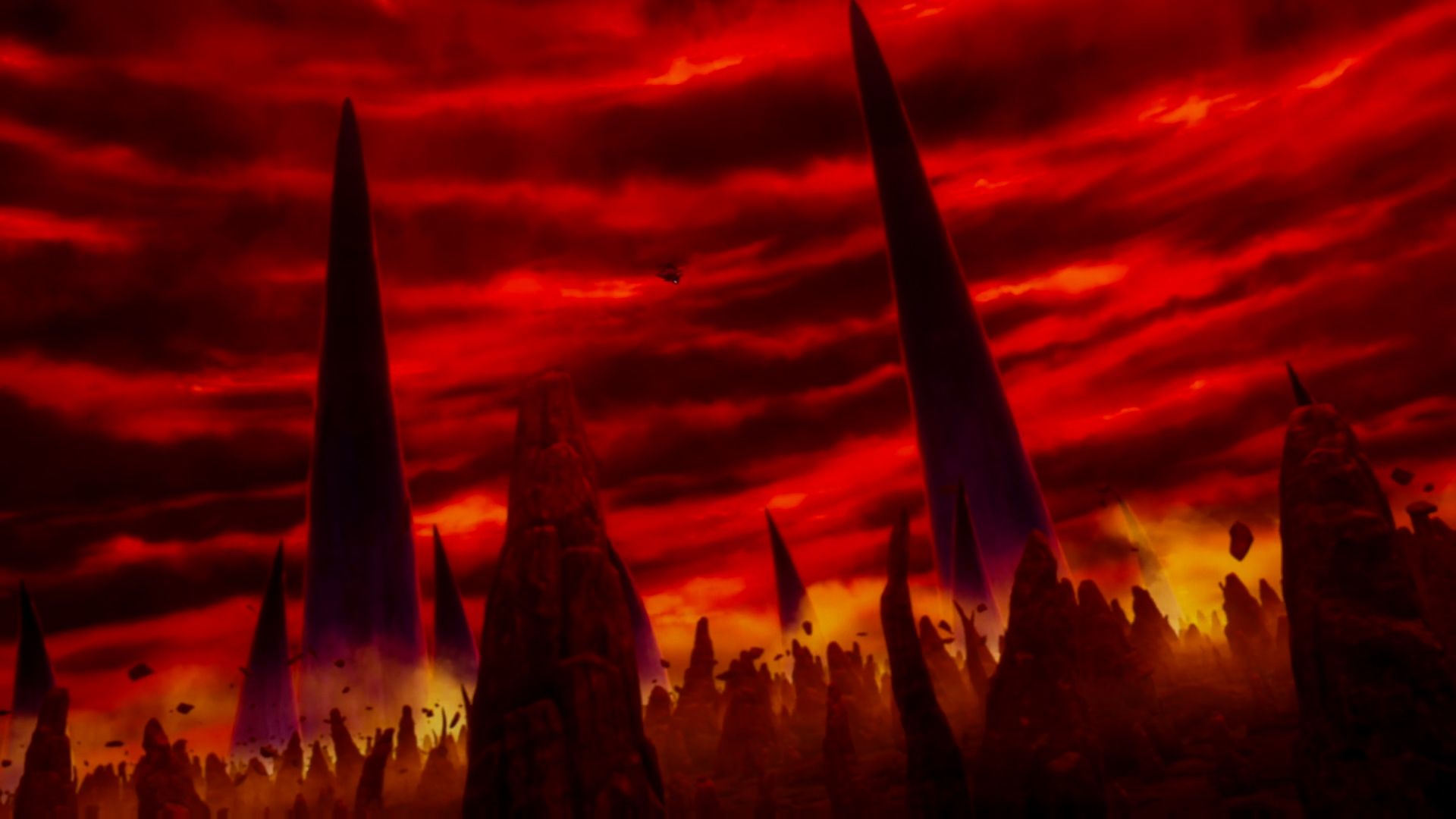
For decades, the Demon Realm (Makai) remained one of the most tantalizing loose threads in Dragon Ball cosmology. Aside from fleeting references during the Majin Buu saga—namely Dabura’s status as the realm’s monarch—and decades of non-canon interpretations across video games like Dragon Ball Heroes and Xenoverse, the plane existed largely as an abstract concept. In Daima‘s inaugural episode, Toriyama rectifies this omission with staggering thoroughness.
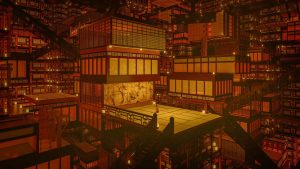
The premiere spends a significant chunk of its runtime anchoring the narrative within the atmospheric, shadowy halls of the Demon Realm’s royal palace. Here, we are introduced to King Gomah, a neurotic and opportunistic monarch, his bureaucratic right-hand Degesu, and the cunning Dr. Arinsu. Watching the climactic events of the Majin Buu saga play out via demonic surveillance monitors, the trio panics upon realizing that Earth’s mortals vanquished the god-like terror of Buu. This instigates their preemptive strike: using the Earth’s Dragon Balls not to assassinate Goku and company, but to neutralize them by wishing them turned into children.
The Tamagami and the Cosmology of Makai
What makes this world-building so intoxicating is how organic it feels to Toriyama’s playful yet intricate worldview. We learn that Degesu is actually the estranged younger brother of Shin (the Supreme Kai), bridging the celestial and demonic hierarchies in a way that immediately enriches the series’ divine ecosystem. Furthermore, the premiere establishes that the Demon Realm boasts its own set of Dragon Balls, guarded not by benign Namekians, but by colossal, formidable biomechanical wardens known as the Tamagami. By introducing these sovereign relics, Toriyama effortlessly sidesteps the narrative stagnation that has historically plagued the series, crafting a fresh playground with its own internal rules, physics, and atmospheric peril.
Downsizing the Pantheon: Why the “Mini” Gambit Outshines GT
When the initial teaser for Daima dropped, skepticism ran rampant. Fans immediately drew comparisons to 1996’s Dragon Ball GT, fearing another derivative narrative trap where Goku is artificially aged down to manufactured comedic effect. However, the premiere decisively shatters these apprehensions. Where GT’s de-aging of Goku felt like an arbitrary production mandate designed to recapture the lightning-in-a-bottle tone of the original 1984 run, Daima approaches the physical regression of the entire Z-Fighter ensemble as a deliberate thematic deconstruction.
By transforming Goku, Vegeta, Piccolo, and the rest of the cast into their “Mini” states, the series performs a desperately needed recalibration. Over the course of Dragon Ball Super, power progression escalated to such astronomical proportions—spanning God Ki, alternate timelines, and multiversal tournaments—that combat often devolved into blinding neon auras, planetary obliterations, and detached spectacle. The stakes were universal, but the emotional connection to physical movement was frequently lost.
In Daima, physical limitations matter once more. Stripping Goku of his fully developed adult physique forces him to adapt his spatial awareness, combat balance, and tactical instinct. The premiere signals a glorious return to ground-level physics: the weight of a punch, the leverage of a sweep, and crucially, the triumphant return of the Nyoibo (Power Pole). Watching a pint-sized Goku effortlessly wield his signature red staff is more than nostalgic pandering; it is a reaffirmation that martial arts ingenuity will always supersede raw destructive output.
Visual Majesty: Toei Animation Unchains its Elite Lineup
From an aesthetic and production standpoint, Dragon Ball Daima represents the pinnacle of modern Toei Animation. Helmed by directors Yoshitaka Yashima and Aya Komaki, with character designs faithfully translated by veteran animator Katsuyoshi Nakatsuru and animation director Chikashi Kubota, the premiere is an absolute masterclass in kinetic craftsmanship.
Unlike the occasionally stiff, gloss-heavy digital compositing that haunted the early stretches of Dragon Ball Super, Daima looks handcrafted, vibrant, and alive. The character animation prioritizes expressive fluidity over static model sheets. The recap of the Buu conflict—rendered with breathtaking new cuts that look ripped straight from an auteur feature film—exhibits remarkable line weight, kinetic squash-and-stretch, and sophisticated environmental lighting.
Moreover, Toriyama’s distinctive visual hallmarks shine through every frame. The architecture of the Demon Realm is steeped in his iconic mechanical industrialism: bulbous cockpits, retro-futuristic monitors, and oddball alien foliage that look like direct cousins to his designs in Sand Land and Chrono Trigger. It is a visual feast that proves what happens when Toei gives top-tier animators ample pre-production time and uncompromising creative freedom.
The Bittersweet Triumph of a Legend’s Swan Song
Beyond the technical brilliance and narrative rejuvenation, the emotional undercurrent of Dragon Ball Daima is palpable. There is an unmistakable warmth running through the premiere’s veins. Unlike the sterile corporate sheen that often accompanies legacy franchise expansions, Toriyama’s direct fingerprints are visible in every idiosyncratic joke, bizarre culinary choice, and character beat. He wasn’t merely consulting from afar; he penned the story, conceptualized the universe, and labored over these character designs until his final days.
The community reaction has mirrored this emotional resonance. Global social metrics erupted following the premiere, not with the typical combative debates over power levels or canon validity, but with widespread gratitude. Fans who grew up on Saturday morning broadcasts alongside a whole new generation discovered common ground in marveling at a show that embraces innocence without sacrificing edge. In a landscape increasingly dominated by hyper-cynical deconstructions and dark fantasy, Daima feels revolutionary purely by daring to be adventurous, joyous, and unabashedly fun.
The Verdict: An Adventure Fit for the Heavens
The premiere of Dragon Ball Daima is nothing short of a triumph. It successfully executes a high-wire act: honoring the legacy of a legendary author, reigniting the thrill of early-era fantasy adventure, and laying down fascinating canonical groundwork that will undoubtedly reshape our understanding of the Dragon Ball universe for years to come. Goku may have shrunk in size, but the spirit of his journey has never stood taller.
What did you think of the Dragon Ball Daima premiere? Did the deep dive into the Demon Realm live up to your expectations, or are you still missing the multiversal brawls of Super? Drop your theories and favorite moments in the comments below!