Ever since the bittersweet, reality-shattering chords of Duffy’s “Distant Dreamer” closed out the animated adaptation of Stone Ocean in late 2022, an unspoken countdown began ticking in the hearts of anime fans worldwide. While casual viewers celebrated the completion of the generational saga of the Joestar bloodline against the vampiric shadow of DIO, manga literati knew the truth: the story of JoJo’s Bizarre Adventure had not ended. In fact, it had merely cleared the slate for Hirohiko Araki’s undisputed magnum opus.
Enter Steel Ball Run (Part 7). Consistently jockeying with Kentaro Miura’s Berserk for the top spot on MyAnimeList’s greatest manga rankings, this epic historical-fantasy cross-country race across 1890s America is more than just another sequel—it is a watershed moment for modern sequential art. Yet, as whispers of an imminent adaptation amplify across social channels and industry message boards, David Production faces an existential question: how does an animation studio translate the most visually demanding, philosophically rich, and mechanically taxing manga of the 21st century without buckling under the weight of its own ambition?
The Seinen Rebirth: Hirohiko Araki’s Pivot to the Frontier
To understand the immense buzz surrounding a potential Steel Ball Run anime, one must grasp the seismic shift it represented in Araki’s creative trajectory. Originally launched in Weekly Shonen Jump in 2004 under the deceptively simple moniker Steel Ball Run—omitting the “JoJo” prefix to ease readers into an alternate continuity—the series was fundamentally transformed when it migrated to the monthly Ultra Jump in 2005.
Freed from the relentless weekly crunch and the editorial censorship of a shonen demographic, Araki blossomed. The narrative unspools across a breathtaking, blood-spattered canvas: thousands of eccentric racers competing for a $50 million grand prize across the perilous, sun-drenched expanse from San Diego to New York City. Beneath this sports-spectacle exterior, however, lies an intricate geopolitical conspiracy centered around the search for the scattered, sacred mummified remains of a miraculous holy figure—strongly implied to be Jesus Christ.
This tonal maturation allowed Araki to explore themes of American manifest destiny, political sovereignty, spiritual redemption, and existential dread with unprecedented nuance. Rather than the operatic good-versus-evil dichotomies that defined Phantom Blood or Stardust Crusaders, Part 7 deals in moral ambiguity, philosophical clashes, and tragic motivations where heroes act like villains and antagonists possess noble clarity.
Johnny Joestar and Gyro Zeppeli: A Masterclass in Character Dualism
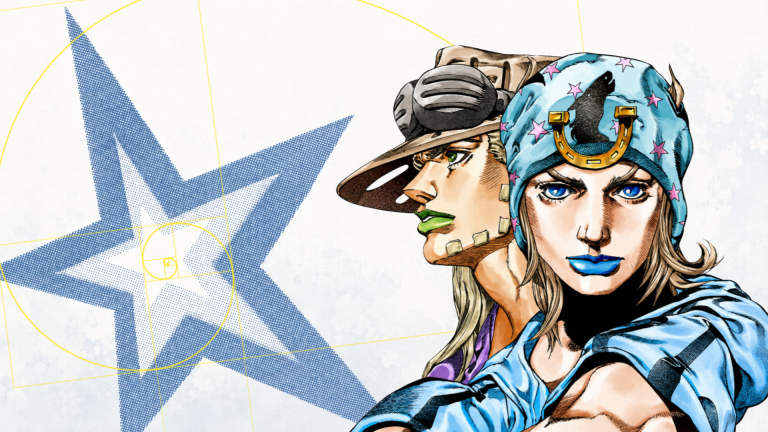
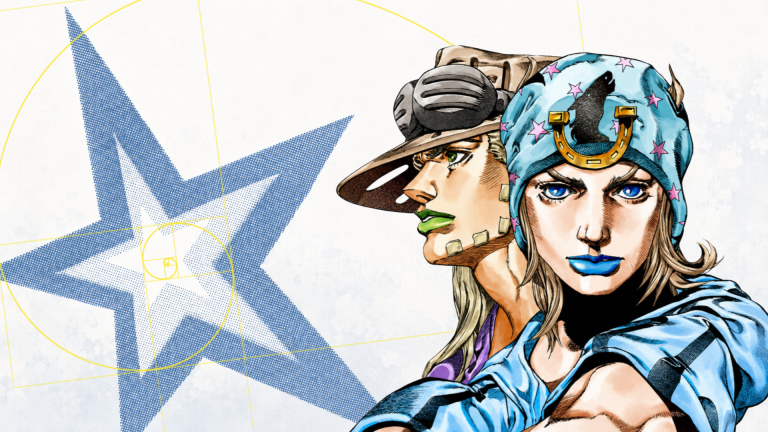
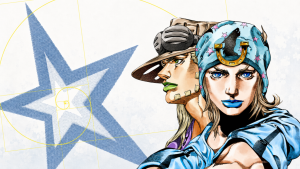
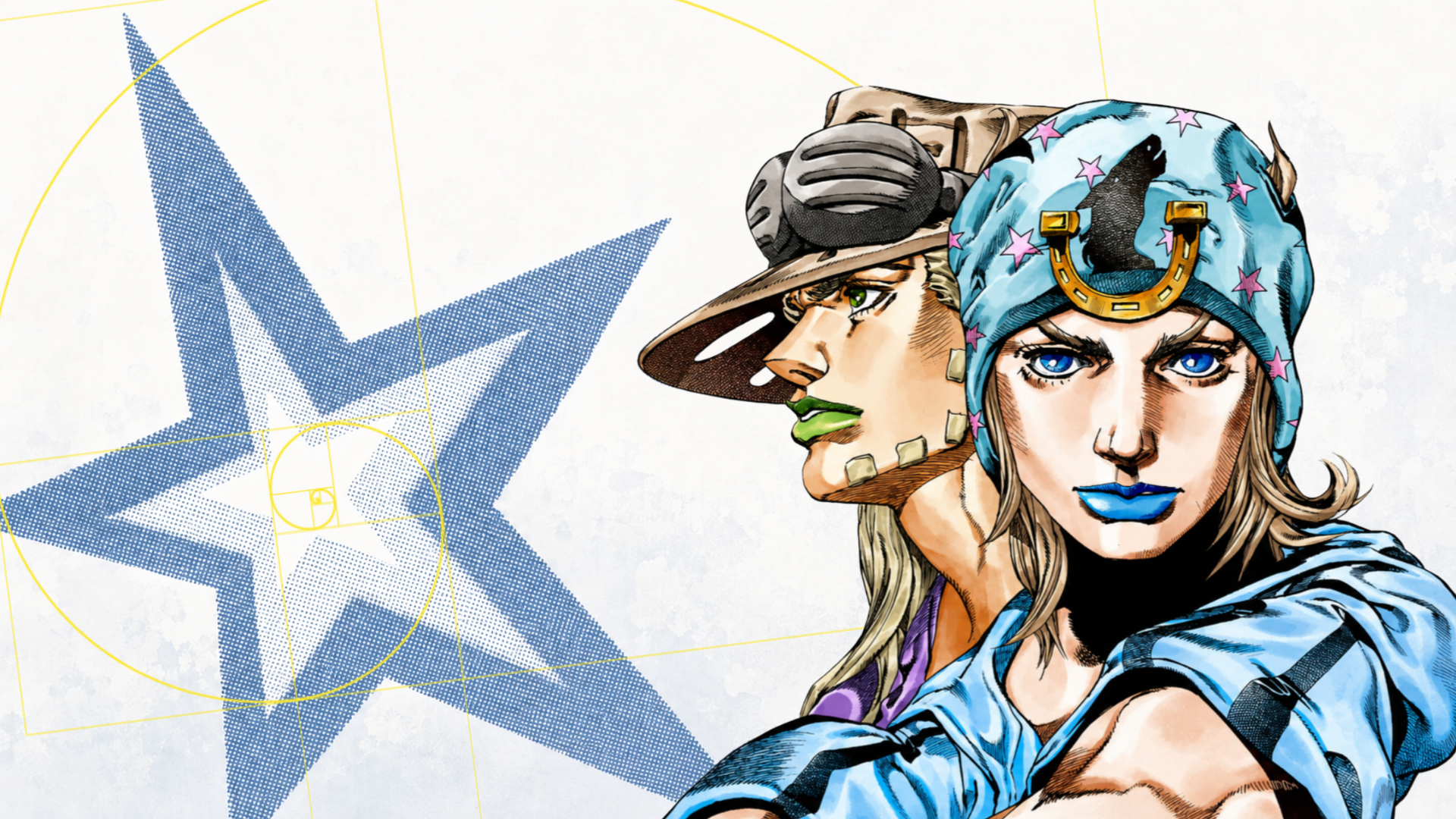
At the center of this storm are two of the most brilliantly written protagonists in comic history: Johnny Joestar and Gyro Zeppeli. Their dynamic elevates Steel Ball Run from an exhilarating race into an intimate psychological drama of mutual healing and shared trauma.
Johnny Joestar is unlike any prior JoJo. A former prodigy jockey turned paraplegic after an act of arrogant foolishness, Johnny begins his journey not out of altruism or a quest to save the world, but out of naked, desperate selfishness. He is bitter, nihilistic, and plagued by what Araki frequently terms “dark determination”—a cold, ruthless willingness to kill anyone standing between him and his recovery. His growth over thousands of miles is not about physical prowess, but about crawling up from “negative to zero”—a soul reconstructing its discarded humanity.
Contrasting Johnny’s grim introspection is Gyro Zeppeli, a disgraced Neapolitan executioner armed with mystical, rotatable steel spheres and an absurd sense of humor involving bad operatic puns and engraved golden teeth (“GO! GO! ZEPPELI”). Gyro joins the race to win royal amnesty for a wrongfully condemned child, yet his clownish bravado barely masks a man crushed by the brutal legacy of his familial duty. Together, their campfire banter, philosophical squabbles, and gradual ascent into unconditional brotherhood form the beating emotional heart of the story.
From Stands to the Spin: A Reimagining of Combat Dynamics
Where earlier parts relied almost exclusively on spiritual manifestations of will (Stands), Steel Ball Run introduces the Spin—a forgotten Neapolitan discipline utilizing the mathematical Golden Ratio (Fibonacci sequence) to harness natural kinetic energy. Through the Spin, throwing a specialized sphere can manipulate muscles, distort space, and bypass conventional physics.
Johnny’s Stand, Tusk, evolves across four distinct “Acts,” directly reflecting his psychological maturation and understanding of this sacred geometry. Watching Johnny progress from merely shooting his fingernails like spinning bullets (Act 1) to tearing through interdimensional space itself (Act 4) represents one of the most satisfying power progressions in Japanese fiction. Animating these mathematically precise, visually mind-bending physics will require David Production to operate at the peak of their stylistic ingenuity.
The Equestrian Conundrum: Can David Production Tame the Beast?
Despite the deafening demand for an anime announcement, industry insiders know the brutal truth: Steel Ball Run is an animator’s worst nightmare. The central issue boils down to a single, notorious hurdle: horses.
In traditional 2D sakuga, four-legged equine anatomy is universally despised. Animating the complex skeletal gait cycles, shifting musculature, and realistic galloping of dozens of horses racing at full tilt across dynamic, changing landscapes is astronomically expensive and time-consuming. Studios typically avoid prolonged horse-centric sequences for this reason; even modern marvels like Wit Studio’s Attack on Titan and MAPPA’s Vinland Saga heavily incorporated CGI models or relied on rotoscoping to survive cavalry sequences.
David Production has consistently punched above its weight since 2012, perfecting a signature pop-art aesthetic layered with chromatic line art, vibrant color-palette shifts, and onomatopoeic visual kanji. However, rendering an unbroken, multi-episode transcontinental race across plains, blizzards, and canyons demands a technical evolution. A complete reliance on poorly masked 3D CGI models could completely sever the organic, dusty grit of Araki’s inkwork. The studio must balance sophisticated cel-shaded 3DCG—perhaps akin to Orange’s work on Trigun Stampede or their own work on the CG openings of early JoJo parts—with pristine, hand-drawn key frames for close-up duels and emotional climaxes.
Distribution Lessons: Avoiding the Stone Ocean Stumble
Beyond the technical challenges sits another critical factor: release format. The global rollout of Stone Ocean suffered immensely under Netflix’s batch-drop system. Releasing an entire cour of episodes at once cannibalized the weekly fan engagement, meme culture, and suspense that turned Stardust Crusaders, Diamond is Unbreakable, and Golden Wind into worldwide trending sensations.
Steel Ball Run cannot afford this sterile treatment. Its structure—divided into clearly demarcated “Stages” of the race, coupled with high-stakes, cat-and-mouse skirmishes against Funny Valentine’s Stand-wielding assassins (such as the terrifying Diego Brando and the lethal Ringo Roadagain)—is tailor-made for episodic, cliffhanger-driven television. If Warner Bros. Japan and David Production want SBR to claim its rightful throne, they must advocate for a return to traditional weekly broadcasting, allowing the mystery of the Saint’s Corpse to simmer week after week in the cultural zeitgeist.
The Long Road to San Diego
Hirohiko Araki’s Steel Ball Run is a transcendent work—a miraculous convergence of historical Americana, high-concept metaphysical battles, and a deeply moving character study about two broken men finding their souls on the back of horses. There is no question that adapting this narrative is the most intimidating frontier David Production has ever approached. Yet, as Gyro Zeppeli famously imparted to Johnny, “The shortest route was a detour. It was the detour that was our shortest path.”
The prolonged wait since the conclusion of Part 6 may test fans’ patience, but for a masterpiece of this scale, patience is not just a virtue—it is a necessity. When that starting pistol finally fires and the opening chords of an Ennio Morricone-inspired theme ring out over the San Diego coast, the anime landscape will never be the same again.
Now, over to you: How do you think David Production should handle the infamous horse animation challenge? Should Part 7 stick to weekly streaming, or are you hoping for an episodic theatrical rollout? Let us know your thoughts in the comments below!