When the sun finally dipped below the horizon of Irene’s rain-slicked highway at the climax of Stone Ocean, David Production didn’t just conclude Jolyne Cujoh’s tragic, triumphant crusade—they closed the book on a six-part generational mythos that had defined pop culture for over three decades. For casual viewers, it felt like an emotional farewell. But for the devoted disciples of Hirohiko Araki’s kaleidoscopic universe, the ending was merely the prologue to an even grander obsession. The slate had been wiped clean, making room for the Holy Grail of modern sequential art: Steel Ball Run.
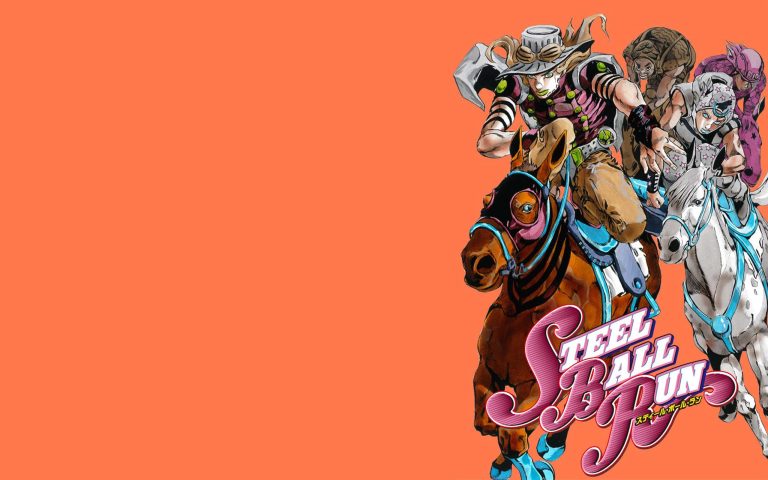
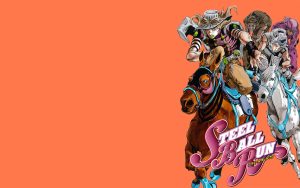
For years, whispered among forum threads, fan-animation collectives, and convention hallways, the demand has been singular and unyielding: adapt Part 7. Consistently ranked alongside Miura’s Berserk and Inoue’s Vagabond at the pinnacle of critical manga rankings, Steel Ball Run is not just another chapter in the bizarre lineage; it is Araki’s undisputed magnum opus. As David Production catches its breath and whispers of pre-production ripple through industry watercoolers, the anime community finds itself suspended between breathless anticipation and existential dread. Can an ambitious television anime truly capture a gritty, supernatural, horse-drawn trans-American odyssey?
The Seinen Rebirth: Why Part 7 Stands Above the Rest
To understand the frenzied discourse surrounding a potential Steel Ball Run anime, one must understand the tectonic shift that occurred in 2004. Mid-run, Araki shifted the series from the rigid, weekly deadlines of Weekly Shonen Jump to the monthly pages of Ultra Jump. That logistical pivot transformed the DNA of the series entirely.
No longer handcuffed by the content restrictions and breakneck pacing demanded of adolescent shonen magazines, Araki pivoted toward psychological realism, geopolitical intrigue, and graphic body horror. Steel Ball Run transports audiences to the dust, blood, and steel of 1890 America. The premise carries the cinematic bombast of a classic Sergio Leone western mixed with the eccentric occultism of classic JoJo: thousands of eccentrics, outlaws, and athletes race across the North American continent on horseback for a $50 million grand prize. But beneath the athletic spectacle lies a covert hunt for the mummified, scattered relics of a prehistoric saint whose holy anatomies grant godlike power.
This tonal maturation elevated Araki from an ingenious pop-stylist into a world-class literary auteur. The stakes were no longer merely about saving the universe from flamboyant megalomaniacs; they were about human desperation, nationalistic hubris, and the agonizing pursuit of personal salvation.
Johnny Joestar and Gyro Zeppeli: A Subversive Brotherhood
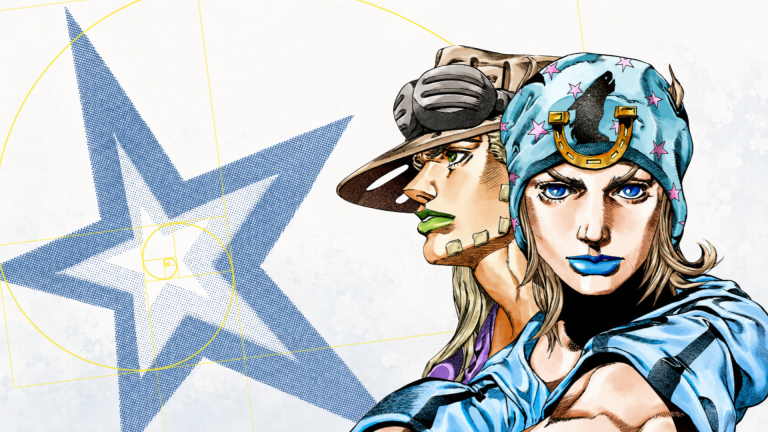
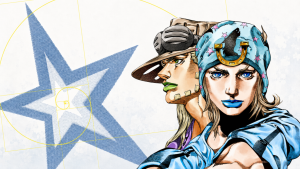
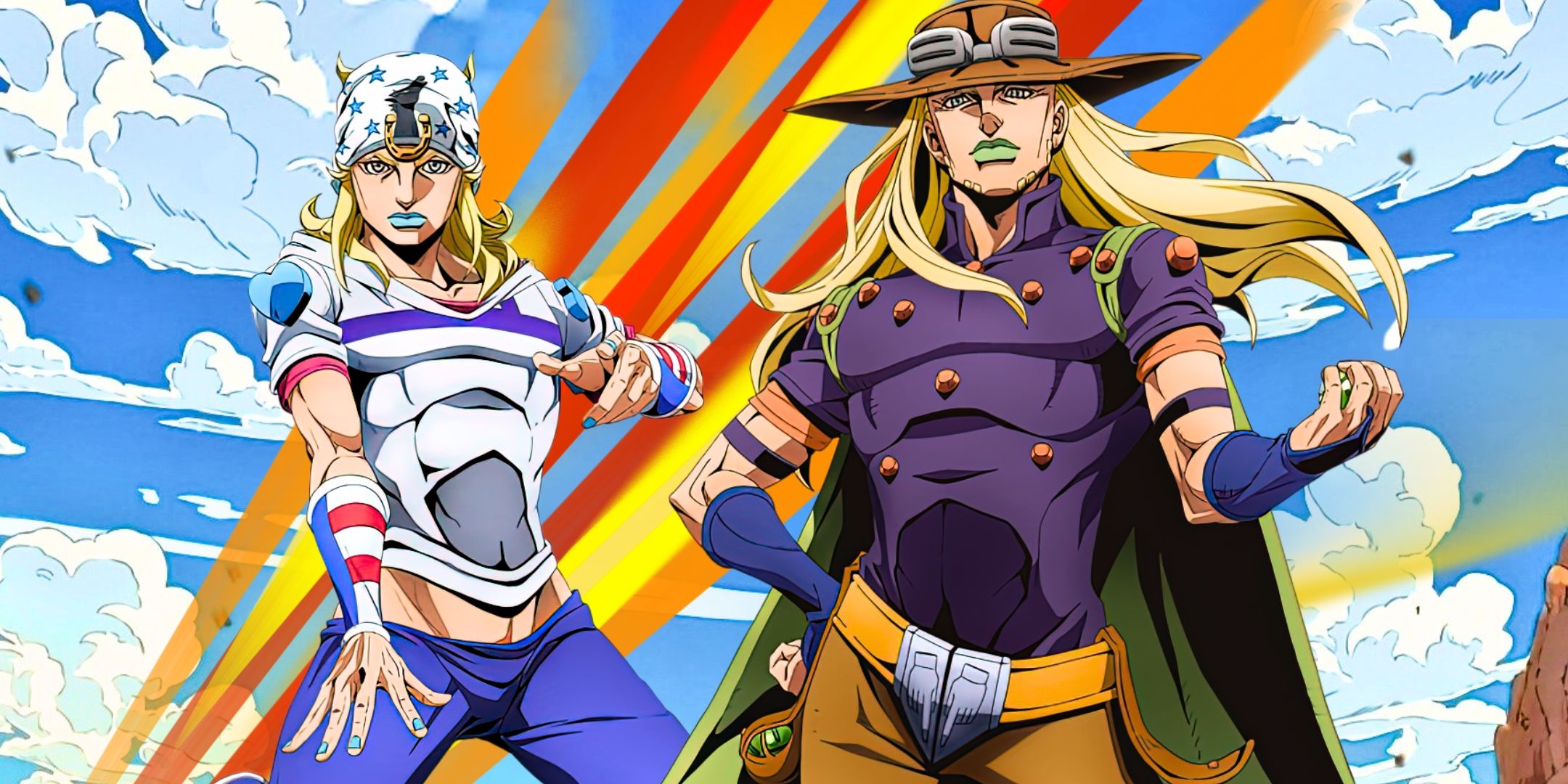
At the beating heart of this monumental narrative lies what is arguably the most dynamic, emotionally nuanced duo in modern manga history: Johnny Joestar and Gyro Zeppeli.
Johnny’s Descent and Dark Determination
In Johnny, Araki dismantled the archetypal Joestar hero. Where Jonathan was a saint of chivalry and Jotaro was an unshakeable sentinel of cool, Johnny Joestar begins the story as a broken, cynical, and deeply selfish former horse-racing prodigy. Paralyzed from the waist down following an act of arrogant vanity, Johnny is defined not by virtue, but by what Araki frequently terms his “dark determination”—a flame of unrelenting, borderline villainous resolve to reclaim what he has lost. His Stand, Tusk, mirrors this agonizing psychological evolution, progressing from a grotesque, helpless crawling entity through developmental “Acts” as Johnny confronts his deepest traumas and masters the spatial physics of rotational force.
Gyro Zeppeli and the Anatomy of the Spin
Balancing Johnny’s brooding desperation is Gyro Zeppeli, a disgraced Neapolitan executioner armed with a razor-sharp wit, steel balls, and a deeply guarded moral compass. Gyro reintroduces supernatural mechanics through the Spin, an ancient lineage-bound art based on the Fibonacci sequence and the ubiquitous Golden Ratio. Unlike the flashy psychic manifests of earlier Stand battles, the Spin grounds Part 7 in a quasi-scientific, geometric logic. Gyro’s dynamic with Johnny—alternating between absurd sight gags regarding mozzarella cheese songs and agonizing lessons on the nature of fate—forms an authentic brotherhood that elevates the narrative far above standard battle-anime camaraderie.
The Elephant in the Room: David Production’s Equestrian Nightmare
If the creative demand for Steel Ball Run is unprecedented, so too is the technical barrier to entry. Simply put: horses are the ultimate bane of the animation industry.
Equine anatomy is notoriously intricate, demanding complex foreshortening, kinetic muscle deformation, and fluid four-legged gaits that drain time and budget from even the most storied studios. While modern blockbusters like Attack on Titan famously leaned on blending techniques to tackle horseback scouting charges, Steel Ball Run is not an anime with a few cavalry scenes—it is an entire narrative set on the saddle. Over thousands of miles of shifting terrain, from sun-baked Arizona deserts to frozen Midwestern waterways, horses are in near-constant motion.
David Production has solidified its reputation through jaw-dropping sound design, bold color-palette shifts, and hyper-faithful stylistic homages. However, an adaptation of this scale will test the studio to its absolute limits. Industry insiders and fans alike speculate on how the team will navigate the challenge:
- Hybrid CGI/2D Workflows: Utilizing bespoke, cell-shaded 3D horse models meticulously matched to Araki’s dense, crosshatched art style, overlaid with hand-drawn character frames for close-up emotional beats.
- Split-Cour or Seasonal Schedulings: Abandoning the marathon production cycles of the past in favor of multi-part seasonal runs, offering animators the necessary breathing room to polish the kinetic chaos of the race.
- Specialized Outsourcing Units: Partnering with vanguard 3D studios (similar to Studio Orange’s work on Trigun Stampede) to handle the logistical nightmare of background cavalry during major race checkpoints.
The Golden Stakes: Funny Valentine and Cultural Resonances
Beyond the structural and logistical hurdles, an anime adaptation holds tremendous cultural resonance thanks to its primary antagonist: the 23rd President of the United States, Funny Valentine. Boasting his reality-bending Stand, Dirty Deeds Done Dirt Cheap (D4C), Valentine is a masterwork of political allegory—a charismatic fanatic convinced that extreme atrocities are justified so long as they serve the prosperity of his homeland.
The philosophical collision between Valentine’s twisted patriotism and Johnny’s hyper-individualist survival instinct transforms the final third of Steel Ball Run into an electrifying ideological thriller. In an era where modern media frequently wrestles with the consequences of unchecked nationalism and historical revisionism, Araki’s mid-2000s critique feels astonishingly prescient. Brought to life with modern production values, the spatial-displacement mind games of D4C promise to break the internet in ways not seen since the premiere of Dio’s time-stopping shenanigans a decade ago.
The Verdict: The Next Great Frontier in Anime
There is no understating the stakes. Steel Ball Run is not just another seasonal anime waiting for a greenlight; it is a legendary literary work whose adaptation could redefine the ceiling for adult action-adventure storytelling on television. David Production faces a monumental, perhaps unenviable creative Everest—one that requires unprecedented budget, technical innovation, and an unwavering respect for Araki’s dense, ink-heavy aesthetic.
Yet, if the studio has proven anything over its historic run from Phantom Blood through Stone Ocean, it is that they do not shy away from the bizarre, the impossible, or the hyper-ambitious. The race hasn’t officially begun, but across the globe, fans can already hear the countdown echoing across the dusty plains of San Diego.
Now it’s your turn: How do you think David Production should handle the infamous horse dilemma—full hand-drawn prestige or high-end hybrid CGI? Who is your dream voice cast for Gyro Zeppeli? Sound off in the comments below, and keep your browsers locked to Wibux.com for all your frontline anime breakdowns!