

Haikyu!! The Dumpster Battle Hits Global Streaming: Why the Karasuno vs Nekoma Rivalry Is Sports Anime Perfection
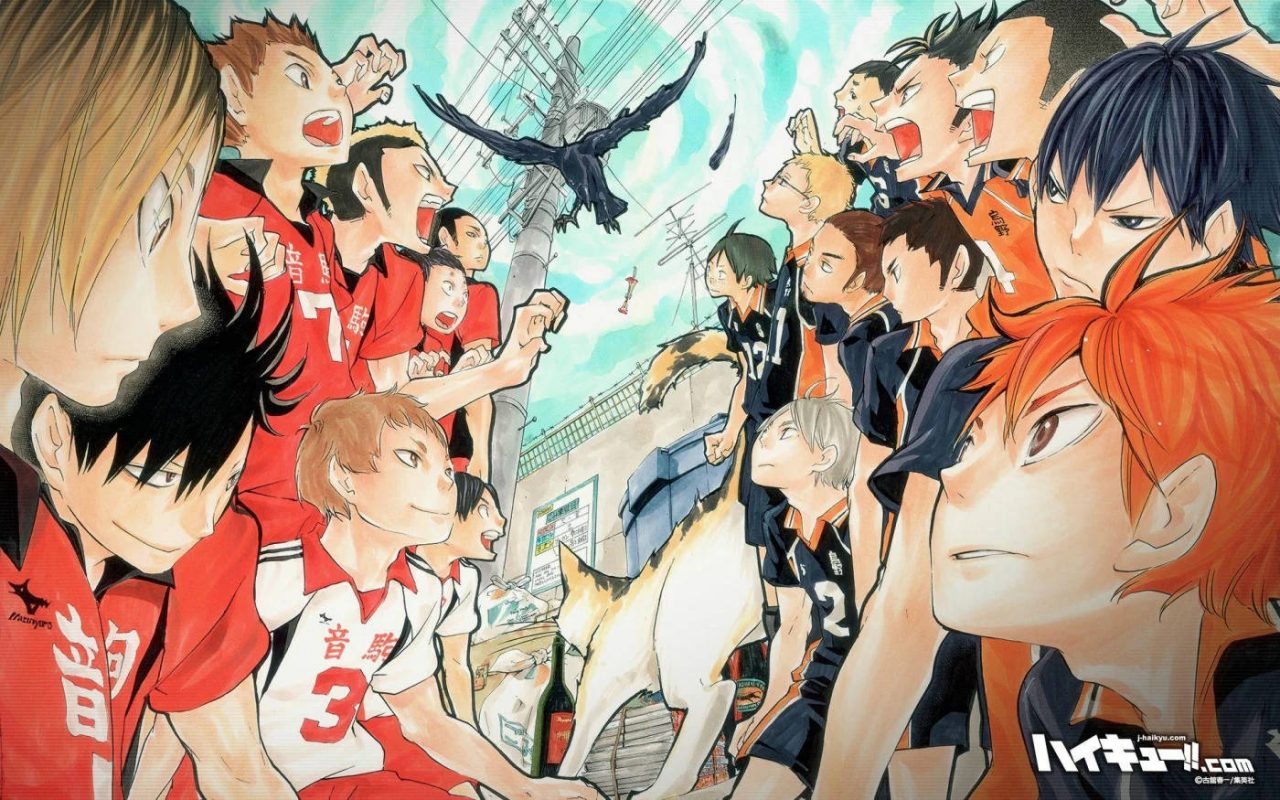
For over a decade, Haikyu!! fans have waited for this moment — not just a match, but a reckoning. The “Battle at the Garbage Dump,” the fabled showdown between Karasuno and Nekoma, has been the gravitational center of Haruichi Furudate’s beloved volleyball manga since its earliest chapters. It was the promise whispered between two rival coaches decades before their players ever set foot on the same court. And now, with Haikyu!! The Dumpster Battle finally hitting global streaming platforms, audiences worldwide can experience what Japanese theatergoers already proclaimed earlier this year: this isn’t just a great sports anime movie. It’s the emotional pinnacle of one of the greatest sports narratives ever told — in any medium.
The film’s global rollout marks a watershed moment for the franchise and for anime cinema more broadly. Following a staggering box office run in Japan that surpassed ¥11.5 billion, The Dumpster Battle arrives on streaming services carrying the weight of enormous expectations — and it delivers on virtually every single one of them. Here’s why this film is nothing short of sports anime perfection.
A Rivalry Forged in Legacy, Not Hatred
What makes the Karasuno vs. Nekoma rivalry so devastatingly effective is that it was never built on animosity. Unlike the combustible tension of Karasuno vs. Aoba Johsai, or the towering intimidation of Shiratorizawa, the Nekoma rivalry is rooted in mutual respect, friendship, and an almost sacred sense of destiny. The “Battle at the Garbage Dump” — named for the trash-talking, scrappy reputation of both schools — was a dream conceived by coaches Ukai Sr. and Nekomata long before Hinata or Kenma were born. The match itself is an inheritance, a torch passed down through generations of players who may not fully understand its origin but feel its gravity in their bones.
This is what elevates The Dumpster Battle beyond conventional sports movie fare. The stakes aren’t just about winning or losing a Nationals quarterfinal — they’re about fulfilling a covenant. Every rally, every dig, every desperate save carries the accumulated emotional weight of four seasons of television anime, multiple OVAs, and hundreds of chapters of manga. Director Susumu Mitsunaka and the team at Production I.G understand this implicitly, and the film is structured not as a spectacle-first blockbuster, but as a deeply intimate character study that happens to contain some of the most breathtaking animation in the studio’s storied history.
Kenma Kozume: The Brain That Finally Learned to Burn
A Psychological Chess Match for the Ages
If The Dumpster Battle has a secret protagonist, it’s Kenma Kozume. The Nekoma setter — perpetually disinterested, energy-conserving, allergic to exertion — undergoes what might be the single most compelling character arc compressed into a feature-length runtime. Kenma has always treated volleyball as a puzzle to be solved rather than a passion to be pursued. He plays because Kuroo dragged him into it. He strategizes because his brain can’t help itself. But he has never, in any meaningful sense, wanted to win the way his teammates do.
Until now.
The film’s masterstroke is charting Kenma’s internal transformation in real time, set against the relentless kinetic engine that is Shoyo Hinata. Hinata doesn’t defeat Kenma through superior skill or tactical genius — he defeats him by being so relentlessly, infectiously joyful that Kenma’s carefully constructed emotional walls crumble. Watching Kenma’s eyes widen, watching him start to sweat, watching him call for the ball with something approaching desperation — it’s not just great sports storytelling. It’s a profound meditation on what it means to find something worth caring about, even when caring terrifies you.
The Hinata Effect
Hinata’s role in this film is fascinating precisely because he isn’t the one undergoing the primary transformation. He is, instead, the catalyst — the sun around which Kenma’s reluctant awakening orbits. Furudate’s genius has always been in understanding that Hinata’s superpower isn’t his jump or his speed; it’s his ability to make everyone around him play harder, feel more, and reach beyond what they thought possible. In The Dumpster Battle, that thematic throughline reaches its most potent expression. Hinata doesn’t just challenge Kenma across the net — he gives Kenma a reason to love the game, and that gift is simultaneously beautiful and heartbreaking because it arrives in the match that will end one of their journeys.
Production I.G’s Kinetic Masterclass
Let’s talk about the animation, because The Dumpster Battle represents Production I.G operating at a level that demands serious recognition in conversations about the best-animated films in recent anime history. The decision to transition Haikyu!!‘s final arcs from television to film format was initially met with skepticism from fans — and understandably so. Compressing an entire Nationals match into roughly 85 minutes of runtime is a gamble that could easily sacrifice the pacing and emotional granularity that made the series’ TV matches so iconic.
But the film format unlocks something the TV series could never fully achieve: sustained, unbroken intensity. The match flows with a fluidity that mirrors the sport itself. Camera angles sweep and dive with impossible dynamism. Receives are animated with a tactile weight that makes you feel the sting of the ball against forearms. Spikes land with percussive force. And in the film’s most transcendent sequences — particularly Kenma’s late-game offensive plays — the animation transcends realism entirely, dissolving into impressionistic bursts of color and motion that externalize the characters’ psychological states.
The compositing work deserves special mention. Production I.G blends traditional 2D character animation with subtle CG camera movements and environmental effects in ways that feel seamless rather than jarring. The gymnasium itself becomes a character — the squeak of shoes on hardwood, the roar of the crowd rendered as an almost physical force, the lighting shifting to isolate key players in moments of revelation. It’s directed with the confidence of a studio that has been animating this sport for a decade and understands its visual grammar at a molecular level.
The Emotional Architecture of a Perfect Match
Why This Hits Harder Than Any Final Boss Battle
The dirty secret of Haikyu!! — the thing that separates it from virtually every other sports anime — is that the outcome of the match is almost irrelevant. Furudate understood something that most sports narratives don’t: the beauty of competition isn’t in victory or defeat, but in the moment of total commitment. The Dumpster Battle is structured so that every point feels earned, every rotation shift carries tactical significance, and every character — from Kuroo’s desperate blocks to Yamamoto’s thunderous crosses to Lev’s still-imperfect-but-improving quicks — gets a moment that honors their journey.
And then there’s the ending. Without venturing into spoiler territory for those coming to this fresh, the film’s final minutes achieve something genuinely rare in anime: a conclusion that is simultaneously triumphant and melancholic, cathartic and bittersweet. The post-match scenes are among the most emotionally devastating in the entire franchise, not because of tragedy, but because of gratitude. Characters thank each other — not with grand speeches, but with looks, with tears held back, with the quiet acknowledgment that this game they played together mattered.
Community Reception and Cultural Impact
The global anime community’s response has been nothing short of rapturous. Social media erupted upon the film’s streaming debut, with longtime fans sharing tearful reactions and newcomers expressing shock at how deeply a volleyball movie could affect them. The film currently holds outstanding ratings across major review aggregators, and critical consensus has positioned it alongside The First Slam Dunk as evidence that sports anime films can achieve the same artistic and emotional heights as any prestige animated feature.
What’s particularly striking is how the film has reignited interest in volleyball itself. Just as the original Haikyu!! manga and anime drove a measurable increase in youth volleyball participation in Japan throughout the 2010s, The Dumpster Battle‘s global release is introducing the sport — and its capacity for storytelling — to an entirely new international audience.
The Verdict: A Legacy Match That Earns Every Tear
Haikyu!! The Dumpster Battle is not merely a good anime film or a satisfying franchise entry. It is the definitive statement of what Haikyu!! has always been about: the idea that sports are not just games, but crucibles in which people discover who they are and what they’re capable of feeling. Kenma’s awakening, Hinata’s infectious fire, Kuroo’s fulfilled promise, and the legacy of two coaches who dreamed of this day — it all converges into 85 minutes of pure, distilled emotional storytelling backed by world-class animation.
If you’ve been following Haikyu!! since the beginning, this film is the payoff you’ve earned. If you’re new to the series, consider this your urgent invitation to start from episode one — because the journey makes this destination unforgettable. Either way, The Dumpster Battle is now streaming globally, and there has never been a better time to witness why this franchise stands at the absolute summit of sports anime.
Have you watched The Dumpster Battle yet? Which moment broke you? Drop your thoughts in the comments below, and follow Wibux.com for more in-depth anime coverage, reviews, and analysis.