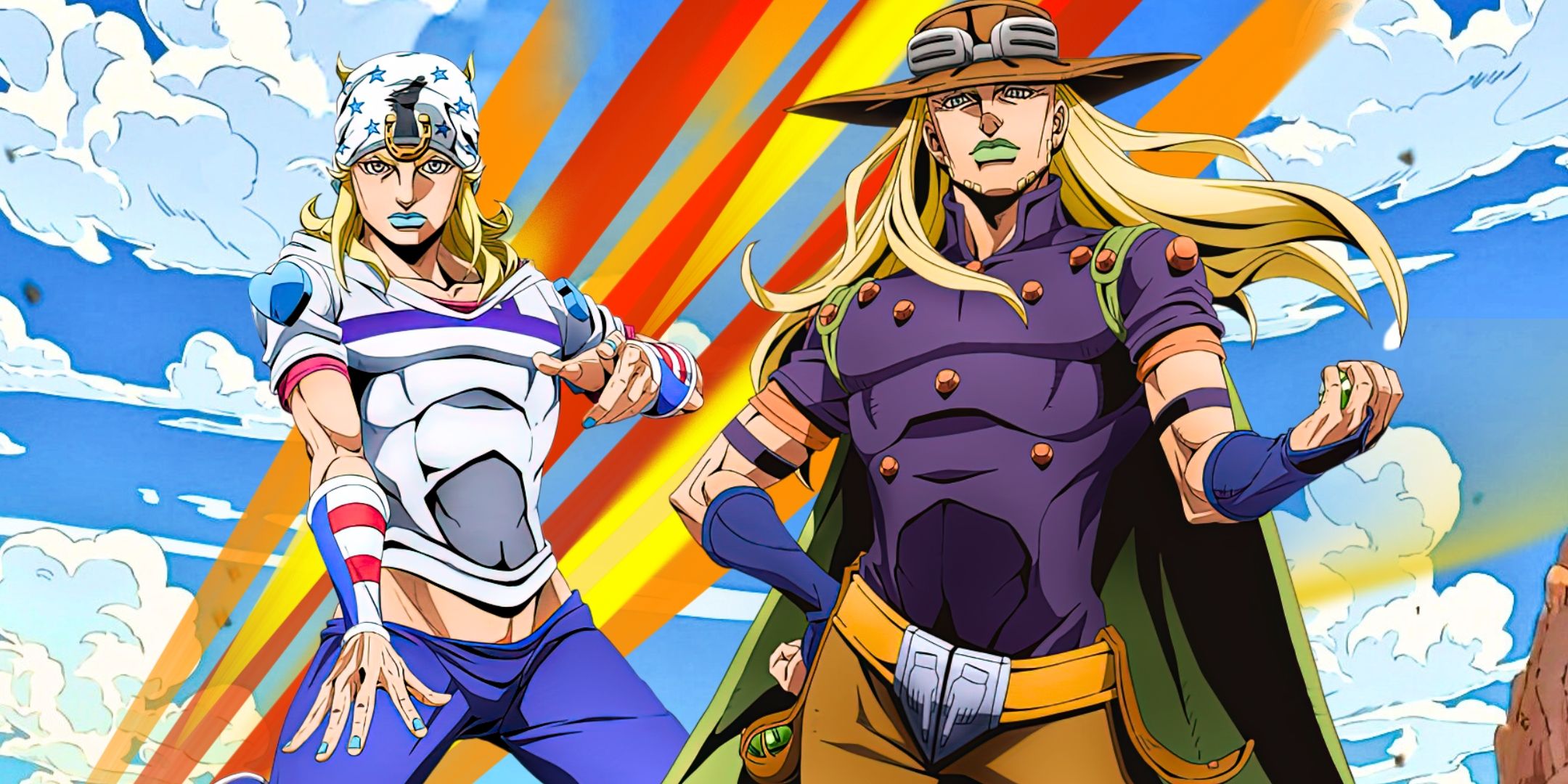
Ever since the bittersweet strums of the original Joestar saga dissolved into the melancholic downpour of Stone Ocean’s climax, the global anime community has held a single, collective breath. The Ireneverse offered a definitive, poetic bookend to six generations of dynastic tragedy, but for the initiated, it signaled the arrival of something far more monumental on the horizon. We have arrived at the precipice of Hirohiko Araki’s undisputed magnum opus: JoJo’s Bizarre Adventure: Steel Ball Run.
Consistently locked in a fierce duel with Kentaro Miura’s Berserk for the highest-rated manga of all time across platforms like MyAnimeList and AniList, Steel Ball Run is not simply another installment in a legendary franchise. It is a wholesale metaphysical reset, a sprawling, grit-caked American Western, and a triumph of seinen serialization. Yet, as rumors churn and speculative timelines bubble within production leaks, the transition from page to screen looms as David Production’s most formidable creative gamble to date.
The Reinvention of Araki’s Canvas: A Seinen Odyssey in the American Frontier
When serialized in 2004, Steel Ball Run initially ran without the explicit “JoJo” moniker on the covers of Weekly Shonen Jump before migrating to the monthly, mature pages of Ultra Jump in 2005. That editorial pivot radically transformed Araki’s artistic trajectory. Unshackled from weekly deadlines and the demographic restrictions of shonen publishing, the mangaka dove into a hyper-detailed, morally ambiguous narrative set against the untamed backdrop of 1890s America.
The premise is dizzyingly ambitious: a cross-continental equestrian race stretching from the sun-drenched beaches of San Diego to the cobblestone streets of New York City, boasting a staggering fifty-million-dollar purse. Yet the race quickly reveals itself as an elaborate smokescreen orchestrated by the highest echelons of the United States government. What begins as a test of endurance descends into an occult hunt across the Great Plains for the mummified relics of an ancient, miraculous martyr. This historical revisionism combines cosmic horror, political espionage, and road-movie camaraderie into an adrenaline-soaked narrative tapestry that has enraptured fans for nearly two decades.
The Golden Ratio: Replacing the Stand Meta with the Spin
While Stands undoubtedly manifest with mind-bending lethality throughout Part 7, Araki used this thematic soft-reboot to recontextualize his power systems. Enter The Spin—a mysterious martial and metaphysical art deeply rooted in Renaissance mathematics, Fibonacci sequences, and the Golden Rectangle. Practiced by the royal executioners of the Kingdom of Naples, the Spin transforms kinetic energy into a devastating, matter-distorting weapon through the rotation of specially crafted steel spheres. It serves as both a philosophical successor to the forgotten Hamon (Ripple) of Parts 1 and 2 and an evolution of Araki’s fascination with natural geometry, forcing encounters to rely on tactical improvisation, physical velocity, and anatomy rather than raw ghostly power-scaling.
Johnny Joestar and Gyro Zeppeli: Flawed Humanity and Dark Determination
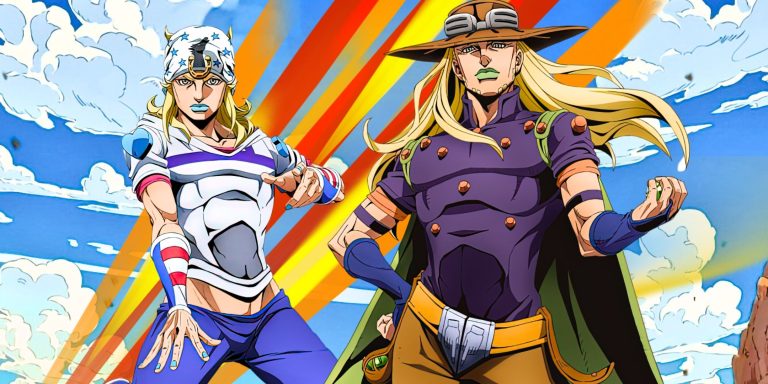
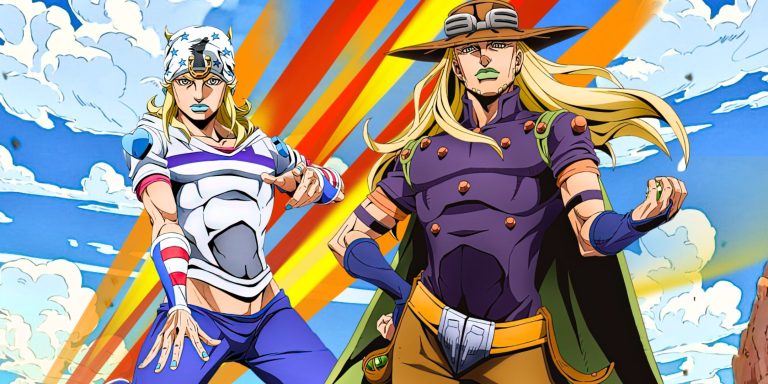
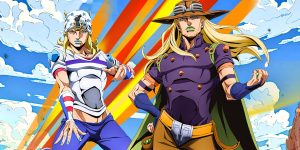
Central to Steel Ball Run’s enduring reverence is the psychological depth of its dual protagonists. Previous JoJo leads, from the gentlemanly Jonathan to the unyielding Jotaro, operated predominantly as archetypal forces of virtue. Johnny Joestar, by sharp contrast, is introduced as a broken, narcissistic former racing prodigy whose youthful arrogance cost him the use of his legs and his social standing. Johnny is not propelled by altruism; he is driven by a ravenous, desperate hunger to return from “below zero” to plain “zero.”
Araki visually underscores Johnny’s soul-searching through his “Dark Determination”—the chilling, flame-lit stare of a man willing to kill without hesitation if it means reclaiming his agency. It is a stunning deconstruction of the traditional shonen protagonist, positioning Johnny as an intensely human, deeply flawed antihero whose redemption must be clawed out of the prairie dirt.
Balancing Johnny’s brooding nihilism is Gyro Zeppeli, arguably the most charismatic deuteragonist ever inked. Emblazoned with “GO! GO! ZEPPELI” across his metallic grill, wielding his spinning steel spheres with surgical precision, Gyro is equal parts surgical master and bizarre eccentric, prone to composing absurd operatic ditties about Italian cheese while nursing a secret, heartbreaking quest to save an innocent child from the executioner’s block. The dynamic between Johnny and Gyro eschews generic mentorship clichés, evolving into an authentic, ride-or-die brotherhood forged in saddle sores, shared campfire revelations, and bullet wounds.
The Equestrian Dilemma: David Production’s Greatest Technical Gamble
If Steel Ball Run is widely considered a narrative masterpiece, it is equally feared by animators as an industrial nightmare. The primary obstacle standing between the manga and its anime manifestation boils down to a brutal reality of the medium: horses are notoriously difficult to animate.
Four-legged quadrupedal anatomy requires an immense understanding of complex skeletal motion, muscle shifting, and dynamic weight distribution. In a narrative where dozens of horses gallop across screen simultaneously at variable speeds, through riverbeds, blizzards, and canyon shootouts, hand-drawn 2D animation becomes a logistical black hole that could bankrupt or break standard production schedules. Anime fans need only remember the jarring, hyper-stiff 3D horses in early seasons of Kingdom or Berserk (2016) to understand the ambient dread surrounding this transition.
David Production, however, is not a typical studio. Having handled the visual eccentricities of JoJo since 2012, along with the kinetic, particle-heavy mastery of Fire Force, they have built a reputation on honoring Araki’s distinctive visual flair. To successfully adapt Part 7, industry analysts anticipate a sophisticated hybrid pipeline: utilizing advanced, cel-shaded 3D CGI models for the continuous long-distance equine maneuvers—blended with bespoke, hand-drawn 2D cuts for close-up impacts, expressive facial acting, and iconic signature manga panels. Navigating this technical labyrinth without losing the tactile roughness of Araki’s ink lines will be the definitive test of the studio’s technical evolution.
The Looming Shadow of Funny Valentine and the Ideological War
A masterclass narrative demands an equally towering antagonist, and Steel Ball Run delivers in the form of Funny Valentine, the 23rd President of the United States. Armed with the terrifying, dimension-hopping Stand known as Dirty Deeds Done Dirt Cheap (D4C), Valentine represents an insidious, utilitarian form of villainy. Unlike the egotistical sadism of Dio Brando or the psychopathic isolationism of Yoshikage Kira, Valentine operates under a banner of hyper-nationalistic, unyielding patriotism.
Valentine’s philosophical diatribe—most famously encapsulated in his “First Napkin” monologue—argues that society is governed strictly by the individual who exerts the decisive will to determine morality and order for the collective. The narrative collision between Johnny’s desperate, individualistic selfishness and Valentine’s grandiose, sanctified tyranny creates a climax that transcends typical battle-manga conventions, forcing the audience to wrestle with uncomfortable truths regarding power, prosperity, and the collateral damage of manifest destiny.
Crossing the Continental Divide: David Production’s Next Frontier
The cultural buzz surrounding the eventual Steel Ball Run anime is more than standard fandom impatience; it is the anticipation of a definitive milestone in anime history. Fans are not merely waiting for an episodic release—they are waiting to see if modern animation technology can keep pace with Hirohiko Araki at the absolute zenith of his creative powers. Furthermore, after the contentious, momentum-killing batch-release rollout of Stone Ocean on Netflix, the community is fiercely lobbying for a return to a weekly broadcast format that allows the trans-American journey to breathe, trend, and dominate weekly pop-culture discourse as it rightfully should.
The race across the American frontier will be arduous, costly, and technically punishing. Yet, if David Production can harness the divine geometry of the Spin and cross this finish line intact, Steel Ball Run will not merely expand the JoJo legacy—it will stand as a towering testament to what the anime medium can achieve when uncompromised artistic vision meets sheer production grit.
How do you think David Production should tackle the legendary horse-racing sequences? Are you team weekly release, or are you willing to binge the race across America? Sound off in the comments below with your dream voice-cast picks for Gyro and Johnny!