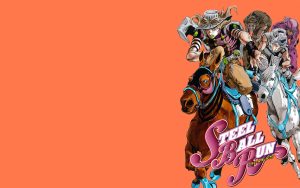
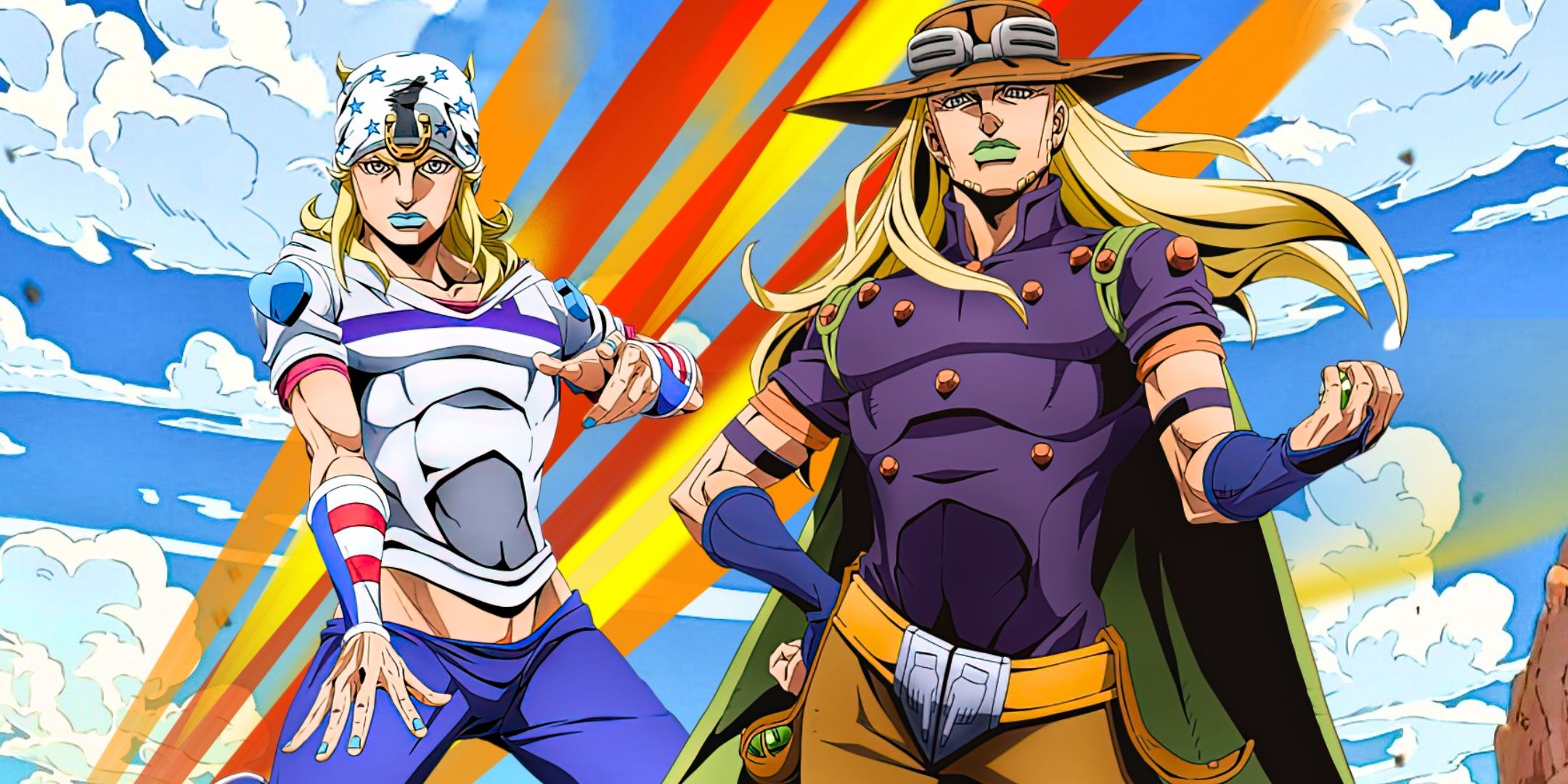
Ever since the bittersweet, reality-shattering strings of Jolyne Cujoh’s theme faded into the silence of the Ireneverse in late 2022, a singular, unified murmur has reverberated across the anime landscape: When is Steel Ball Run? For over a decade, Hirohiko Araki’s seventh installment of JoJo’s Bizarre Adventure has stood as an almost mythical obelisk in modern manga culture. Consistently hovering at the apex of critical rankings on platforms like MyAnimeList, Steel Ball Run is celebrated not merely as a high point for the franchise, but as Araki’s undisputed magnum opus. Now, as David Production rests between monumental projects, the creative, technical, and cultural anticipation for an anime adaptation has reached a fever pitch.
Adapting Part 7 is not a standard promotional maneuver or a simple continuation of a seasonal machine. It represents an existential hurdle and a brand-new horizon for David Production. Taking the leap into a cross-country equestrian epic means trading 1980s urban corridors and Florida prison blocks for the dust, blood, and sacred geometry of late 19th-century America. For fans and industry observers alike, the journey toward the starting line of the trans-American race is as gripping as the contest itself.
The Seinen Shift: Resetting the JoJo Bloodline in 1890 America
A Cinematic Paradigm Shift on Horseback
To understand why the buzz around Steel Ball Run is so pervasive, one must understand its unique publishing history. When serialization began in 2004 under Weekly Shonen Jump, it was initially branded without the explicit “JoJo” moniker, presenting itself simply as a high-stakes historical sports manga. However, the true creative renaissance arrived when the series transitioned to the monthly pages of Ultra Jump in 2005. Freed from the relentless deadlines and demographic censorship of weekly shonen magazine standards, Araki unlocked an unprecedented tier of cinematic pacing, gritty realism, and thematic maturity.
The premise is monumental: the year is 1890, and eccentric promoter Steven Steel has organized a 6,000-kilometer cross-country horse race stretching from San Diego Beach to New York City, carrying a staggering prize purse of fifty million dollars. But this is Hirohiko Araki. Beneath the facade of athletic stamina and American industrial ambition lies a supernatural territorial war orchestrated from the shadows by United States President Funny Valentine. The search is on for the dispersed, mummified relics of the Saint’s Corpse—artifacts that grant godlike Stand abilities and possess the terrifying power to concentrate universal fortune into a single nation’s borders.
Johnny Joestar and Gyro Zeppeli: A Deconstruction of the Heroic Ideal
From Crippled Ego to Dark Determination
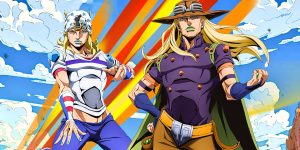
At the center of this dust-swept pilgrimage is perhaps the most nuanced, morally complex duo ever penned in manga history. Johnny Joestar is an inversion of every traditional JoJo archetype before him. Unlike the noble gentleman Jonathan or the indomitable Jotaro, Johnny begins his story as a broken shell: a former prodigy jockey paralyzed from the waist down following an act of senseless arrogance, stripped of his privilege, his family, and his self-worth.
Johnny is not motivated by righteousness. His eyes burn with what Araki famously terms “dark determination”—an unrelenting, sometimes frightening willingness to sacrifice morality, allies, and enemies alike for the selfish, desperate hope of walking again. When he witnesses the charismatic, flamboyant Neapolitan royal executioner Gyro Zeppeli deploy the mysterious art of the Spin—causing his paralyzed legs to momentarily twitch—Johnny’s destiny crystallizes. He clings to Gyro not as a heroic savior, but as a lifeline back to existence.
The Philosophy of the Spin
Their bond becomes the emotional bedrock of the entire narrative. Where Johnny is sullen, calculated, and raw, Gyro is whimsical yet deeply scarred by the political burdens of his homeland’s monarchy. Their campfire conversations about bad jokes, opera glasses, and Italian cuisine provide essential human levity amidst horrific Stand skirmishes. As Gyro mentors Johnny in the ancient, rotational physics of the Spin—a refined evolution of Hamon utilizing the Golden Ratio of the universe—their Stand evolutions mirror their psychological growth. Tusk and Ball Breaker are not just weapons; they are visual manifestations of mathematical precision, personal redemption, and existential transcendence.
The Sacred and the Stand: Golden Rectangles and Dimensional Warfare
From a lore perspective, Steel Ball Run completely revitalizes the mechanics of Stands. By stepping away from the meteorite arrow lore of the original continuity, Araki introduces the Saint’s Corpse and the mysterious “Devil’s Palm” geological phenomena as conduits for Stand awakening. This paradigm shift grounds the combat in a blend of historical mysticism and abstract theoretical physics.
The battles in Part 7 are universally considered the most dynamic and atmospheric in the canon. Clashes like the tense, snow-covered standoff against Ringo Roadagain’s six-second time-rewinding Mandom establish a masculine, almost existential philosophy about dueling that elevated the franchise’s storytelling into high art. Later, as Johnny unravels the secrets of Tusk ACT 4 and confronts President Funny Valentine’s dimension-traversing Dirty Deeds Done Dirt Cheap (D4C), the narrative scale ascends into sheer multiversal terror. Adapting these visually abstract, emotionally exhausting skirmishes requires a production studio firing on all creative cylinders.
The David Production Dilemma: The Equestrian Hurdle and Visual Ambition
The Terrifying Reality of 2D Equine Animation
If the thematic depth of Steel Ball Run is a dream for anime fans, its production logistics are an animator’s nightmare. The central reason an official announcement has lingered in developmental limbo is simple: horses. In the animation industry, horses are universally recognized as one of the most grueling, time-consuming, and anatomically demanding subjects to illustrate in hand-drawn 2D. A single quadruped galloping in perspective requires immense draftsmanship, precise weight shifting, and fluid anatomical muscle deformation.
Now multiply that single horse by dozens of racers charging through dust storms, rushing across torrential rivers, and weaving between dimensional rifts over the course of roughly 36 to 48 episodes. David Production, renowned for its saturated color shifts, stylistic onomatopoeia, and reverence for Araki’s ink work, faces an unprecedented crossroad:
- The Hybrid Route: Utilizing sophisticated cel-shaded 3D CGI models for horse movement in wide shots, blended seamlessly with hand-drawn 2D close-ups for jockey expressions and combat impacts (reminiscent of the technology employed in modern high-budget mecha and dynamic action productions).
- A Extended Production Runway: Allowing a prolonged pre-production schedule to train animators and assemble an all-star bullpen of freelance action directors, ensuring that Araki’s iconic cross-hatching and Western grit are fully preserved on screen.
Fan wariness regarding subpar CGI in anime adaptations is well-documented, but David Production has earned substantial goodwill over six parts. How the studio solves the technical equation of the Steel Ball Run race will likely define the aesthetic trajectory of anime adaptations for the rest of the decade.
The Next Frontier Awaits
The enduring buzz surrounding the Steel Ball Run anime is a testament to the cultural monument Hirohiko Araki forged when he dared to reimagine his life’s work in the dust of the American frontier. It is a story about the fragile nature of miracles, the heavy price of national ambition, and the profound intimacy forged between two wanderers riding toward their own mortality.
Whether David Production delivers our first official teaser tomorrow or two years from now, one thing remains immutable: the race has already begun in the hearts of millions of fans worldwide. As the anime industry continues to mature and tackle ever-more ambitious literary works, Steel Ball Run stands as the ultimate golden trophy at the finish line.
How do you think David Production should tackle the equestrian animation challenges of Part 7? Are you holding out hope for a full 2D spectacle, or is high-end hybrid CGI the only realistic path forward? Sound off with your predictions in the comments below!