


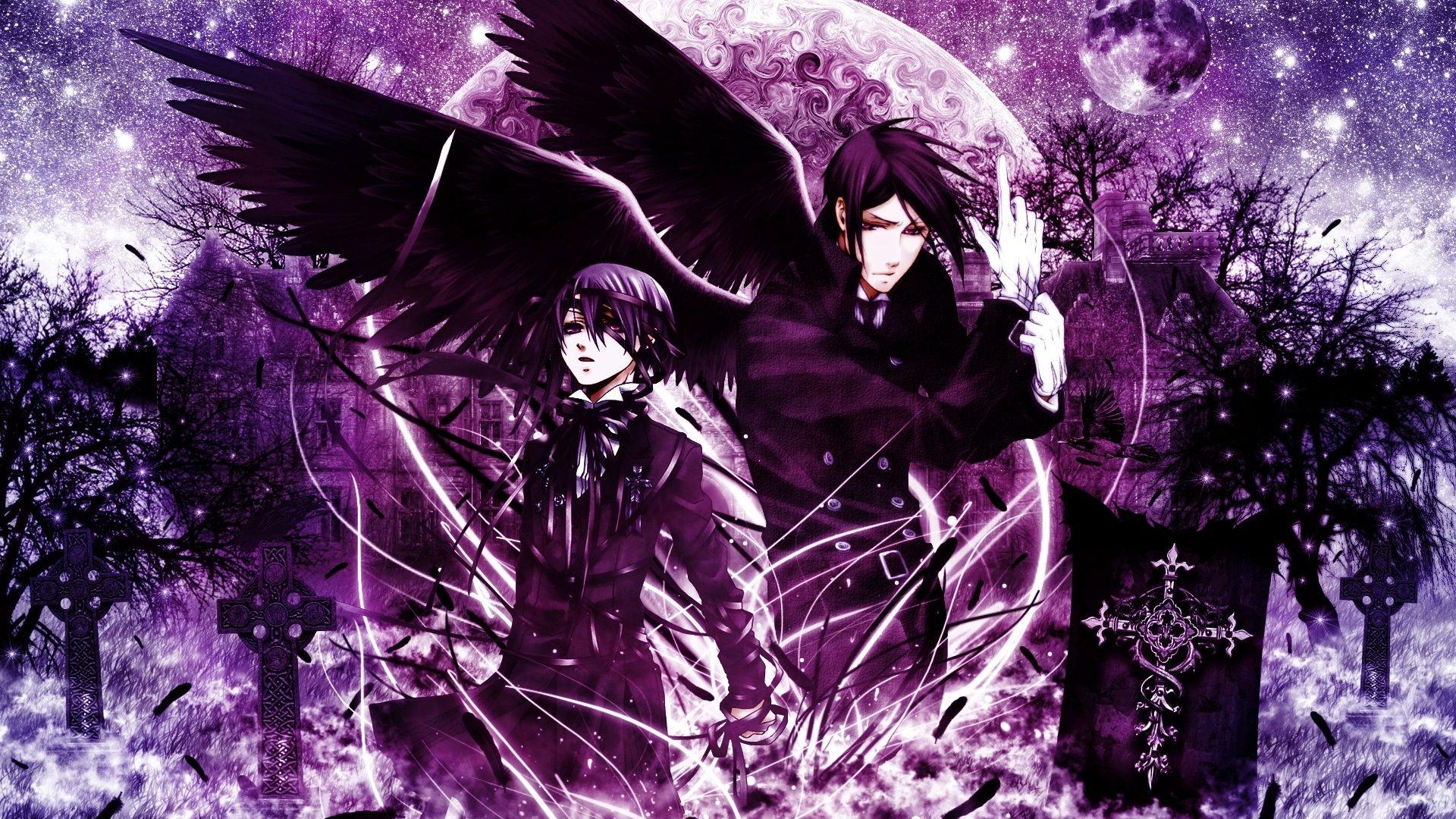
For more than a decade and a half, Yana Toboso’s Black Butler (Kuroshitsuji) has walked a razor-thin tightrope between decadent Victorian melodrama, dry British satire, and bone-chilling supernatural horror. Just as the global anime fandom caught its breath following the sun-drenched, cricket-laden intrigue of the Public School Arc, Aniplex and studio CloverWorks delivered the thunderbolt fans had been whispering about for months: the Emerald Witch Arc (Midori no Majo-hen) is officially on the horizon. This confirmation is not merely another tick on the franchise’s checklist; it represents a momentous shift into what manga purists universally acknowledge as the most harrowing, conceptually ambitious, and emotionally devastating storyline in the entire Phantomhive canon.
By transplanting the Queen’s Watchdog and his diabolical butler out of the smog of London and thrusting them into the primeval, cursed canopy of nineteenth-century Germany, the Emerald Witch Arc fundamentally recalibrates the narrative stakes. Out with the silver trays and tailored scholastic waistcoats; in with folkloric plagues, mythological lycanthropes, and the sickening encroaching shadow of industrial-era military atrocities.
Beyond the Boarding School: Stepping Into the Cursed Werewolf Forest
The transition from Weston College to the uncharted wilderness of southern Germany is an intentional shock to the system. Sent on an urgent, highly confidential errand by Queen Victoria, Ciel Phantomhive and Sebastian Michaelis are tasked with investigating a string of mysterious, gruesome deaths occurring near the German border. The culprit, according to local whisper networks and terrified peasantry, is not human: it is the legendary Werwolf-Wald (the Werewolves’ Forest), an enchanted, forbidden expanse where any outsider who trespasses is struck down by an invisible, flesh-rotting curse known as the “Witches’ Miasma.”
Where previous arcs found safety nets in the aristocratic decorum of Victorian England, the cursed village of Wolfsschlucht strips Ciel of his social armor. Here, the Phantomhive name carries zero diplomatic leverage. The setting functions almost like a Grimm Brothers fairy tale corrupted from the inside out, leaning heavily into oppressive folk horror. Cloaked in suffocating fog, ancient stone shrines, and the terrifying howling of lupine guardians, the arc immediately establishes an atmosphere of claustrophobic dread that distinguishes itself from anything the anime has adapted since Book of Circus.
Sieglinde Sullivan and the Deconstruction of Gothic Witchcraft
At the center of this isolated nightmare sits one of Toboso’s finest creations: Sieglinde Sullivan, the titular Emerald Witch. Crowned as the genius leader of the village despite being a tiny, physically disabled child whose feet were ritualistically bound to prevent her escape, Sieglinde is a tour-de-force of character writing. Flanked by her monolithic, brooding butler Wolfram Gelglitz—who serves as a fascinating, violently protective human foil to Sebastian’s calculated demonic servitude—Sieglinde commands ancient spells, or so she genuinely believes.
The Tragic Collision of Superstition and Modern Science
What makes the Emerald Witch Arc such an electrifying piece of speculative historical fiction is the way Toboso deconstructs classic supernatural tropes. Without venturing into outright spoiler territory for anime-only viewers, the narrative uses the veil of medieval witchcraft to explore a far uglier, strictly human evil. The arc functions as a harrowing allegory for the birth of chemical warfare and mustard gas development that would eventually define the trenches of World War I.
Sieglinde’s tragedy is not that she is an evil sorceress, but that she is a victim of weaponized isolation—an intellectual prodigy whose innocence has been engineered into a lethal geopolitical weapon. Watching Ciel, an adolescent who has also traded his childhood for systemic power, navigate Sieglinde’s brilliant yet deeply sheltered psyche provides some of the most emotionally complex character interplay in modern shonen/seinen crossover history.
The Breaking of Ciel Phantomhive: Demonic Contracts and Raw Psychological Trauma
While the broader mystery involves espionage and military conspiracies, the true core of the Emerald Witch Arc is the absolute, unsparing psychological collapse of Ciel Phantomhive. For years, viewers have watched Ciel maintain his cold, aristocratic facade, barking orders at Sebastian while treating his demonic pact as an absolute guarantee of victory. In the cursed forest, that illusion violently shatters.
Exposed to the concentrated horrors of the forest’s miasma, Ciel suffers a catastrophic mental breakdown, regressing into a catatonic, terrified state that dredges up the unspeakable traumas of the occult cult that originally summoned Sebastian. This regression transforms the dynamic between master and servant from a dark buddy-comedy into a sheer exercise in predatory terror:
- The Precarity of the Contract: Sebastian Michaelis is not an adoptive father or a guardian angel; he is a starved apex predator waiting for a breach of contract. When Ciel loses his will to fight and avow his revenge, Sebastian ceases to be protective, preparing to casually devour Ciel’s soul on the spot as forfeit.
- The Servants Unleashed: With their young master incapacitated and their head butler’s loyalty fraying at the edges, the Phantomhive household staff—Bardroy, Mey-Rin, and Finny—are forced to abandon their bumbling comedic personas. The arc serves as a phenomenal showcase for their lethal military and experimental backgrounds, delivering jaw-dropping tactical combat sequences.
CloverWorks’ Dark Renaissance: Aesthetic Brilliance and Production Expectations
The continuation of CloverWorks at the helm of the production is the best news the franchise could have received. While the Public School Arc proved the studio could render pristine Edwardian lighting, pastel cricket fields, and immaculate teacups, the Emerald Witch Arc will challenge their compositing and action directors on an entirely different level.
The aesthetic demands here are ferocious. From rendering the grotesque, reality-warping panic attacks Ciel suffers within his own mind, to capturing the kinetic, explosive gun battles featuring heavy steam locomotives, chemical canisters, and werewolf sieges, CloverWorks has a golden opportunity to cement this season as a visual masterpiece. If the teaser imagery and key visuals are any indicator, the studio is leaning into high-contrast chiaroscuro lighting, muddy autumnal color palettes, and visceral, unnerving creature designs that will push the envelope of television anime horror.
The Verdict: An Essential Turning Point for the Franchise
The confirmation of the Emerald Witch Arc signals that the modern renaissance of Black Butler is far from a fleeting nostalgia trip. It proves that the creative team is committed to adapting Toboso’s narrative with uncompromising fidelity, bypassing the filler-heavy missteps of the late 2000s in favor of razor-sharp, prestige storytelling. By colliding gothic folklore with the industrial cruelty of early 20th-century warfare, this upcoming season promises to deliver not only breathless action, but a piercing meditation on the cost of stolen innocence.
Prepare your silver cutlery and secure your gas masks: the Watchdog is stepping into the forest, and neither he nor Sebastian will emerge from the green haze untainted.
What are your absolute must-see moments from the Emerald Witch Arc? Are you excited to see CloverWorks tackle the full-throttle combat of the Phantomhive staff, or are you bracing yourself for Ciel’s darkest psychological chapter yet? Let us know your theories down in the comments below!