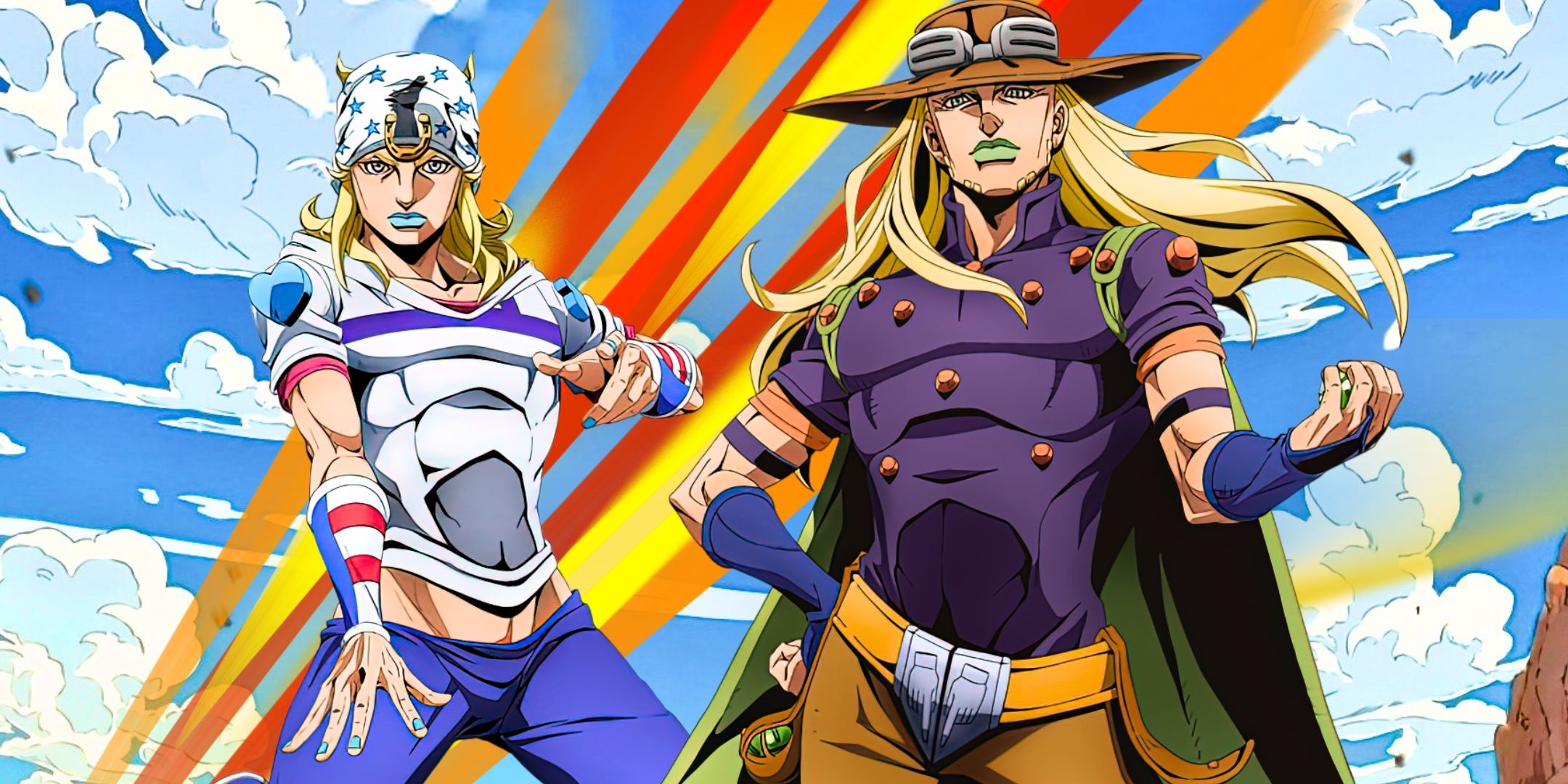
Ever since Jolyne Cujoh’s fated standoff under the blinding Florida sun brought David Production’s decade-long adaptation of the original Joestar lineage to an emotional crescendo, the anime industry has held its collective breath. We now stand at the threshold of the medium’s ultimate white whale: an adaptation of JoJo’s Bizarre Adventure: Part 7 – Steel Ball Run. To categorize this sentiment as mere seasonal hype is a gross understatement. In the annals of modern sequential art, Hirohiko Araki’s cross-country equestrian epic frequently stands shoulder-to-shoulder with titans like Berserk and Vagabond at the pinnacle of manga storytelling. The leap from the punchy, pop-art urbanity of Stone Ocean to the dust-choked, grease-stained American frontier of 1890 represents a seismic evolution—not just for Araki’s multi-generational mythos, but for the studio charged with translating it to screen.
The Seinen Shift: Araki’s Masterclass in Narrative Rebirth
To understand the immense gravity of the Steel Ball Run discourse, one must understand its historic shift in publication. When the manga debuted in 2004 within the pages of Weekly Shonen Jump, it initially carried no “JoJo” subtitle, masquerading instead as a prestige historical sports drama before officially migrating to the monthly seinen imprint Ultra Jump in 2005. That editorial realignment fundamentally liberated Araki. Unshackled from the rapid pacing and demographic constraints of youth-oriented weekly serialization, he slowed his cadence, heightened his anatomical draftsmanship, and welcomed an unprecedented degree of psychological realism into the fold.
The setting—a punishing 6,000-kilometer horseback race stretching from San Diego Beach to New York City—serves as far more than an energetic backdrop. It is a grueling existential gauntlet. Araki stripped away the traditional vampire lore and familiar bloodlines, wiping the slate clean to present an alternate 19th-century frontier dictated by cutthroat capitalism, religious mysticism, and raw human ambition. The result transformed JoJo from high-camp, muscle-bound theatricality into an evocative, prestige road movie where character growth is hard-won, and every fireside respite carries heavy philosophical consequence.
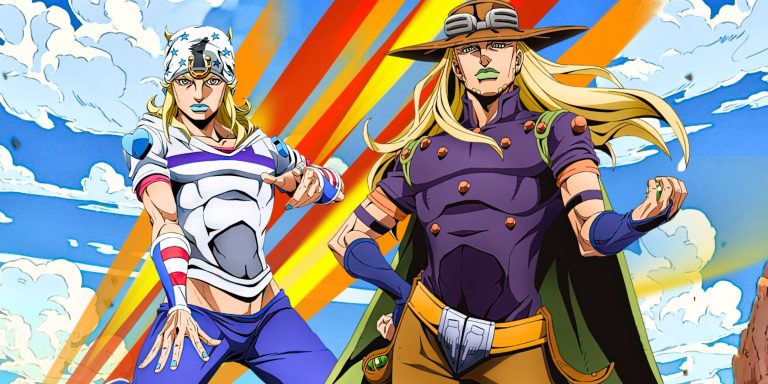
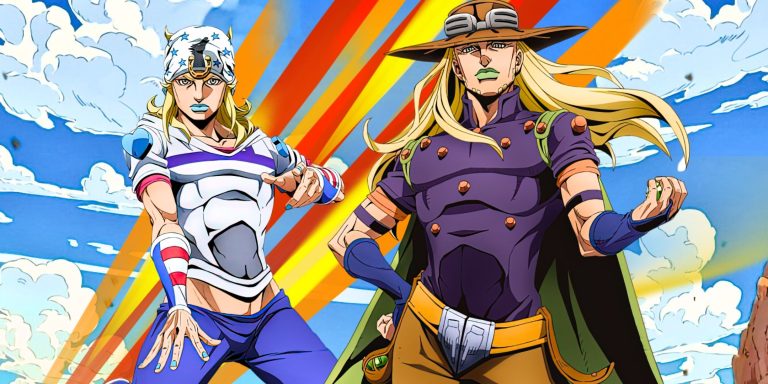
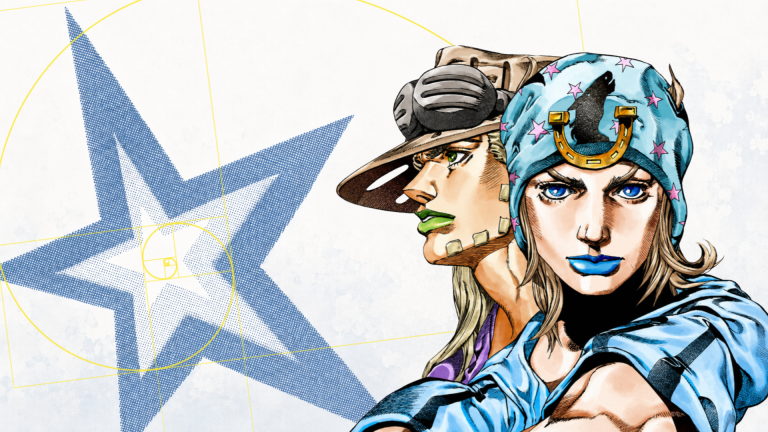
Johnny Joestar and Gyro Zeppeli: Deconstructing the JoJo Dynamic
The Dark Determination of Johnny Joestar
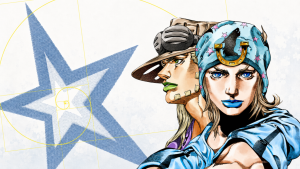
At the center of Steel Ball Run lies the most morally intricate protagonist Araki has ever conceived. Johnny Joestar stands in stark, deliberate contrast to the valiant nobility of Jonathan or the unyielding moral anchors of Jotaro and Josuke. Paralyzed from the waist down following an act of youthful arrogance, Johnny enters the race not to rescue a loved one, defeat an ancient evil, or defend justice. He is motivated by a desperate, selfish urge to reclaim personal agency, bodily autonomy, and his lost sense of self.
Araki frequently frames Johnny with a terrifying visual motif: eyes burning with “dark determination.” He is a protagonist fully prepared to kill, manipulate, and compromise his soul to achieve his goals. His Stand, Tusk, perfectly manifests this painful evolution. Starting as an infantile, nail-shooting entity in Act 1 and mutating across the narrative into the interdimensional, physics-shattering juggernaut of Act 4, Johnny’s combat abilities mature alongside his agonizing spiritual rehabilitation.
Gyro Zeppeli and the Mastery of the Spin
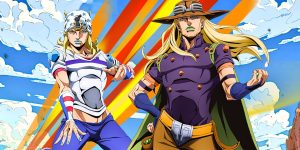
Johnny’s calculating desperation finds its counterweight in Gyro Zeppeli, a disgraced Neapolitan royal executioner whose flippant humor, custom grill, and eccentric operatic compositions mask a heart burdened by duty. Gyro rides to secure international prestige and state amnesty for a condemned child wrongfully awaiting death back home. Unlike typical shonen mentor-pupil frameworks, the camaraderie between Johnny and Gyro is built on mutual vulnerability and intellectual tradecraft.
Central to Gyro’s philosophy is the Spin—a mystical martial tradition rooted in the mathematical harmony of the Golden Ratio and the Fibonacci sequence. By manipulating kinetic energy through steel spheres, Araki elevated combat from brute supernatural Stand clashes to a mind-bending study of geometry, anatomy, and rotational physics. The dynamic between Johnny’s cold calculation and Gyro’s stoic code of honor forms the beating heart of the series, providing raw emotional grounding against the story’s increasingly surreal landscape.
The Equestrian Crucible: David Production’s Technical Everest
Step inside any animation studio in Tokyo, and artists will readily confirm an open secret: quadrupeds are an animator’s ultimate trial. Drawing horses in motion—demanding precise skeletal structures, flowing manes, variable perspective angles, and dense muscle contraction—is notoriously brutal on traditional 2D animation pipelines. In Steel Ball Run, horses are not secondary transport; they are the primary combat stage.
Every phase of the trans-American sprint requires accurate kinetic depiction: hooves tearing through dirt, tight pack maneuvers, exhaustion, physical injury, and high-speed jousts under the influence of enemy Stands. For David Production, relying entirely on hand-drawn 2D keyframes across an estimated four-cour run would be financially and logistically prohibitive. The industry standard points inevitably toward a hybrid CGI model.
The studio faces the monumental task of harmonizing cel-shaded 3D horse assets with the expressive, hand-drawn character work fans demand. As studios like Studio Orange (Trigun Stampede) and MAPPA (Attack on Titan) have shown, 3D integration can yield stunning, dynamic camera work when given adequate render time and visionary direction. However, following community critiques surrounding the release cadence of Stone Ocean, David Production simply cannot afford a compromised presentation. To honor the expressive weight of Araki’s inked hatching and dramatic cross-hatching, Part 7 will require unprecedented pre-production lead time, top-tier compositing, and perhaps an end to compressed streaming release models in favor of a celebrated weekly broadcast event.
Manifest Destiny and the Corpse of the Saint
The narrative momentum behind Steel Ball Run is propelled by one of the most compelling antagonists in anime history: President Funny Valentine. Armed with the reality-hopping Stand Dirty Deeds Done Dirt Cheap (D4C), Valentine does not crave villainous conquest. He is a steadfast patriot who sincerely believes that by assembling the sacred relics of the Saint’s Corpse scattered across the American continent, he will guarantee prosperity for his nation—even if it casts eternal misfortune upon the rest of the globe.
This dynamic reframes the battle from a simplistic struggle between good and evil into a clash of irreconcilable worldviews. Araki takes Catholic iconography, American folklore, and classical Western tropes, weaving them into a grand inquiry into sacrifice, fate, and structural power. The race shifts from an eccentric athletic contest into a sacred pilgrimage, raising the ideological stakes to heights the series has never matched since.
The Horizon Line: Why Part 7 Is the Ultimate Frontier
Adapting JoJo’s Bizarre Adventure: Steel Ball Run is not just another production milestone on David Production’s calendar; it is the definitive crucible of their identity as an animation house. Successfully translating Araki’s densest, visually demanding masterpiece will require extraordinary technical courage, unmatched pacing discipline, and respect for its mature narrative shift. If David Production can capture the sweeping vistas, the kinetic fury of the Spin, and the tender bond between Johnny and Gyro, this adaptation will not merely dominate social feeds—it will stand as a landmark achievement in modern television animation.
What are your expectations for David Production’s Part 7 adaptation? Can hybrid CGI conquer the equestrian challenge, or should the studio pursue traditional keyframes at all costs? Let your voice be heard in the comments below, and keep it locked to Wibux.com for all incoming JoJo updates!