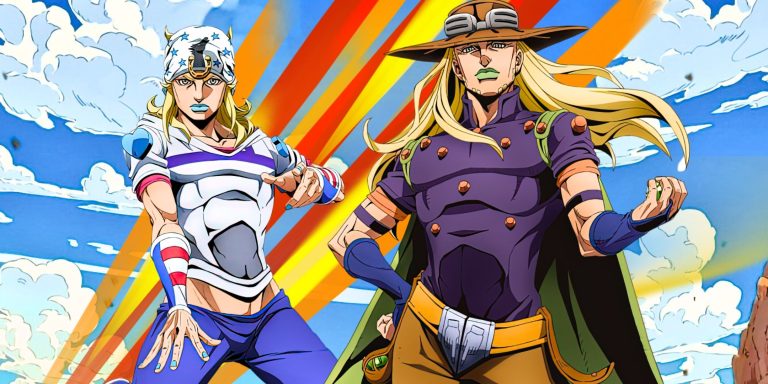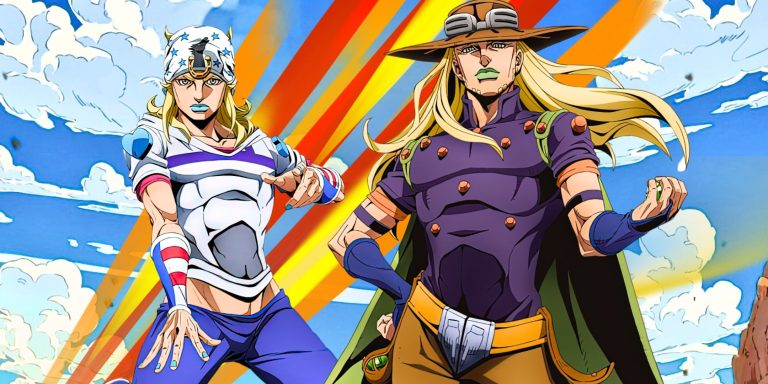



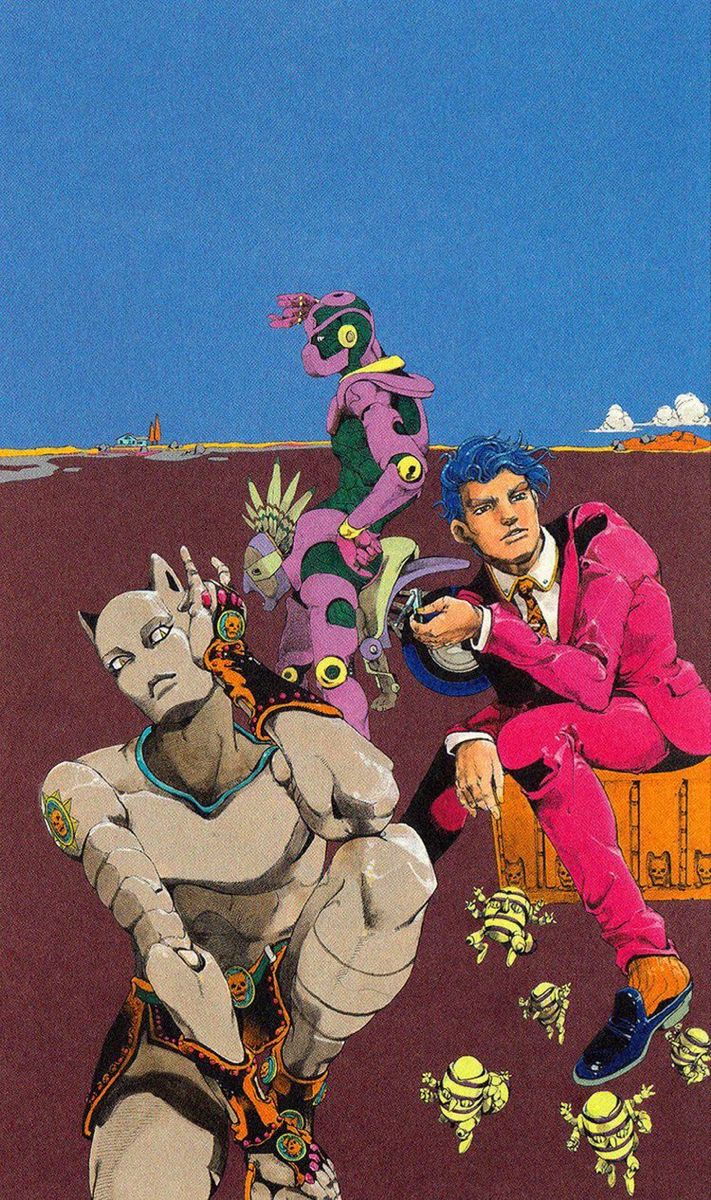
When you think about crossovers between anime culture and traditional Japanese performing arts, your brain probably short-circuits. But Hirohiko Araki — the legendary manga artist behind JoJo’s Bizarre Adventure — just proved that the boundary between pop culture and classical art doesn’t exist. The Hakataza theater in Fukuoka, the largest kabuki venue on the entire island of Kyushu, now displays stage curtains designed by Araki himself, and fans cannot stop talking about it.
From Stand Users to Kabuki Legends
The new curtains feature portraits of two iconic kabuki actors: Onoe Kikugorō VIII (born Kazuyasu Terajima) and his son Onoe Kikunosuke VI (born Kazufumi Terajima). This isn’t random fan art — the timing is deeply significant. The Hakataza is using these curtains during their Grand Kabuki performances running from June 2 to June 22, 2026, to commemorate a rare generational milestone: both actors are assuming new legendary stage names in a simultaneous name succession ceremony.
Onoe Kikugorō VIII previously performed under the name Onoe Kikunosuke V before inheriting his father’s prestigious stage name. Meanwhile, his eldest son stepped into his father’s former identity, becoming Onoe Kikunosuke VI. This kind of dual name succession is extraordinarily rare in the kabuki world — it’s the kind of event that demands an artist of Araki’s caliber to mark it properly.
Why Araki? The Connection Makes Perfect Sense
At first glance, asking the creator of JoJo’s Bizarre Adventure to design kabuki curtains might seem like an odd pairing. But Araki has deep respect for Japanese artistic traditions. His manga is famous for its references to Renaissance sculpture, Italian fashion houses, and classic rock music. The JoJo series itself has always been a bridge between East and West, between classical art and modern storytelling.
Kabuki theater, with its dramatic poses, exaggerated expressions, and larger-than-life character portrayals, shares an aesthetic DNA with JoJo’s iconic posing style. Many fans have pointed out over the years that JoJo characters’ signature stances feel almost kabuki-esque. Now, that connection has been made literal — on actual kabuki stage curtains.
The Hakataza: A Stage Worthy of JoJo
The Hakataza theater in Fukuoka holds a special place in Japanese cultural history. As the largest kabuki theater on Kyushu, it has hosted centuries of performances, from classical kanjincho dramas to modern kabuki productions. Choosing this venue for Araki’s artwork signals something important: the Japanese cultural establishment is embracing manga artists as legitimate contributors to the nation’s artistic heritage.
The Grand Kabuki June performances are among the most prestigious events in the kabuki calendar. Having Araki’s curtains displayed during this run elevates both the artist and the manga medium he represents. It’s a statement that JoJo’s Bizarre Adventure is not just entertainment — it’s art worthy of sharing space with one of Japan’s oldest performing traditions.
Fans Are Losing Their Minds
The announcement, shared through JoJo’s Bizarre Adventure’s official X (Twitter) account alongside coverage from Famitsu.com and the Hakata Kabukiza Theater’s website, sent waves across social media. Fans are calling it the most unexpected and beautiful cultural crossover of 2026.
Some have joked that Araki’s next Stand ability will be “Kabuki Curtain” — a reality-warping power that transforms any stage into a theatrical masterpiece. Others are hoping this collaboration leads to something even bigger: a JoJo kabuki performance, or perhaps a full anime-manga-kabuki triple crossover event.
Given that JoJo’s Bizarre Adventure has already conquered anime, live-action film, video games, fashion collaborations, and now traditional kabuki theater — honestly, nothing would surprise us anymore.
What Does This Mean for Manga and Traditional Art?
This collaboration represents something larger than a single set of curtains. It’s part of a growing trend of manga and anime creators being recognized by Japan’s traditional cultural institutions. When a manga artist who started publishing in 1987 is now creating work for a centuries-old kabuki stage, it signals that the cultural hierarchy is shifting. Manga is no longer seen as separate from “serious” Japanese art — it IS Japanese art.
Araki’s work on the Hakataza curtains will be on display through June 22, 2026. If you’re in Japan, it’s absolutely worth a trip to Fukuoka. If not, at least we have the images circulating online — and honestly, the fact that JoJo and kabuki now share the same visual language is worth celebrating on its own.
What Do You Think?
Should manga creators be doing more collaborations with traditional Japanese arts? Would you watch a full JoJo kabuki performance if it ever happened? Drop your thoughts in the comments — this crossover has opened a door that we really hope someone walks through.
Related Articles:
- Steel Ball Run Resmi Diadaptasi Jadi Anime: Harapan dan Kekhawatiran Penggemar JoJo
- Crunchyroll Anime Expo 2026 Lineup — JoJo Panels Included
- David Production: Studio Legendaris yang Menghidupkan JoJo