



When a spiky-haired boy with a monkey tail first met a teenage inventor in the bamboo groves of Mount Paozu in late 1984, few could have predicted that Akira Toriyama was laying the foundation for a global cultural monolith. Exactly forty years later, the premiere of Dragon Ball Daima arrives not merely as an anniversary celebration, but as an emotionally charged monument. Following Toriyama’s untimely passing in March 2024, Daima serves as the master’s final gift to the world—a project where he was involved far beyond his customary advisory capacity, deeply immersing himself in character design, narrative architecture, and the microscopic eccentricities of worldbuilding.
For years, the franchise has ascended into a stratosphere of cosmic godhood, multiversal tournaments, and ever-escalating chromatic transformations. Yet, Dragon Ball Daima deliberately hits the brakes on infinite power creep. By plunging Goku and his allies into unfamiliar territory—both physically diminished and geographically marooned—the series resurrects the tactile, whimsical spirit of martial arts adventure that defined the original run. The result is a premier episode that balances solemn retrospective reverence with an electric sense of discovery.
Toriyama’s Final Vision: A Deeply Personal Swansong
What immediately distinguishes Dragon Ball Daima from modern contemporaries like Dragon Ball Super is the palpable presence of Toriyama’s idiosyncratic authorial voice. While prior projects frequently relied on loose conceptual outlines subsequently expanded by screenwriters or manga successor Toyotarou, Daima features Toriyama’s fingerprints across every narrative seam. From the vehicle designs steeped in retro-futurism to the idiosyncratic biology of brand-new alien races, the show vibrates with the playful surrealism of his golden era.
The premiere spends a calculated, confident amount of time recapping the Majin Buu saga not through nostalgia alone, but through the observational lenses of its brand-new antagonists. This framing re-anchors the stakes. Toriyama was famously self-aware about his sprawling narrative, and watching new characters dissect the absurdities of Earth’s greatest battles grounds decades of lore in a refreshing, comedic realism. It reminds us that Toriyama was always a gag-manga artist at heart—a genius who understood that true tension exists only when balanced by human warmth and unpretentious levity.
Unlocking the Gates of Makai: Deep Lore Meets Dark Fantasy
For decades, the Demon Realm (Ankoku Makai) existed primarily as a tantalizing footnote within canonical lore—a shadowy backdrop used to justify Dabura’s lineage, or an asset mined extensively by spin-off media like Super Dragon Ball Heroes and the Xenoverse gaming franchise. In Daima, Toriyama finally pulls back the curtain on this mysterious dimension, integrating it fully into official canon with deliberate, expansive worldbuilding.
The Shadow Monarchy: Gomah, Degesu, and Dr. Arinsu
The premiere wastes no time introducing the new power brokers of the Demon Realm: King Gomah, the nervous yet opportunistic successor to the fallen Dabura; Degesu, the sly younger brother of Supreme Kai Shin; and Dr. Arinsu, a calculating scientist whose designs clearly foreshadow deeper cosmological disruptions. Their dynamic is instantly classic Toriyama—petty, neurotic, yet uniquely dangerous. Rather than relying on world-shattering brute force, their antagonism stems from political paranoia, seizing the cosmic vacuum left by Babidi’s failure on Earth.
Re-engineering the Dragon Balls and Namekian Heritage
Perhaps the most thrilling revelation for franchise historians is the expansion of Namekian mythos within the Demon Realm. The premiere establishes that Namekians originated in this shadowy plane before migrating elsewhere, introducing Neva—an ancient, wizened Namekian capable of manipulating the Dragon Balls with alarming efficiency. Furthermore, the introduction of the Tamagami, armored demonic guardians who protect the Demon Realm’s localized set of dragon orbs, completely reframes the mechanics of wish-granting. It is a masterclass in organic retconning, giving long-dormant lore fresh vitality without violating existing canon.
Subverting the GT Stigma: Tactical Combat and the Joy of “Mini”
When the promotional materials for Daima first revealed that Goku and the Z-Fighters would be transformed into children, internet fandom erupted into immediate, anxious comparisons to 1996’s Dragon Ball GT. However, the premiere decisively shatters these superficial parallels. Where GT used the de-aging of Goku as an isolated, brooding plot device that frequently sidelined the supporting cast, Daima turns the transformation into a collective, comedic crisis that reshapes the group dynamic.
More importantly, miniaturizing Goku solves the existential storytelling crisis of modern Dragon Ball: how do you create genuine peril for a protagonist who possesses divine Ultra Instinct? By stripping Goku of his hyper-developed reach, adult mass, and familiar physical equilibrium, the series brilliantly recalibrates combat fundamentals. The return of the iconic Nyoibo (Power Pole) is not mere fan-service; it is an absolute necessity. Goku must once again rely on leverage, spatial awareness, and raw martial ingenuity over catastrophic energy blasts, instantly recapturing the kinetic joy that made the 21st and 22nd World Martial Arts Tournaments legendary.
Technical Brilliance: Toei Animation’s Dream Team Assembled
Visually, the Daima premiere is nothing short of breathtaking, establishing a gold-standard benchmark for modern television anime. Under the joint direction of Yoshitaka Yashima and Aya Komaki—the visionary talent behind the critically acclaimed high points of the One Piece Wano Country arc—the production exhibits a standard of visual polish rarely sustained in serialized animation.
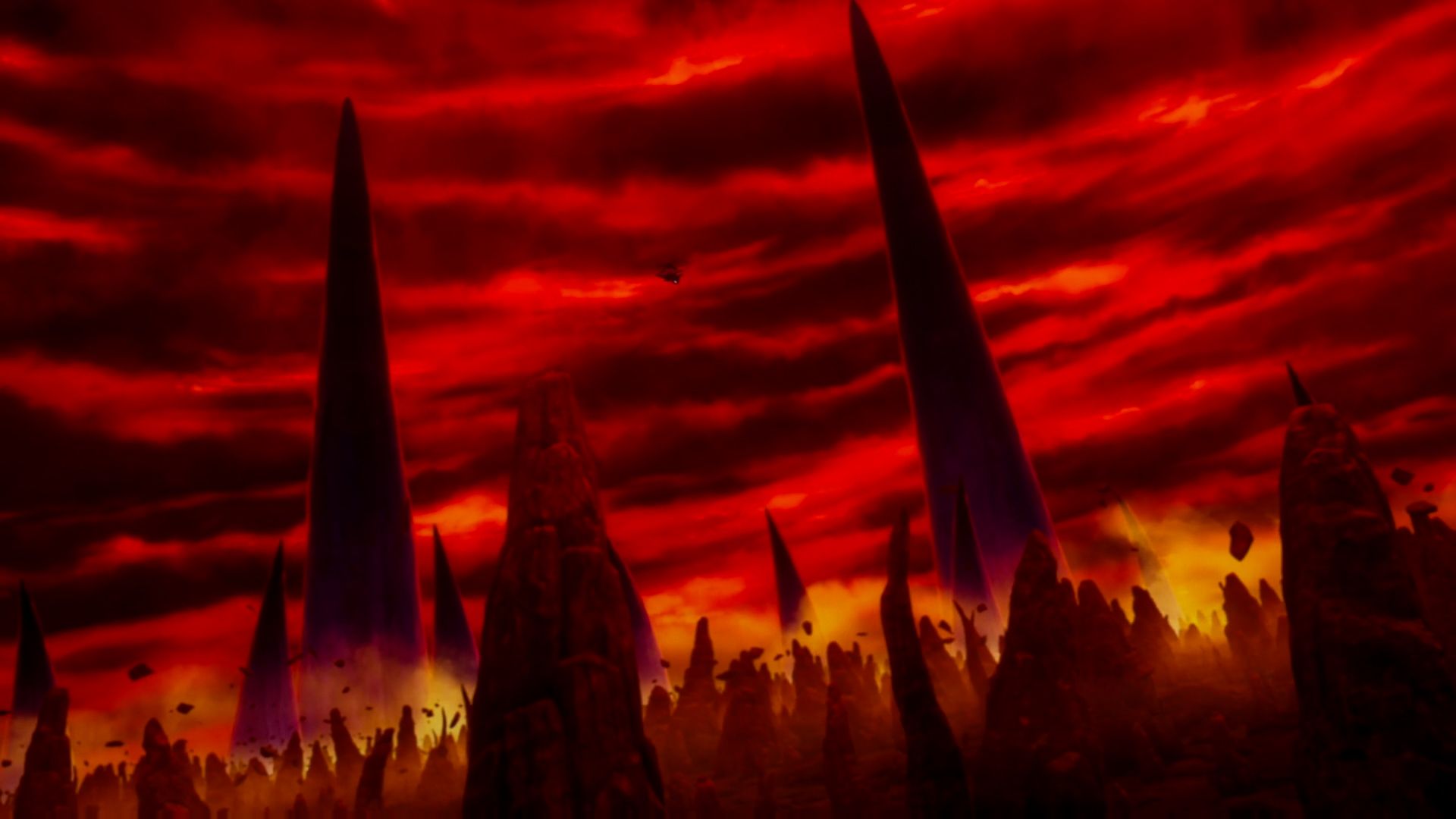
Veteran character designer Katsuyoshi Nakatsuru, alongside modern visionary Chikashi Kubota (whose work on Dragon Ball Super: Super Hero redefined the franchise’s visual potential), has created a hybrid style that feels revolutionary. The line art favors organic, rounded contours reminiscent of Toriyama’s late-1980s color spreads, entirely jettisoning the hyper-glossy, plastic textures that plagued the early runs of Dragon Ball Super. The environmental art of the Demon Realm—drenched in ethereal purples, alien fungal landscapes, and oppressive spires—evokes classic dark fantasy, proving that Toei Animation has treated this production with the prestige of a theatrical feature.
The Eternal Legacy of Akira Toriyama
It is impossible to watch the premiere of Dragon Ball Daima without feeling an acute pang of sorrow, paired immediately with immense gratitude. Akira Toriyama reshaped the landscape of global pop culture, inspiring generations of creators from Shonen Jump icons to Hollywood filmmakers. Daima does not read like an author running out of ideas; it reads like an artist reveling in the pure, boundless freedom of his imagination one final time.
By shifting focus away from god-tier spectacles and grounding Goku’s journey in curious exploration, delightful comedy, and authentic martial arts, the series reminds us precisely why we fell in love with this universe in the first place. Daima is playful, ambitious, visually stellar, and emotionally profound. As Goku steps through the dimensional rift into the unknown, he carries four decades of history with him—and Akira Toriyama’s spirit continues to lead the adventure.
What did you think of the Dragon Ball Daima premiere? Do you think the Demon Realm lore finally fixes long-standing mysteries of the franchise, and how do you feel about the return of the Power Pole? Sound off in the comments below, and stay tuned to Wibux.com for our weekly episode breakdowns and deep-dive lore essays!



One thought on “Dragon Ball Daima Premiere Breakdown: Akira Toriyama’s Final Masterpiece Takes Goku to the Mysterious Demon Realm”