

When Sui Ishida brought Tokyo Ghoul:re to its breathless, exhausted conclusion in 2018, the mangaka walked away visibly bruised by the grueling machinery of weekly serialization. In candid post-mortems, Ishida confessed to losing his sense of taste, suffering chronic burnout, and feeling fundamentally alienated from his own magnum opus. So, when he quietly inaugurated Choujin X on Shueisha’s Tonari no Young Jump in 2021—working entirely on his own non-traditional schedule—it signaled something far more potent than a simple career continuation. It was an act of reclamation.
Now, with Choujin X crossing deep narrative thresholds and amassing critical acclaim worldwide, the anime industry finds itself abuzz with the inevitable: an anime adaptation is no longer a question of if, but when and how. For a fandom that remembers both the soaring heights and the tragic, butchered trajectory of Studio Pierrot’s Tokyo Ghoul adaptations, the stakes couldn’t be higher. Ishida’s second coming isn’t just another dark fantasy IP waiting for a streaming license; it is an avant-garde subversion of western superhero mythos, steeped in visceral body horror, Kafkaesque psychology, and uninhibited artistic malice.
The Ghost of Ken Kaneki: Parallels, Departures, and Creative Liberation
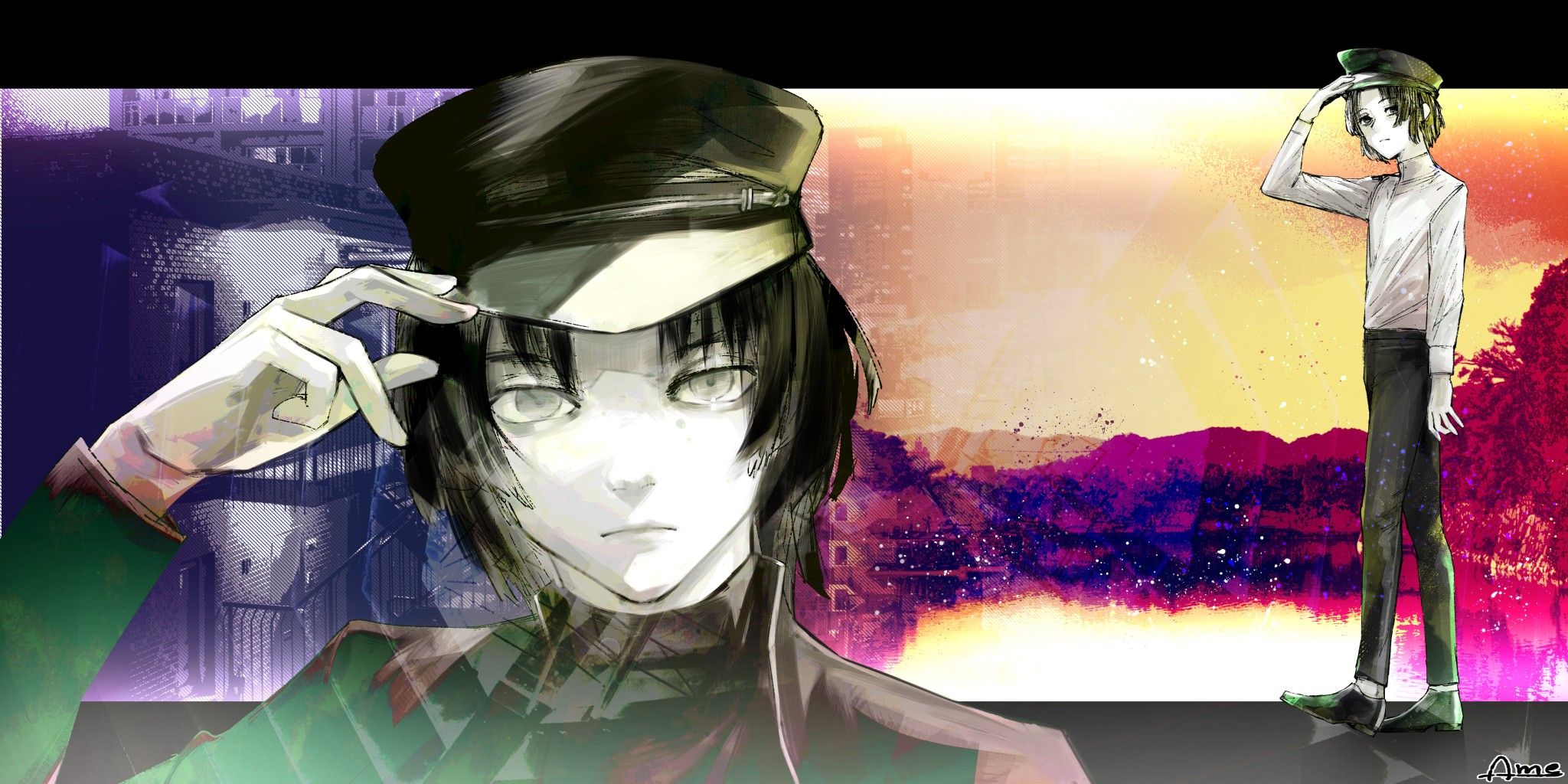
On paper, the core premise of Choujin X tempts shallow comparisons to its predecessor. A quiet, socially withdrawn boy finds his mundane life violently shattered when he injects himself with an illicit syringe to survive a supernatural catastrophe, mutating into an ostracized monster. Yet, reading Tokio Kurohara’s narrative through the lens of Ken Kaneki obscures what makes Choujin X fundamentally distinct: its radical tone and tonal volatility.
Where Tokyo Ghoul was a pitch-black, Shakespearean tragedy doused in grief, urban melancholy, and gothic opera, Choujin X embraces an eccentric, surrealist swagger. Ishida infuses post-war Shokei-era geopolitical grit with absurd deadpan comedy, playful pop art motifs, and manic American superhero deconstruction. Tokio does not turn into a poised, brooding one-eyed ghoul; he transforms into a grotesque, lanky, scarecrow-esque Beast Choujin sporting an oversized vulture skull.
From Western Capes to Eastern Body Horror
The term “Choujin” literally translates to “superhuman”—a deliberate wink at Nietzschean philosophy and golden-age cape comics alike. Yet Ishida strips away the moral binary championed by Western contemporaries like My Hero Academia. Transformations in Choujin X are terrifying, psychosomatic events where a human’s deepest traumas, fixations, and self-loathing calcify into lethal physiological weapons. It is Cronenbergian body horror masquerading as heroism, a conceptual sandbox that demands an anime adaptation capable of pivoting from high-octane battle-shonen momentum to unvarnished, suffocating dread in a single frame.
Tokio and Azuma: Deconstructing the “Sidekick” Complex
At the beating heart of Choujin X lies the relationship between Tokio Kurohara and Azuma Higashi—a masterclass in subverting the archetypal Shonen rivalry. From early childhood, Azuma is the undisputed golden boy: charismatic, physically lethal, justice-obsessed, and morally upright. Tokio, conversely, operates as his willingly subservient shadow, comfortably identifying as the docile “vulture” scavenging the scraps of Azuma’s heroic “lion.”
Their dynamic ruptures when Tokio survives the transformation while Azuma seemingly fails, upending their codependent hierarchy. Ishida explores the rot within their friendship with microscopic precision:
- The Burden of the Savior: Azuma’s pathological hero complex is stripped bare, revealing an ego that requires Tokio’s weakness to validate his own righteousness.
- The Vulture’s Ascension: Tokio’s journey from a spineless sycophant to an autonomous predator forces him to embrace the unsavory reality of his powers—survival through scavenging, isolation, and brutality.
- The Fractured Bond: Their inevitable ideological clash does not stem from simple villainous corruption, but from agonizing psychological displacement. It is an exploration of masculine insecurity and codependency rarely depicted with such naked vulnerability.
Any production team hoping to handle an adaptation must possess an exceptional handle on nuanced vocal direction. Tokio’s journey requires an arc that organically shifts from meek hyperventilation to gravelly, hard-earned maturity, while Azuma’s descent demands an actor capable of masking venomous spite beneath polished chivalry.
Visual Alchemy: Translating Ishida’s Chaotic Ink to Screen
If an anime adaptation of Choujin X fails, it will almost certainly be at the drawing board. Sui Ishida’s illustrative evolution across the run of Choujin X represents an auteur operating without corporate guardrails. His panels are a tempest of scratchy, frantic ink splatters, charcoal-heavy shading, and sudden, breathtaking jumps into hyper-detailed realism or impressionistic watercolor smears.
The Shadow of Studio Pierrot’s Past Failures
The collective anime fandom still suffers collective trauma from Tokyo Ghoul Root A and Tokyo Ghoul:re. Pierrot’s decision to cannibalize hundreds of chapters of intricate psychological maneuvering into hollow, poorly composited slideshows remains one of the medium’s greatest creative tragedies. Choujin X cannot survive an assembly-line production model. Its choreography is loose, jagged, and heavily reliant on spatial distortion and sudden kinetic explosions.
For an adaptation to succeed, Shueisha must entrust the IP to a studio celebrated for giving auteur animators free rein. Science SARU could elevate the manga’s psychedelic, morphing anatomy and surreal tonal shifts; Studio MAPPA’s elite action teams (responsible for the grim kineticism of Chainsaw Man and Jujutsu Kaisen) could render the devastating physical impact of Yamato Mori’s skirmishes; while a studio like Bones could bridge the gap between hyper-stylized character acting and high-tier sakuga battle sequences. Crucially, the series must adhere to a seasonal cadence, granting animators the runway required to translate Ishida’s chaotic, unconventional framing without dissolving into generic, digital homogeneity.
Prophetic Wars and Mythic Scope: The Yamato Mori Lore
Beyond individual skirmishes, Choujin X excels through its richly layered, apocalyptic world-building. Ishida grounds the bizarre occurrences within Yamato Mori, an organization that rescues and integrates Choujins into public defense while clashing with rogue factions like the Tower of Mourning. The lore expands backward into generational warfare dominated by historic, demigod-level “Choujins of the Era”—figures like Queem, the terrifying war engine responsible for reshaping the global map, and Sora Siruha (Zora), the tragic, multi-eyed prophet whose apocalyptic visions drive the series’ central conflict.
This generational fatalism elevates the narrative far beyond standard vigilante fare. Tokio is not simply fighting criminal misfits; he is walking an ontological tightrope, haunted by premonitions that identify him as the potential catalyst for the world’s absolute ruin. The tension between predestination and agency gives every battle catastrophic, mythic weight.
The Verdict: A Second Chance at Immortality
Choujin X is not Sui Ishida apologizing for Tokyo Ghoul; it is Ishida learning from it, refining his voice, and crafting a sprawling, uncompromised masterwork on his own uncompromising terms. It manages to balance gut-wrenching character deconstructions with unhinged, creative combat, positioning itself as one of the most intellectually compelling manga currently in active publication.
When the screen adaptation inevitably arrives, it carries the profound weight of poetic justice. It is the anime industry’s chance to finally do right by one of this generation’s most visionary storytellers—delivering not a truncated, sterilized marketing vessel, but a ferocious, pitch-black masterpiece of dynamic superhero horror.
How do you feel about a potential Choujin X anime? Which studio do you trust to capture Ishida’s frantic art style—MAPPA, Bones, or an unexpected dark horse? Sound off in the comments below!