

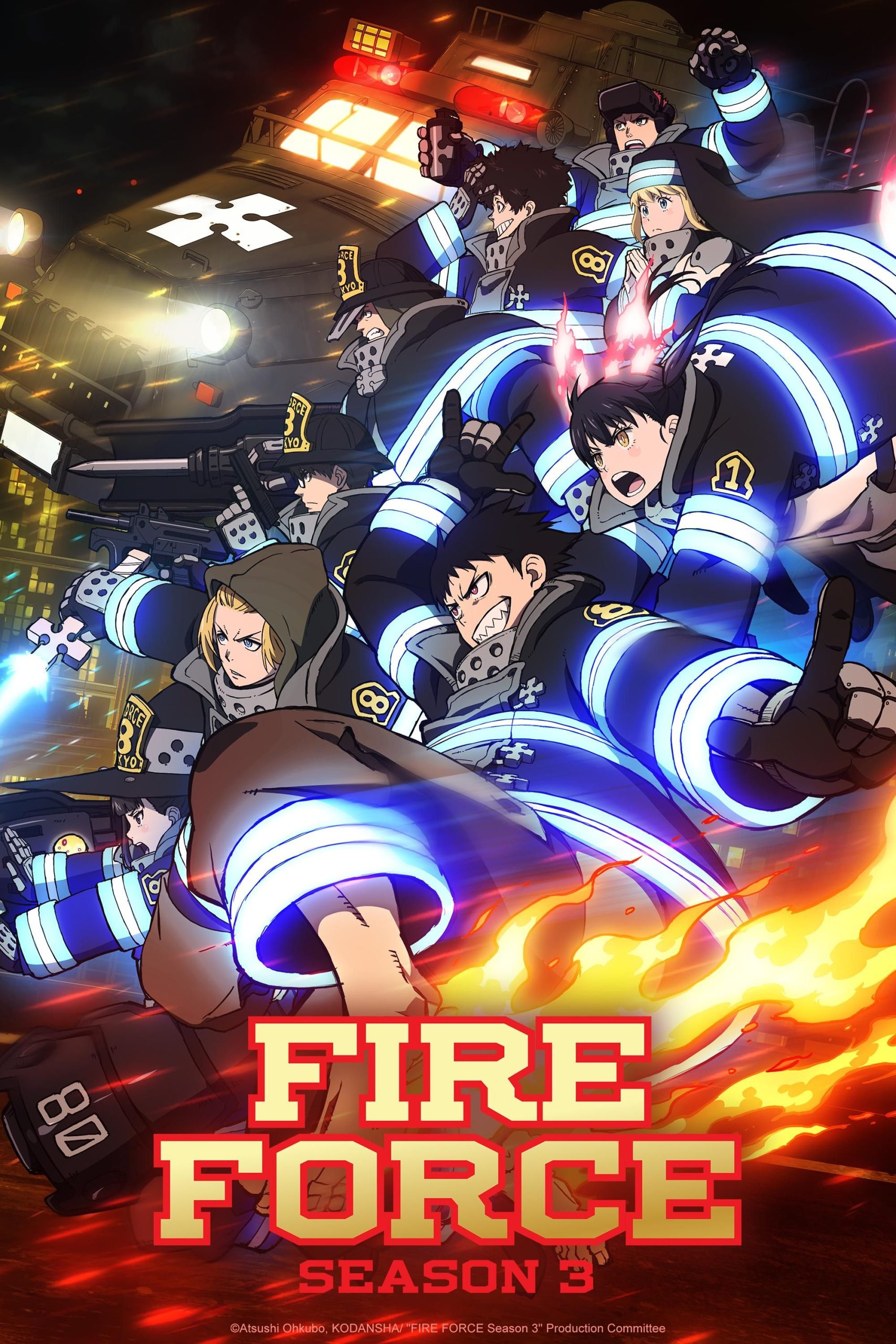
What if the ending of Fire Force was never just an ending, but a secret door to one of anime’s most beloved worlds? When the final episodes of Fire Force Season 3 Part 2 wrapped up, fans were not just watching Shinra Kusakabe save humanity. They were watching creator Atsushi Ohkubo pull off one of the boldest franchise connections in modern shonen history. If you thought the flames were done, think again.
A Finale That Burned Brighter Than Expected
Fire Force, known in Japan as Enen no Shouboutai, has always been more than a stylish action series about firefighters battling infernals. Under the direction of David Production, the anime evolved into a cosmic story about faith, despair, and the power to reshape reality. The third and final season, split into two cours, brought Shinra’s journey to a dramatic close, with the second part airing in early 2026.
At the center of it all is Shinra Kusakabe, the devil-grinned hero of Special Fire Force Company 8. From the beginning, Shinra wanted to be a hero who could protect his family and uncover the truth behind spontaneous human combustion. By the finale, that personal mission had exploded into a battle for the very structure of the world. The stakes were not just life and death; they were the rules of existence itself.
Atsushi Ohkubo’s Wildest Storytelling Move
Atsushi Ohkubo, the manga creator behind both Fire Force and Soul Eater, has never been shy about big ideas. But the way Fire Force ends reframes his earlier work in a way fans are still arguing about. Without spoiling every beat, the finale reveals how Shinra’s actions reshape the world, creating a reality where fear, madness, and death operate under different rules. For longtime readers, the echoes of Soul Eater are impossible to ignore.
This is why the ending hit so hard. It did not just close Shinra’s arc; it recontextualized Ohkubo’s entire creative universe. Characters like Arthur Boyle, with his delusional knight persona and Excalibur-style plasma sword, suddenly feel like part of a bigger mythological puzzle. Arthur’s goofy bravery has always been a fan favorite, but in the final stretch, his role helps underline the series’ central theme: belief has power, and the stories people tell can change the world.
Why David Production Deserves Credit
Adapting a finale this ambitious is risky. David Production, the studio known for its bold visual style and memorable anime adaptations, had to balance explosive action with dense lore and emotional payoff. The result is a final season that feels both chaotic and intentional. The fight choreography, flame effects, and sound design give Shinra’s last battles the weight they deserve, while quieter moments let the characters breathe.
The studio also understood what made Fire Force special in the first place: its cast. Company 8 is not just a squad of superpowered firefighters. It is a found family. Watching Shinra fight alongside his comrades reminds viewers why the series built such a loyal fanbase. The finale works because it remembers that spectacle means nothing without heart.
The Soul Eater Connection Fans Can’t Stop Talking About
The biggest reason the Fire Force ending went viral is the Soul Eater connection. For years, fans speculated about shared visual motifs, moon designs, and Ohkubo’s signature style. The finale turns those theories into a full-blown conversation. It suggests that the world of Fire Force helped lay the foundation for the kind of reality where Soul Eater could exist.
That revelation has sparked endless debates online. Is it a direct prequel? Is it a spiritual origin story? Or is Atsushi Ohkubo simply having fun connecting his creations? Whatever the answer, the impact is undeniable. The ending gave Fire Force a legacy far bigger than a standard shonen wrap-up. It made fans revisit both series, hunt for clues, and imagine what a modern Soul Eater revival could look like.
What This Means for Anime Fans
The Fire Force finale proves that anime endings can still surprise people. In an era of predictable sequels and safe adaptations, Atsushi Ohkubo chose chaos, ambition, and creativity. Shinra Kusakabe did not just defeat a final villain; he changed the meaning of the story fans thought they were watching.
Whether you came for the fire fights, the Company 8 camaraderie, or the wild lore twists, the ending gave everyone something to talk about. And maybe that is the real magic trick: a finale that feels final, yet makes the whole universe feel bigger.
What Do You Think?
Did the Fire Force finale nail the Soul Eater connection, or did it raise more questions than answers? Do you want to see David Production or another studio revisit the Soul Eater world with a fresh anime project? Drop your theories, favorite Shinra moments, and hottest takes in the comments. Let’s keep the flames going.