Ever since the universe-shattering climax of Stone Ocean drew Enrico Pucci’s grand design to its bittersweet, reality-resetting conclusion, a singular, deafening rallying cry has dominated anime social spheres: Where is Steel Ball Run? For over a decade, Hirohiko Araki’s seventh installment of JoJo’s Bizarre Adventure has rested comfortably atop the pantheon of sequential art, perpetually jockeying for the highest honors on platform databases like MyAnimeList and securing its reputation as Araki’s undisputed magnum opus. Yet, as the industry charges forward into an era dominated by seasonal powerhouses and cinematic spectacles, the prospect of animating this sweeping, supernatural Western remains David Production’s most tantalizing—and terrifying—frontier.
The hype surrounding an anime adaptation of Steel Ball Run is not standard franchise momentum; it is an existential event for pop-culture enthusiasts. Transitioning from the neon-soaked urban sprawl of Morioh and the claustrophobic concrete of Green Dolphin Street Prison to the dust-choked, sun-drenched plains of 19th-century North America, Part 7 represents a total philosophical, aesthetic, and mechanical reinvention of Araki’s thirty-year-old epic. But translating a masterpiece etched in ink into a fluid, animated reality demands answering thorny logistical questions that have haunted animators since the manga wrapped in 2011.
The Great Trans-American Odyssey: Reinventing JoJo for the Seinen Era
To understand the sheer weight of the buzz, one must appreciate the context of Steel Ball Run’s genesis. Launched initially in Weekly Shonen Jump in 2004 before pivoting to the monthly pages of Ultra Jump in 2005, the narrative leap granted Araki unprecedented creative liberation. Unshackled from the pacing demands and editorial censorship of standard shonen demographics, Araki leaned heavily into nuanced gray morality, graphic visceral stakes, and expansive cinematic framing.
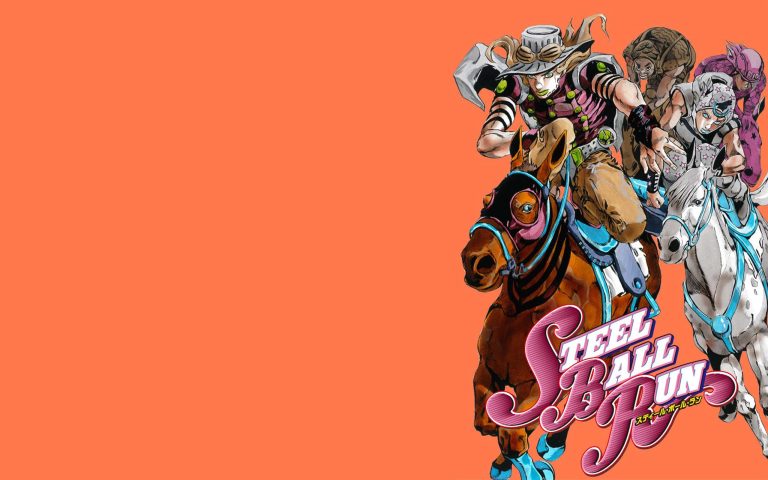
The premise is deceptively accessible yet grand in scale: eccentric promoter Steven Steel organizes the “Steel Ball Run,” an epoch-defining, 6,000-kilometer cross-country equestrian race spanning from the Pacific coast of San Diego to the urban sprawl of New York City, boasting a staggering fifty-million-dollar prize purse. Beneath the competitive bravado, however, lies an occult conspiracy of global ramifications. The race is merely a smokescreen orchestrated by the highest echelons of the American government to unearth scattered, mummified relics of the Holy Corpse—divine artifacts capable of conferring absolute prosperity upon whoever secures them.
This tonal recalibration yields a historical-speculative masterpiece that feels less like a traditional anime tournament and more like Sergio Leone directing a cosmic horror epic written by Cormac McCarthy. It’s an intoxicating cocktail of Americana, frontier mythology, and bizarre supernatural phenomena that demands absolute narrative reverence from any studio brave enough to tackle it.
Flawed Icons: The Cynic, the Executioner, and the Golden Spin
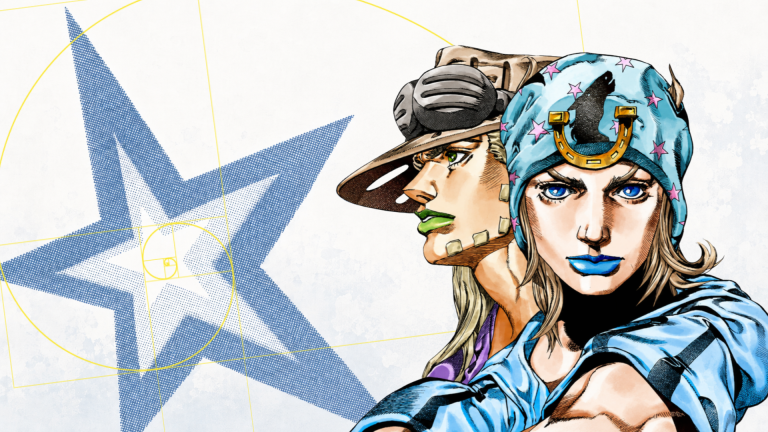
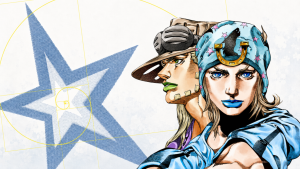
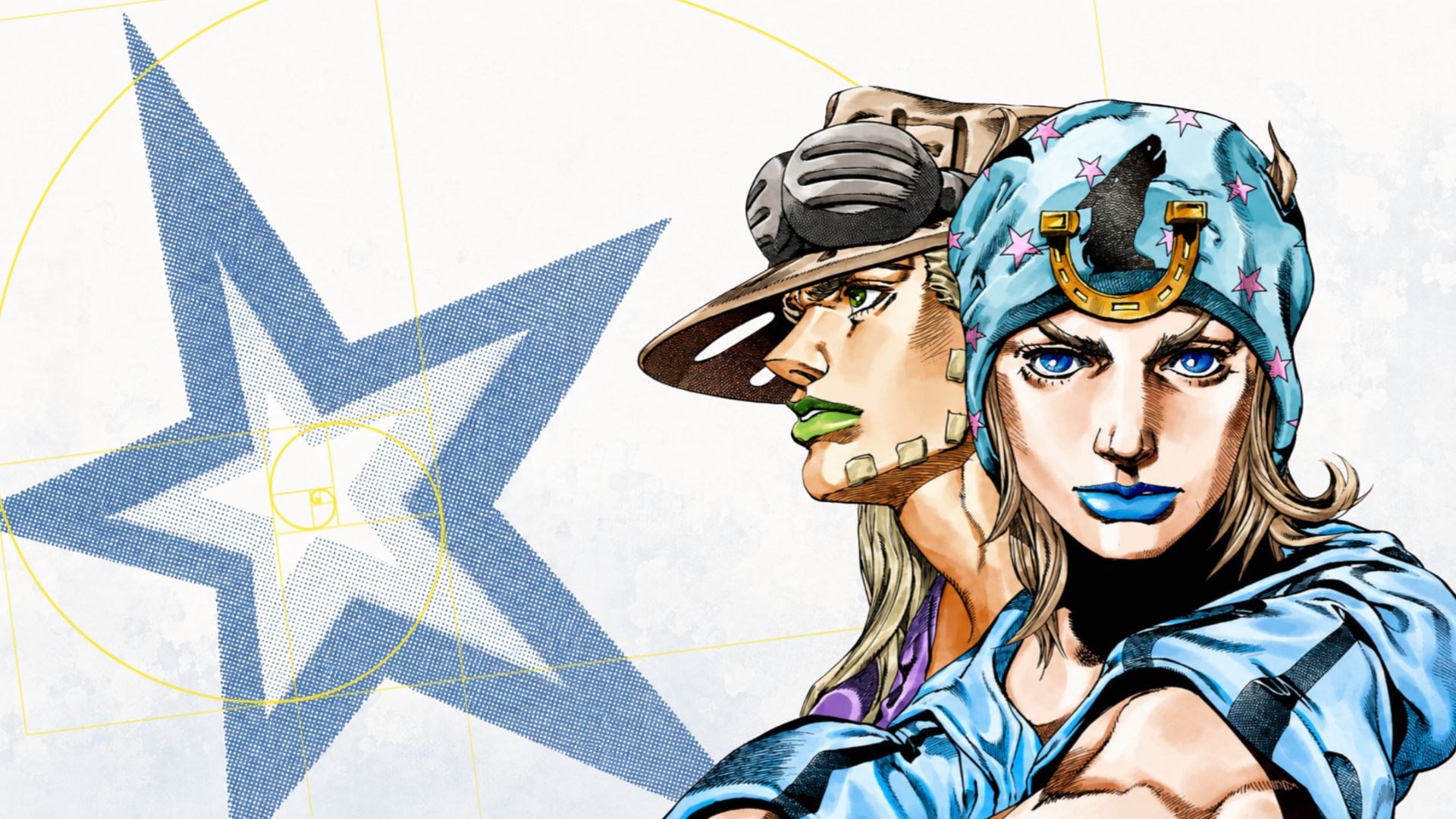
At the beating heart of Part 7’s critical acclaim is the profound emotional synergy between its two lead protagonists: Johnny Joestar and Gyro Zeppeli. Their dynamic represents arguably the finest dual-character character arc Araki has ever penned, transcending the archetypal buddy-cop or mentor-pupil tropes common to the medium.
Johnny Joestar is explicitly not Jonathan Joestar. Far from the righteous, chivalric gentleman of Part 1, Johnny begins his journey as an embittered, arrogant former horse-racing prodigy whose career and mobility were shattered by a reckless gun incident that left him paraplegic. Johnny is neither altruistic nor heroic; he is selfish, driven by a desperate, borderline-feral obsession to walk again. His Stand, Tusk, evolves not purely out of heroic resolve, but through an internal descent into “dark determination”—a psychological state where Johnny becomes willing to commit atrocities to claw his way out of spiritual and physical ruin.
Contrasting Johnny’s brooding desperation is Gyro Zeppeli, a disgraced Neapolitan royal executioner whose flippant humor, gold-plated grills, and absurdist songs belie a deeply tragic moral conflict. Gyro participates in the race not for glory or fortune, but to secure the amnesty of an innocent boy condemned to death back in his homeland. The resulting camaraderie between the two men is rich with quiet campfires, agonizing sacrifices, and sharp, witty dialogue that feels remarkably human.
The Anatomy of the Spin: Beyond Hamon and Stands
Narratively and mechanically, Part 7 replaces the linear progression of traditional Stand battles with The Spin—a forgotten supernatural martial art rooted in sacred geometry and the Golden Ratio. By harnessing the physical rotation of spherical steel balls or anatomical mechanics, Gyro and Johnny manipulate kinetic force, gravity, and even space-time itself. The visual translation of the Spin—its mathematical spirals, energy vortexes, and spatial distortions—offers David Production an opportunity to showcase unprecedented visual ingenuity, bridging the esoteric mysticism of classic Hamon with the multi-dimensional complexity of contemporary Stands.
The Equestrian Paradox: David Production’s Ultimate Technical Gauntlet
Despite the immense narrative appetite, the reality of adapting Steel Ball Run faces an industry-wide creative roadblock: the horse problem. In professional anime production, horses are universally recognized as the absolute zenith of technical difficulty. Their complex quad-pedal anatomy, the rhythmic cadence of running gaits, and the sheer volume of intricate skeletal movements make sustained 2D hand-drawn equestrian animation an expensive, production-schedule nightmare.
A standard 24-episode television anime might feature a cavalry charge for a few seconds across a couple of climactic episodes. Steel Ball Run, by its very nature, features dozens of named competitors galloping across shifting terrain for hundreds of chapters. The logistical dilemma facing David Production is stark:
- Traditional 2D Animation: Unbelievably time-consuming and budget-draining, likely leading to animator burnout or compromised line fidelity over a long cour production.
- 3D CGI Integration: More efficient for maintaining complex mechanical models, but carries the perpetual danger of falling into the “uncanny valley,” disrupting Araki’s trademark cross-hatched, highly stylized character design.
For David Production to succeed, they cannot simply rely on standard production templates. Industry insiders anticipate a cutting-edge hybrid workflow—potentially taking cues from the sophisticated 3D cell-shading pipelines established by studios like Orange (Trigun Stampede) or the kinetic compositing techniques perfected in contemporary high-budget anime features. Finding the sweet spot between fluid horse mechanics and Araki’s raw, textured inks will be the single most crucial factor dictating the adaptation’s visual legacy.
Manifest Destiny and Divine Flesh: The Philosophy of Funny Valentine
No discussion of Steel Ball Run’s prestige can omit its central antagonist: Funny Valentine, the 23rd President of the United States. Armed with the reality-crossing Stand Dirty Deeds Done Dirt Cheap (D4C), Valentine subverts standard villainy through sheer ideological conviction. He does not covet the Holy Corpse for personal vanity or petty tyranny; his mission is absolute, imperialist patriotism. Valentine desires to build an impenetrable geopolitical buffer, transferring all global suffering, tragedy, and economic decay onto foreign lands so that his nation may perpetually flourish.
The philosophical clash between Johnny’s desperate, personal pursuit of salvation and Valentine’s grandiose, utilitarian “first napkin” doctrine forces audiences to interrogate traditional concepts of heroism and justice. Animating this ideological collision—especially the labyrinthine, multiverse-hopping sequences of the late-stage battles—will elevate the adaptation from a simple action-thriller into a deeply resonant sociopolitical commentary.
The Horizon Beckons: Can the Anime Deliver the Masterpiece?
The cultural anticipation for JoJo’s Bizarre Adventure: Steel Ball Run is unprecedented. It marks a bridge between two eras—a clean narrative slate for newcomers who skipped the Joestar family saga, and the ultimate thematic reward for veteran followers who have tracked David Production’s journey since 2012. If the studio can conquer the grueling logistics of its high-speed equestrian combat and honor the exquisite psychological tapestry of Johnny and Gyro’s journey, Steel Ball Run will not just be another hit season—it will redefine what a prestige anime adaptation can achieve.
Now over to you, Wibux readers: How do you think David Production should tackle the equestrian animation—pure 2D, high-end CGI hybrids, or cinematic feature-length formats? Who is your dream voice cast for Johnny and Gyro? Let us know in the comments below!