
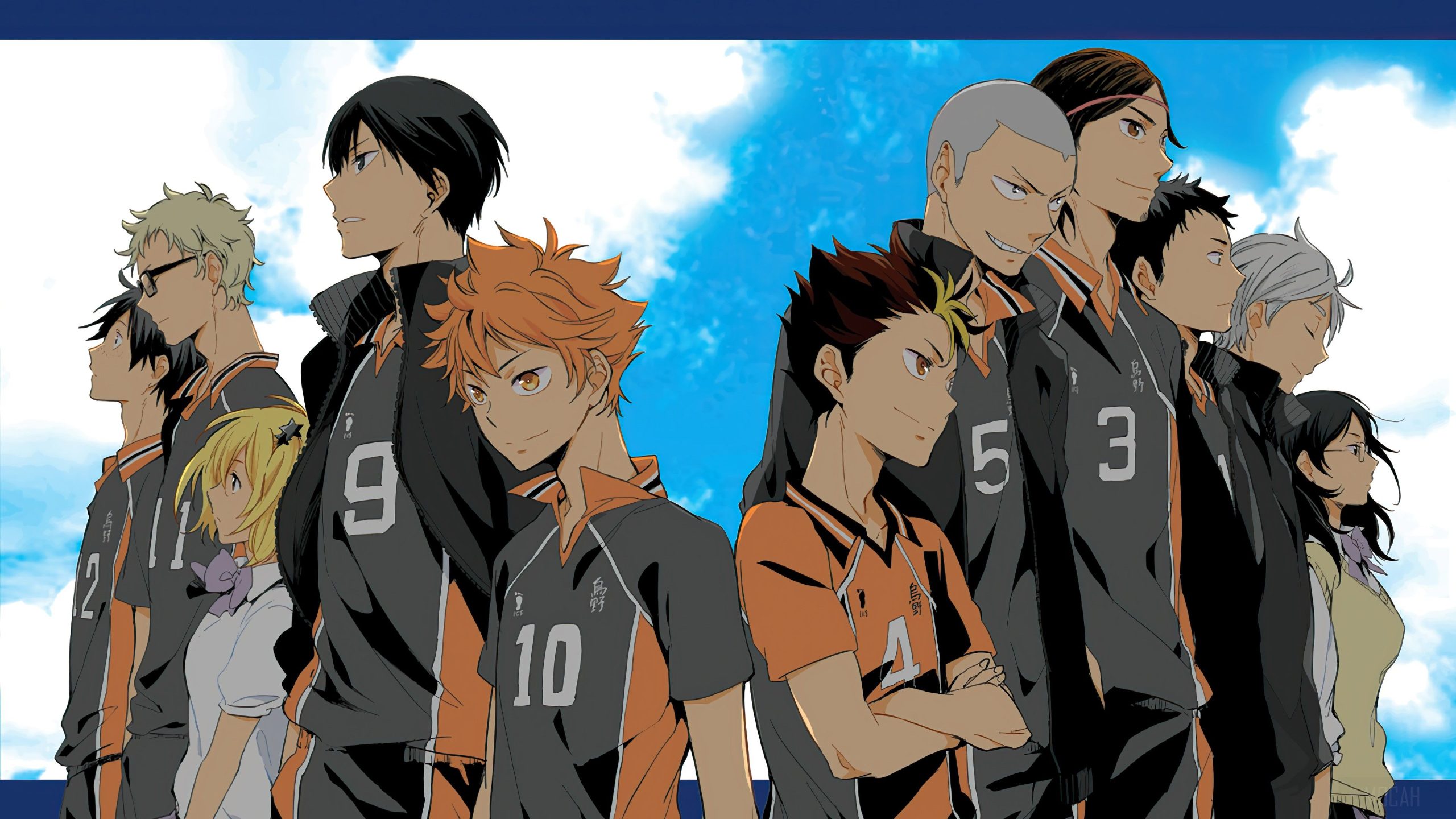
There is a specific, suffocating tension unique to sports anime when an entire franchise strips away its hyperbole and zeroes in on the raw mechanics of exhaustion, instinct, and camaraderie. For over a decade, Haruichi Furudate’s Haikyu!! teased a single, inevitable confrontation: the “Battle at the Garbage Dump.” It was never about national dominance, trophies, or collegiate scouting reports. It was an inherited grudge match between two visionary coaches, brought to life by two high school squads whose playing styles represent the antithesis of one another—the volatile, airborne improvisation of Karasuno High versus the grinding, hyper-adaptive floor defense of Nekoma High.
Now that Haikyu!! The Dumpster Battle has officially transitioned from a record-shattering theatrical run to global streaming platforms, fans worldwide are experiencing what can only be described as a masterclass in kinetic storytelling. Running at a razor-sharp 85 minutes, the film does not merely adapt an arc; it distills the emotional thesis of modern sports anime into a heart-stopping, sweat-drenched sprint. This isn’t just another tournament match—it is the definitive peak of the medium.
The Ghost of Generations Past: The Ukai-Nekomata Philosophy
To understand why this specific clash reverberates so deeply, one must look past the net and examine the sideline lineage. The rivalry between Karasuno’s former coach, Ikkei Ukai, and Nekoma’s Yasufumi Nekomata was born out of decades of near-misses. They were programs that mirrored one another in grit, constantly sparring in unofficial practice matches during Golden Week training camps, yet never able to validate their rivalry on the holy ground of Tokyo’s National Tournament.
Systems of Attrition vs. The Omnidirectional Attack
What elevates this battle beyond ordinary shonen rivalries is the fundamental clash of volleyball ideologies. Karasuno is an evolutionary marvel—a team of chaotic individualists who re-engineered themselves into an unrelenting, multi-pronged attack machine. Led by Tobio Kageyama’s pinpoint setting and Shoyo Hinata’s explosive verticality, Karasuno plays at a blistering tempo designed to overwhelm through sheer velocity and offensive variety.
Nekoma, conversely, is an organism. They do not overpower; they endure. Their mantra, “We are the blood that connects smoothly to keep the brain functioning,” manifests as arguably the most suffocating floor defense in fictional sports. Nekoma treats defense not as a reaction, but as a deliberate setup for psychological checkmate. They will happily concede five consecutive points if it grants them the data necessary to neutralize an opponent’s primary weapon in the subsequent set. The clash between Karasuno’s airborne ferocity and Nekoma’s terrestrial attrition creates an exquisite structural friction that carries every single volley.
The Brain vs. The Sun: Kenma Kozume’s Psychological Chessboard
At the beating heart of The Dumpster Battle is the quiet, fascinating dynamic between Karasuno’s middle blocker Shoyo Hinata and Nekoma’s setter Kenma Kozume. Kenma is the anti-shonen protagonist: physically unremarkable, socially reserved, and perpetually conserving his energy as if he were a battery-powered handheld console on its final bar. He does not play volleyball out of burning passion; he plays because his childhood friend, Tetsuro Kuroo, asked him to, and because his analytical mind finds pattern recognition satisfying.
Caging the Crow
The film’s central narrative conflict lies in Kenma’s calculated attempt to cage Hinata. Recognizing that Hinata’s true terror is not his spiking form, but his freedom of movement and momentum, Kenma implements an insidious tactical chokehold. By systematically guiding Karasuno’s returns and narrowing their landing zones, Kenma denies Hinata his approach run. The visual storytelling here is nothing short of harrowing: director Susumu Mitsunaka renders the court as a psychological horror space, using birdcage motifs and restricted camera angles to show Hinata being slowly stripped of his wings.
The Tipping Point of “Fun”
Yet, the genius of Furudate’s writing—and this film’s adaptation of it—is that Hinata does not break Kenma through animosity; he breaks him through sheer, infectious joy. Hinata invents a solution on the fly, transforming a restricted jump into a sky-scraping vertical leap that shatters Kenma’s algorithm. When the match descends into the third set, stamina gives way to sensory overload. Kenma, gasping for air on a sweat-slicked floor, looks up at Kuroo and utters words fans never expected to hear: “It’s fun.” It is a moment of monumental narrative catharsis, paying off hundreds of chapters of character development without a single melodramatic speech.
Kinetic Poetry: Susumu Mitsunaka and Production I.G’s Directorial Pinnacle
When it was first announced that the final arcs of Haikyu!! would be condensed into a two-part film project, the community was fraught with anxiety. Could an 85-minute feature capture the sprawling depth of an 85-chapter manga confrontation? The return of director Susumu Mitsunaka—the visionary behind the anime’s critically acclaimed first three seasons—instantly quelled those fears. Mitsunaka approaches the animation not as a television episode blown up for the silver screen, but as an intimate, hyper-kinetic sensory experience.
Production I.G pushes dynamic line art to its absolute threshold here. The ball physics, the distinct auditory squeak of indoor court sneakers, and the rhythmic sound design of synchronized breathing turn the gym into a living, breathing pressure cooker. But the undisputed crowning achievement of the film arrives during the climactic match-point sequence.
In a breathtaking technical gamble, the camera switches to a seamless, unedited first-person POV shot from Kenma’s perspective. Viewers do not just watch the final rally; they inhabit Kenma’s exhaustion. The camera bobs unsteadily with every heavy intake of breath; vision blurs at the periphery; sweat droplets distort the frame; the ball moves at terrifying, disorienting speeds. By pulling the audience into the physical agony and mental hyperspace of a high school athlete on the brink of collapse, Production I.G crafts one of the greatest sequences in modern animation history.
The Bittersweet Finality of the “Match Without a Rematch”
Most sports narratives live and die by the binary of winning and losing. The Dumpster Battle subverts this entirely. The emotional weight of the conclusion does not stem from Karasuno securing a spot in the next round of Nationals, nor does it focus primarily on Nekoma’s despair. Instead, it mourns the simple fact that this match—a game between genuine friends who shaped each other into better athletes—is finally over.
Unlike their practice matches at Camp Shinzen, there is no “one more set.” The referee blows the whistle, the ball slips from sweat-slicked fingers, and reality sets in. The film lingers deliberately on the post-match rituals: Kuroo and Daichi shaking hands with cracked, mutual respect; Coach Nekomata extending his hand toward Ukai’s ghost via his grandson; Kenma sharing a simple, quiet exchange of melon bread with Hinata. It captures the fleeting, cruel beauty of youth sports better than almost any live-action film in recent memory.
Why The Dumpster Battle Sets a New Benchmark
By arriving on global streaming platforms, Haikyu!! The Dumpster Battle broadens its legacy from a domestic box-office conqueror to an international cultural milestone. It proves that sports anime does not require supernatural gimmicks, battle-shonen energy auras, or villainous antagonists to hold an audience spellbound. It only requires a deep, uncompromising reverence for human emotion, tactical intelligence, and the transformative power of a shared passion.
Whether you are a day-one manga purist or a casual viewer who fell in love with Karasuno’s ascent, this film demands your full, undivided attention. Now that the match is streaming, lower the lights, turn up the volume, and witness sports animation at its absolute zenith.
What did you think of the climactic POV rally? Did the film do justice to Nekoma’s send-off, or did you wish it remained a full television season? Jump into the comments below and let your voice be heard!