
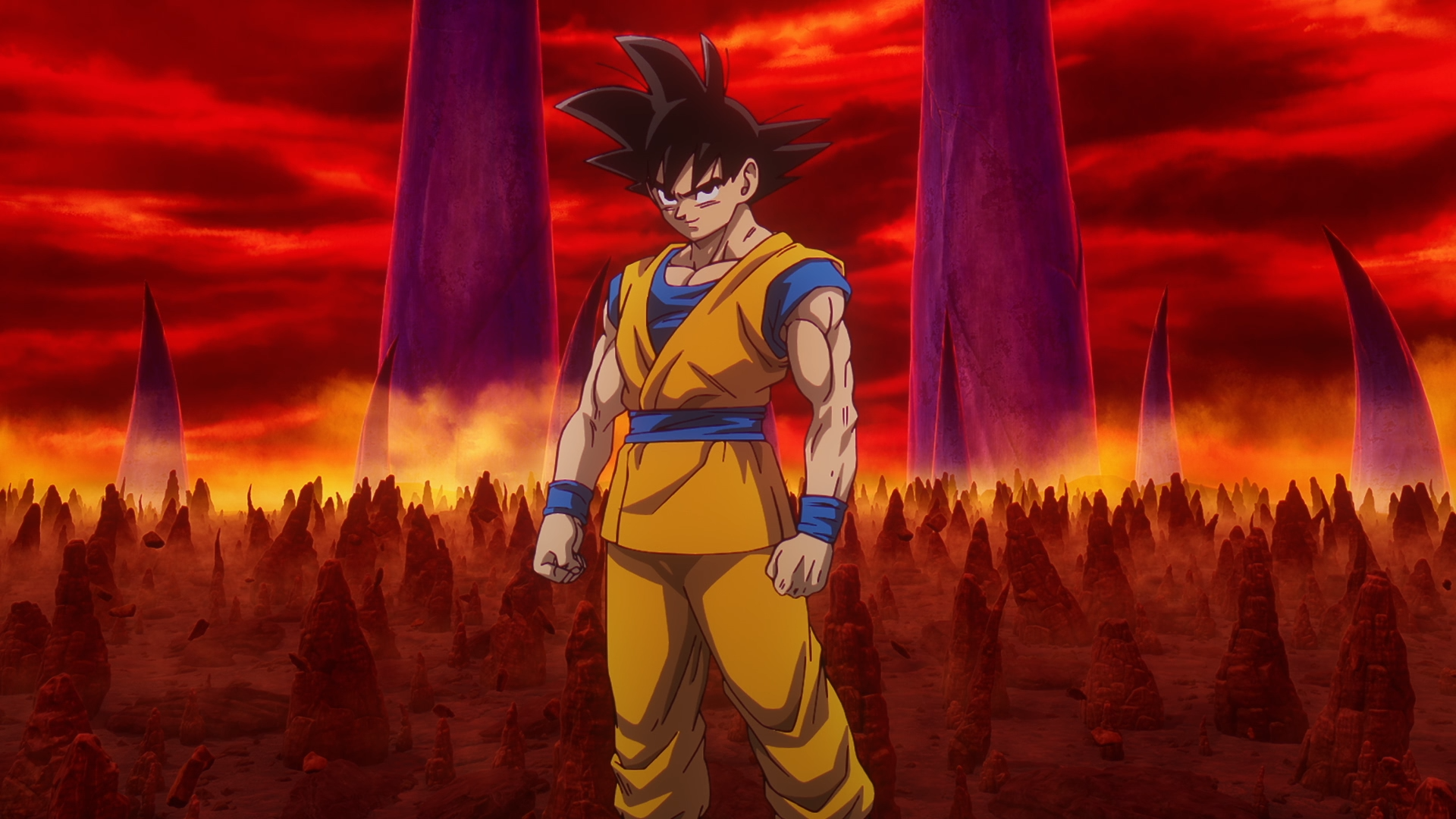
When the history of modern shonen is written, October 2024 will stand as a poignant crossroads. For four decades, the artistic DNA of Akira Toriyama has pulsed through the global pop-culture bloodstream, shaping everything from serialized manga and prestige combat gaming to the foundational vocabulary of cinematic action. Following Toriyama’s sudden and heartbreaking passing in March 2024, the premiere of Dragon Ball Daima ceases to be just another seasonal television broadcast; it is a sacred cultural event. Arriving squarely in the franchise’s 40th-anniversary year, Daima serves as the legendary creator’s genuine swansong—a project where he was uniquely and intimately involved in worldbuilding, narrative architecture, and character design. Far from a hollow exercise in corporate brand maintenance, the premiere episode, titled “Conspiracy,” proves that Toriyama’s creative spirit was as mischievous, daring, and unbound as it was when a wild-tailed boy first met a blue-haired scientist on Mount Paozu.
Diving Beyond the Mortal Plane: King Gomah and Makai’s Forgotten Hierarchies
For decades, the Demon Realm (Makai) remained one of the most enticing enigmas in Dragon Ball cosmology. Flirted with during the Buu Saga through the demonic monarch Dabura, and frequently relegated to non-canon spinoffs like Super Dragon Ball Heroes and Dragon Ball Xenoverse, the underworld had never received proper canonized cartography. Dragon Ball Daima immediately rectifies this narrative oversight by plunging viewers into the smoky, baroque depths of the Demon Realm’s First, Second, and Third Worlds.
The premiere’s opening act is a masterclass in retrospective lore-weaving. Rather than hitting the ground running on Earth, the story unfolds through the paranoid machinations of King Gomah, the newly elevated Supreme King of the Demon Realm, alongside his sniveling aide Degesu and the chillingly pragmatic Dr. Arinsu. Watching these underworld elites review the Majin Buu conflict via crystalline surveillance screens is pure Toriyama meta-textual brilliance: Gomah’s sheer terror at seeing Dabura turned into confectionery treats—followed by Goku vanquishing Kid Buu with a Super Spirit Bomb—grounds the villains’ motives in earned desperation. The universe’s strongest mortals exist, and the Demon Realm is utterly defenseless against them.
The Glind Race and Canonical Revelations
Toriyama uses this underworld expedition to introduce vital cosmological revelations. We discover the origins of the Glind race, shocking anatomical and ancestral ties connecting the Core People (including Earth’s Supreme Kai, Shin) back to this subterranean realm, and the existence of the Tamagami—demonic sentinels safeguarding an alternate, far more dangerous set of Dragon Balls. This is foundational myth-making that reframes existing lore without resorting to retcons, proving Toriyama was still actively refining his universe until his final days.
De-Aging the Legends: Mechanical Playfulness over Derivative Gimmickry
When Toei Animation first revealed that Goku and company would be transformed into children, a collective groan echoed across the internet. The initial knee-jerk reaction was understandable: had we not already witnessed this conceit in 1996 with Dragon Ball GT? Yet, Daima subverts cynical expectations within its first forty minutes. Where GT leveraged the Black Star Dragon Balls as an arbitrary narrative catalyst, King Gomah’s wish to Shenron feels distinctly comedic, tactical, and unmistakably rooted in classic Toriyama whimsy.
Gomah does not wish for universal supremacy or absolute immortality; terrified of the warrior gods who slew Buu, he pragmatically decides to reduce them all to harmless elementary-school age. The transformation does not merely shrink Goku; it hits Vegeta, Piccolo, Bulma, Chi-Chi, Krillin, and the wider cast with an infectious wave of visual and psychological vulnerability. Vegeta’s wounded aristocratic pride at being trapped in toddler proportions offers pristine character comedy, while Goku greets his diminished stature with characteristic nonchalance, immediately testing his center of gravity.
Crucially, this de-aging serves an indispensable mechanical purpose: it hard-resets a franchise suffering from catastrophic power inflation. After the omnipotent multiversal stakes of Dragon Ball Super—where Ultra Instinct, divine Hakai, and parallel timelines trivialized ordinary physics—Daima forces Goku back to basics. The tactical, kinetic, close-quarters combat returns. The celebrated revival of Goku’s iconic Nyoibo (Power Pole) is not merely a nostalgic prop; it is a structural necessity that signals a long-overdue pivot back to tactical martial arts over celestial beam-struggles.
The Pinnacle of Craft: Yashima, Komaki, and Toriyama’s Aesthetic Fidelity
Visually, Dragon Ball Daima looks nothing short of miraculous. Toei Animation, recognizing the monumental gravity of this production, assembled a creative brain trust that feels like a love letter to the medium. Co-directed by the legendary Yoshitaka Yashima and the visionary Aya Komaki (renowned for her transcendent stylistic work on One Piece Film: Red and Kyousougiga), the premiere operates with a cinematic elasticity rarely afforded to television anime.
The visual continuity is further safeguarded by character designer Katsuyoshi Nakatsuru, whose hand-drawn sensibilities defined the franchise’s golden era. The premiere rejects the sterile digital sheen and hyper-saturated gradients that plagued early stretches of Dragon Ball Super. Instead, Daima embraces rich, organic line-work, sophisticated environmental lighting, and dynamic camera choreography that mirrors the kinetic bounce of late-1980s Chrono Trigger and Dragon Quest concept art.
When martial artists clash in this premiere, strikes land with bruising spatial weight. The choreography feels tactile, prioritizing momentum, counter-balancing, and traditional wuxia influence. Every mechanical contraption—from Gomah’s bizarre flying tele-pods to the gothic architecture of the Demon Realm palaces—bears Toriyama’s distinctive, rounded industrial design. It feels unmistakably tactile, reminding viewers that Toriyama was as gifted an industrial draftsman as he was a master of manga paneling.
An Authorial Swansong: The Undying Magic of the 40th Anniversary
What elevates Dragon Ball Daima into profound artistic territory is the sheer depth of Toriyama’s imprint. In an era where legacy anime creators often transition into superficial executive producer roles, Toriyama rolled up his sleeves for Daima. He crafted the original premise, outlined the episodic narrative, designed an unprecedented number of characters, monsters, and vehicles, and directly scripted dialogue beats.
The narrative does not read like a committee-driven exercise designed to move gacha game merchandise. It reads like an elder craftsman returning to his workshop to play with his favorite tools one last time. There is a palpable joy in the worldbuilding—a rhythmic juxtaposition of existential planetary dread with absurd trivialities, such as characters bickering over snacks while traversing dark dimensions. This delicate balance of the mythical and the mundane has always been the golden thread holding the franchise together.
Verdict: Goku’s Journey Continues into the Infinite
The premiere of Dragon Ball Daima does not merely hit its targets; it honors a legacy that has shaped multiple generations of artists, animators, and dreamers across the globe. By refusing to rest on the lazy laurels of multiversal power scaling, Toriyama chose to strip his heroes down to their purest forms and plunge them into an uncharted wilderness filled with magic, danger, and unadulterated wonder.
As Goku leaps into the dimensional vortex toward the Demon Realm with his Power Pole slung over his back, it is impossible not to feel a lump in one’s throat. Dragon Ball Daima is a vibrant, dazzling reminder of why we fell in love with this universe in the first place: the thrill of the unknown, the joy of the fight, and the boundless horizons of an endless adventure. Akira Toriyama may have embarked on his own journey beyond the stars, but through Daima, his heart still beats loudly inside every single frame.
What were your favorite moments from the premiere of Dragon Ball Daima? Are you excited to see Goku rely on his martial arts mastery and Power Pole once again, or do you find yourself missing the cosmic stakes of Super? Sound off in the comments below and share your theories on the secrets hidden within the Demon Realm!