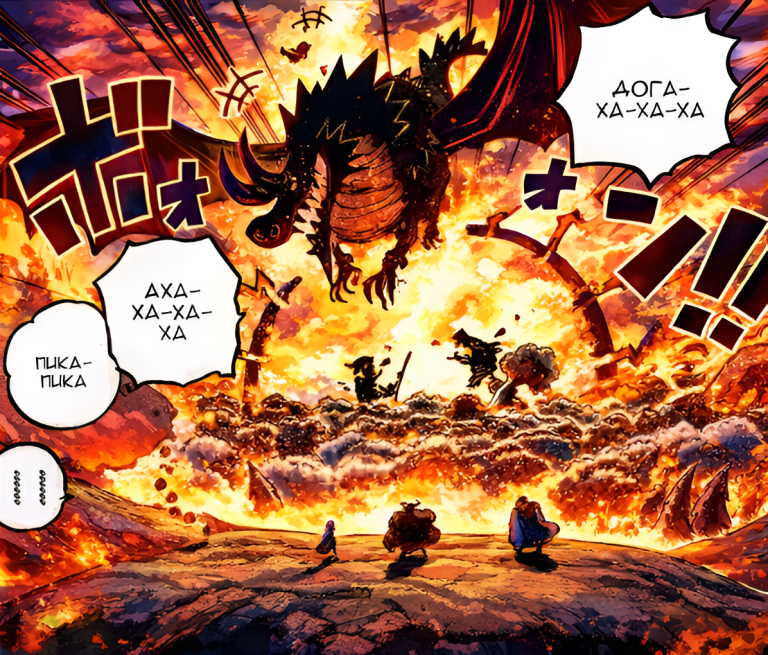
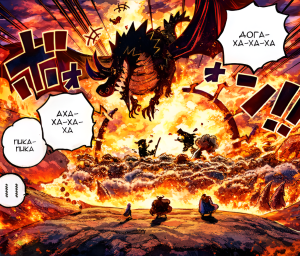
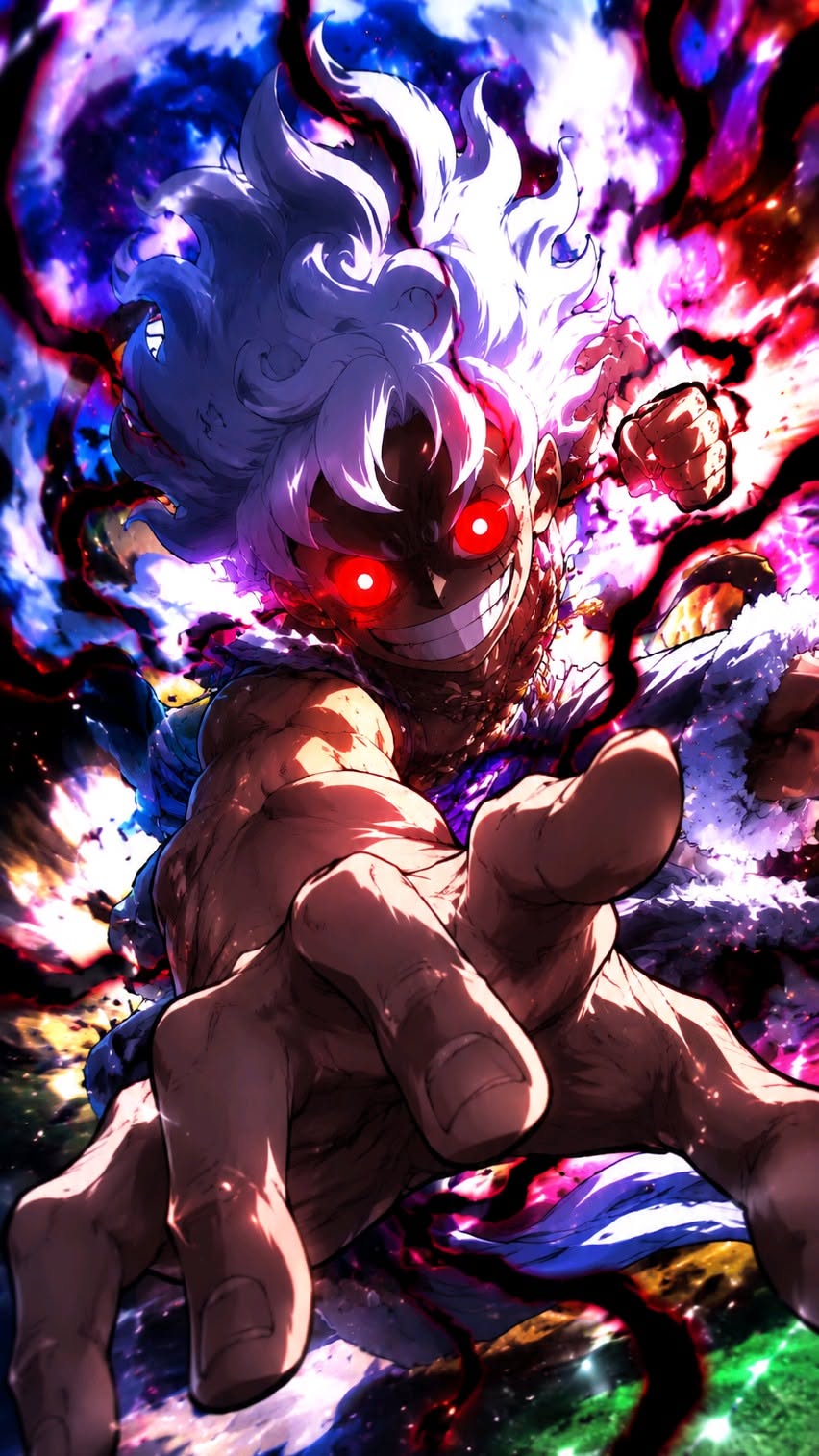
When Eiichiro Oda hits a numerical milestone, the tectonic plates of the manga industry do not merely shift—they shatter. From Chapter 100’s mythic entry into the Grand Line to Chapter 1000’s epochal “Red Roc” echoing across the rooftop of Onigashima, Oda treats century-mark chapters as sacred narrative altars. Now, as the serialized Odyssey approaches the monumental Chapter 1200, the narrative trajectory is poised for an unprecedented convergence. With the Straw Hat Pirates having formally crossed the threshold into Warland Elbaf, the story has traded the sterile, techno-dystopian anxieties of Egghead Island for the primal, colossal mythos of the giant realm teased all the way back in Little Garden during Chapter 106.
Yet, Elbaf is not simply a picturesque land of mead halls and towering warriors. Beneath its idyllic, Norse-inspired canopy lies an open wound from the Void Century. As tensions escalate following the shocking revelation of Prince Loki—shackled to the colossal bark of Yggdrasil like an apocalyptic Prometheus—a terrifying consensus is forming across the community: Chapter 1200 will not merely be a transition chapter; it will be the detonation of the Void Century’s deepest vault, unleashing Loki’s divine wrath and exposing the ancient war engines resting under Elbaf’s roots.
The Yggdrasil Inversion: Treasure Tree Adam and the Subterranean Graveyard
For decades, the botanical geography of One Piece has operated on an unspoken dualism: the Sunlight Tree Eve, which channels illumination down into the abyssal depths of Fish-Man Island, and the Treasure Tree Adam, renowned for yielding wood so resilient it can withstand the cannonade of an entire fleet. In Elbaf, the central world-tree serves as the terrestrial manifestation of Adam. However, the architectural reality of this titan plant poses a critical question that modern archeology in the Grand Line has dared not ask: What is Adam feeding on?
The Botanical Vault of the Great Kingdom
In classical mythology, the roots of Yggdrasil dig deep into Niflheim, the realm of mist, ice, and primeval death. If Oda follows his established pattern of subverting mythological archetypes, the roots of Adam do not merely anchor Elbaf—they cage something beneath it. The prevailing theory suggests that during the twilight of the Void Century, as the Twenty Kingdoms systematically purged the Great Kingdom from world history, Joy Boy and his giant allies converted the subterranean cavern systems of Elbaf into a fortified bunker of war relics.
Egghead established that the Ancient Kingdom’s zenith was defined by an incomprehensible blend of scientific prowess and mystical Haki application, epitomized by Emet, the Iron Giant. If an entire mechanized legion or prototype cataclysms were sealed beneath the impenetrable roots of Adam, Elbaf is not just a sovereign nation of giants—it is an unsprung trap. Chapter 1200 is structurally primed to pull the camera away from the high-canopy villages and drop our protagonists into the subterranean underbelly, exposing a graveyard of iron behemoths, ancient airships, and weapons that make the Seraphim look like children’s playthings.
Loki the Accursed: Deconstructing the “Cursed Prince” Archetype
When Prince Loki was finally unveiled, Oda bypassed the cartoonish, caricature designs often applied to Elbaf’s royalty in favor of raw, terrifying gravitas. Bound in colossal Sea-Prism Stone chains, blindfolded, and radiating pure, unadulterated menace, Loki subverted every expectation of a whimsical Norse trickster. The lore established that Loki murdered his own father, King Harald, to consume a “legendary Devil Fruit” passed down through the royal lineage—an act of patricide that branded him an outcast in his own homeland.
The Psychology of Divine Restraint
Loki’s visual design instantly evokes Fenrir, the monstrous wolf bound by the gods with the magical ribbon Gleipnir, awaiting Ragnarok to snap his bonds and devour Odin. But in the nuanced morality of One Piece, monstrous reputations are rarely what they seem. Was King Harald truly a benevolent monarch, or was he negotiating a secret capitulation with the World Government, attempting to sell Elbaf’s devastating military might to Mary Geoise?
If Loki’s patricide was a desperate, scorched-earth measure to keep Elbaf’s sovereign power out of the hands of the Celestial Dragons, then his “cursed” moniker is the ultimate tragic mask. His “Divine Wrath”—tied directly to this unseen legendary fruit—could represent the inverse of Sun God Nika’s liberating joy. Where Luffy brings spontaneous, laughing freedom, Loki embodies unbridled, cataclysmic retribution. Chapter 1200 may well provide the catalyst that shatters those colossal chains, setting up an ideological and physical clash of gods: the Sun of Liberation versus the Winter of Ragnarok.
The Holy Knights’ Convergence: Mary Geoise Plays Its Hand
The pacing of the Final Saga dictates that the World Government cannot afford to let Elbaf stand unmonitored. Following the cataclysmic fallout of Vegapunk’s global broadcast, the ascension of Figarland Garling into the Gorosei, and the open declaration of war from the Revolutionary Army, Mary Geoise is cornered. The Holy Knights, led by their most elite arbiters, have operated in the narrative shadows for too long.
The strategic value of Elbaf cannot be overstated. If the Straw Hats successfully ally with the giants, Monkey D. Luffy effectively commands the most destructive conventional army on the planet, backed by two Ancient Weapons (Pluton and Poseidon) and the literal avatar of Joy Boy. To counter this, the Holy Knights must infiltrate the Warland. Theorists speculate that Chapter 1200 will deliver a masterclass in multi-front chaos: as Luffy makes contact with Loki, the Holy Knights will strike at Elbaf’s lower strata, attempting to commandeer the dormant Void Century relics for the Celestial Dragons. The sudden shockwave of an invasion would force an unholy alliance, compelling the giants to release Loki as an act of absolute military desperation.
The Joy Boy Covenant: Why Chapter 1200 Must Reshape the Narrative
Oda’s grand narrative hinges on the concept of “inherited will” and unfulfilled promises. The Iron Giant’s tearful apology to Joy Boy at Egghead proved that the warriors of the Void Century did not vanish willingly; they were starved of their leader’s rhythm, left in stasis across centuries. Elbaf’s cultural obsession with the Sun God suggests that the giants were not just Joy Boy’s friends—they were his vanguard.
Chapter 1200 represents the emotional and thematic midpoint of the Final Saga. If Chapter 1100 humanized Bartholomew Kuma and crystallized the tragedy of the World Government’s tyranny, Chapter 1200 must establish the scale of the war to come. By stripping away the layers of Elbaf’s pride to reveal the bleeding scars of the Void Century, Oda can bridge the 800-year gap like never before. Loki’s unchained Haki, mixed with the subterranean hum of waking Void Century armaments, would firmly signal that the battle for the throne of the world is no longer a distant threat—it is happening on these very shores.
The Dawn Awaits: Final Verdict
As we approach the threshold of Chapter 1200, the stakes of One Piece have transcended the simplistic paradigm of pirate crews clashing for island territory. Elbaf is the final crucible. The unraveling of Prince Loki’s complex motivations, combined with the catastrophic revelation of what lies sleeping beneath the roots of the Treasure Tree Adam, ensures that this milestone will not be a quiet celebration. It will be the trumpet blast announcing the war that will consume the seas.
Will Loki stand alongside Monkey D. Luffy as a brother-in-arms, or will his unchained divine wrath burn Elbaf to ash before the Straw Hats can even reach the One Piece? The countdown to Chapter 1200 has begun, and the manga world holds its collective breath.