JoJo’s Bizarre Adventure: Steel Ball Run — The Anime Adaptation That Could Redefine the Medium
There are anime adaptations, and then there are events. When David Production inevitably brings Steel Ball Run — Part 7 of Hirohiko Araki’s genre-defying JoJo’s Bizarre Adventure — to the screen, it won’t merely be another season of a beloved franchise. It will be a seismic cultural moment, the kind that reshapes conversations about what animation can achieve and what stories deserve to be told in the medium. For years, the manga community has held Steel Ball Run aloft as one of the greatest comic narratives ever committed to paper — a sweeping, philosophically rich, emotionally devastating western epic that fuses Cormac McCarthy’s desolate Americana with Araki’s singular brand of supernatural maximalism. The question has never been if it would be adapted, but how any studio could possibly do it justice.
Now, with Stone Ocean behind us and the JoJo timeline officially reset into the Steel Ball Run universe, the anticipation has reached a fever pitch that borders on the religious. Let’s break down exactly why this adaptation matters so much — and the monumental challenges that lie ahead.
A New Universe, A New Kind of JoJo: Why Steel Ball Run Is Araki’s Magnum Opus
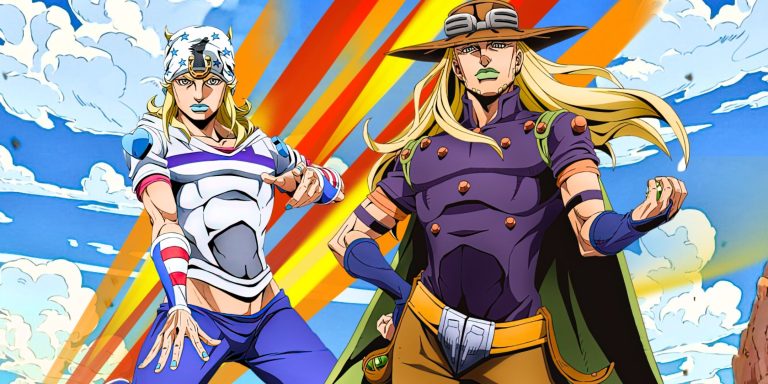
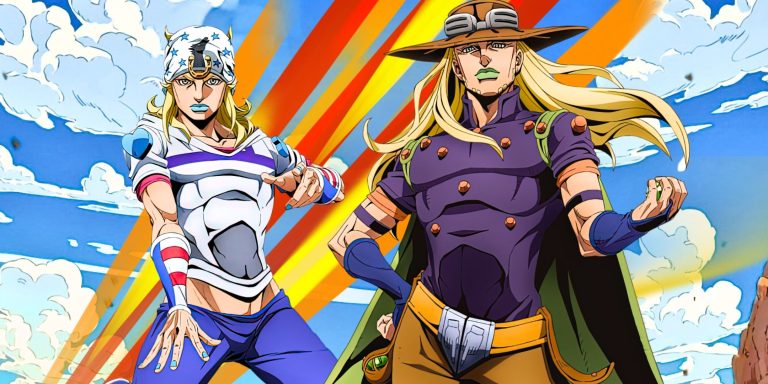
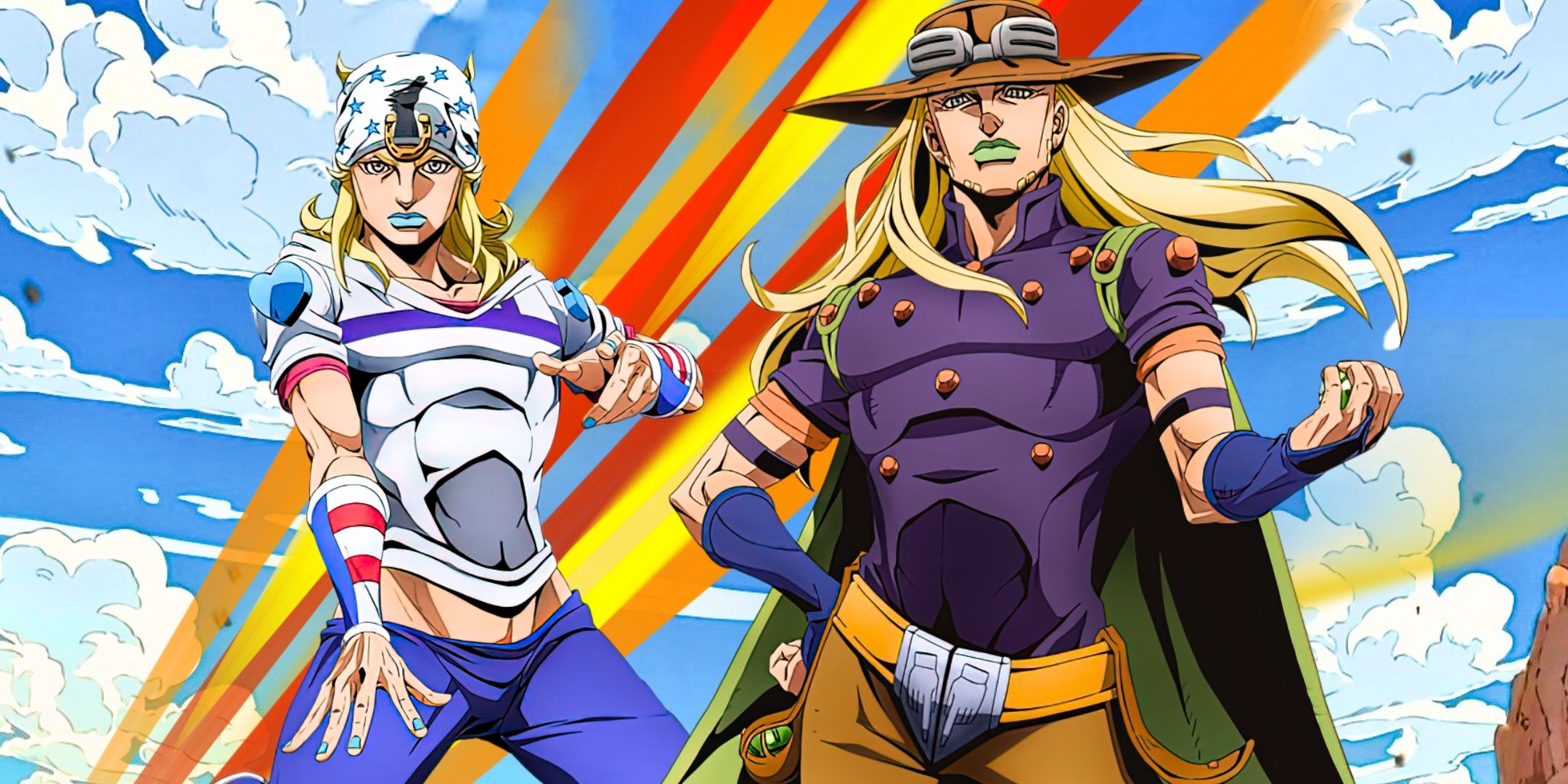
Steel Ball Run occupies a singular position in the JoJo canon. Published between 2004 and 2011 across 95 chapters, it began life as a standalone series before being folded back into the JoJo umbrella — a fact that speaks to its ambition. Set in 1890 during a fictional cross-continental horse race from San Diego to New York City, the story follows Johnny Joestar, a paraplegic former jockey consumed by self-loathing, and Gyro Zeppeli, a Neapolitan executioner carrying the weight of an impossible moral burden. Together, they ride across a mythologized American landscape in pursuit of the scattered corpse parts of a holy figure — relics that grant godlike power to those who possess them.
What makes Steel Ball Run Araki’s definitive work isn’t just its narrative scope — it’s the maturity. Gone are the more episodic, villain-of-the-week structures of earlier parts. In their place is a tightly woven odyssey that interrogates faith, destiny, national identity, disability, and the nature of worthiness. Araki draws from the iconography of the American West — its vast emptiness, its violence, its promise of reinvention — and filters it through a Japanese artist’s outsider perspective, creating something that feels both deeply familiar and utterly alien. The result is a manga that reads like a Sergio Leone film directed by someone who’s read too much Jorge Luis Borges, and it’s magnificent.
Johnny and Gyro: The Most Complex Duo in JoJo History
Johnny Joestar — The Anti-Hero Who Earns His Name
Johnny Joestar is unlike any JoJo protagonist before him. Where Jonathan Noble was chivalric and Jotaro Kujo was stoic, Johnny is broken. Paralyzed from the waist down after a shooting incident born from his own arrogance, he enters the Steel Ball Run race not out of heroism but out of desperation — a need to reclaim something, anything, from a life that has stripped him of purpose. His journey toward the Spin and, eventually, his Stand Tusk is one of the most meticulously constructed character arcs in manga. Each act of Tusk’s evolution corresponds to a psychological breakthrough, making Johnny’s power progression feel earned in a way that transcends typical shonen escalation. He doesn’t become stronger because the plot demands it; he becomes stronger because he finally believes he deserves to.
Gyro Zeppeli — Heart, Philosophy, and Pizza Mozzarella
If Johnny is the soul of Steel Ball Run, Gyro is its beating heart. A master of the Spin — a rotational energy technique rooted in the mathematics of the Golden Rectangle and the Fibonacci sequence — Gyro is at once a mentor, a comedian, and a tragic figure carrying an unbearable secret. He races across America not for glory but to save the life of a child condemned to execution back in Naples, a motivation that lends every one of his battles a quiet, aching urgency. His chemistry with Johnny is arguably the finest partnership Araki has ever written: warm, contentious, deeply human, and punctuated by some of the most gloriously stupid jokes in the series (yes, “Pizza Mozzarella” is a cultural artifact). Animating this relationship — its silences as much as its spectacles — will be the emotional linchpin of the entire adaptation.
David Production’s Greatest Technical Challenge: Horses, Horses, Horses
Let’s address the elephant — or rather, the horse — in the room. Steel Ball Run is, fundamentally, a story about people on horseback, and animating horses convincingly is one of the most notoriously difficult tasks in the industry. Equestrian movement involves complex, multi-jointed locomotion that resists shortcuts. Bad horse animation is immediately, viscerally noticeable, and Steel Ball Run demands not just horses walking or galloping, but horses fighting — mid-race combat sequences where riders clash at full speed across desert plains, mountain passes, and flooded riverbeds.
David Production has steadily evolved its technical capabilities across each JoJo part, incorporating more sophisticated CG integration and dynamic camera work, particularly in Stone Ocean. But Steel Ball Run will require a quantum leap. The studio will likely need to develop or refine CG horse models that can blend seamlessly with 2D-animated characters — a hybrid approach similar to what studios like MAPPA and ufotable have pioneered, but applied at a scale and consistency that hasn’t been attempted for a long-running series. The Spin itself presents another challenge: Araki’s depictions of rotational energy are deeply tied to mathematical geometry, with panels that visually invoke the Golden Spiral in ways that demand inventive motion design. Static manga panels can suggest infinite rotation; animation must realize it.
There’s also the question of format. Steel Ball Run’s narrative density and emotional pacing would suffer in a weekly broadcast model. A seasonal or Netflix-style batch release — similar to Stone Ocean’s rollout — seems far more likely, allowing the production team the time necessary to maintain visual quality across what could easily be 40+ episodes.
The Villain Question: Funny Valentine and the Politics of Power
No discussion of Steel Ball Run is complete without Funny Valentine, the 23rd President of the United States and one of the most compelling antagonists in anime and manga history. Valentine’s Stand, D4C (Dirty Deeds Done Dirt Cheap), allows him to travel between parallel dimensions — a power that Araki weaponizes not just for spectacular fight choreography but for devastating philosophical confrontation. Valentine’s ideology — that any atrocity is justified if it serves the nation’s prosperity — is presented with such charisma and internal logic that readers genuinely debate whether he’s the true hero of the story. In an era where audiences are increasingly drawn to morally complex villains, Valentine has the potential to become an all-time iconic anime antagonist, a figure who forces viewers to confront uncomfortable questions about patriotism, sacrifice, and the cost of utopia.
His climactic confrontation with Johnny — a battle that spans dimensions, ideologies, and the very concept of “justice” — will be the adaptation’s ultimate test. Get it right, and David Production will have animated one of the greatest final battles in fiction.
The Community Is Ready. The Question Is Whether the World Is.
The JoJo fandom has been manifesting this adaptation for years. Manga readers have created fan animations, exhaustive analysis videos, and enough memes to fill the entire Steel Ball Run racecourse. But Steel Ball Run also represents an opportunity to reach beyond the existing fanbase. Its western setting, its mature themes, its relatively self-contained narrative (thanks to the universe reset), and its cinematic pacing make it arguably the most accessible entry point for newcomers since Stardust Crusaders.
If David Production can match the ambition of Araki’s vision — if they can make the horses gallop, the Steel Balls sing, and Johnny Joestar’s journey from a broken man in a wheelchair to a figure worthy of the Joestar name land with the emotional devastation it deserves — then Steel Ball Run won’t just be the best JoJo adaptation. It will be one of the defining anime productions of its generation.
The race is coming. Stay locked to Wibux.com for every announcement, trailer breakdown, and deep dive as Steel Ball Run rides toward the screen. In the meantime, tell us: who’s your favorite Steel Ball Run character, and what scene are you most desperate to see animated? Drop your thoughts in the comments below.