JoJo’s Bizarre Adventure: Steel Ball Run — The Most Anticipated Anime Adaptation of a Generation Is Finally on the Horizon
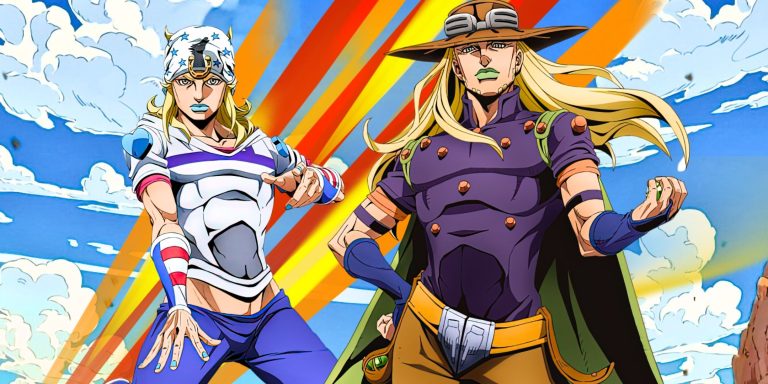
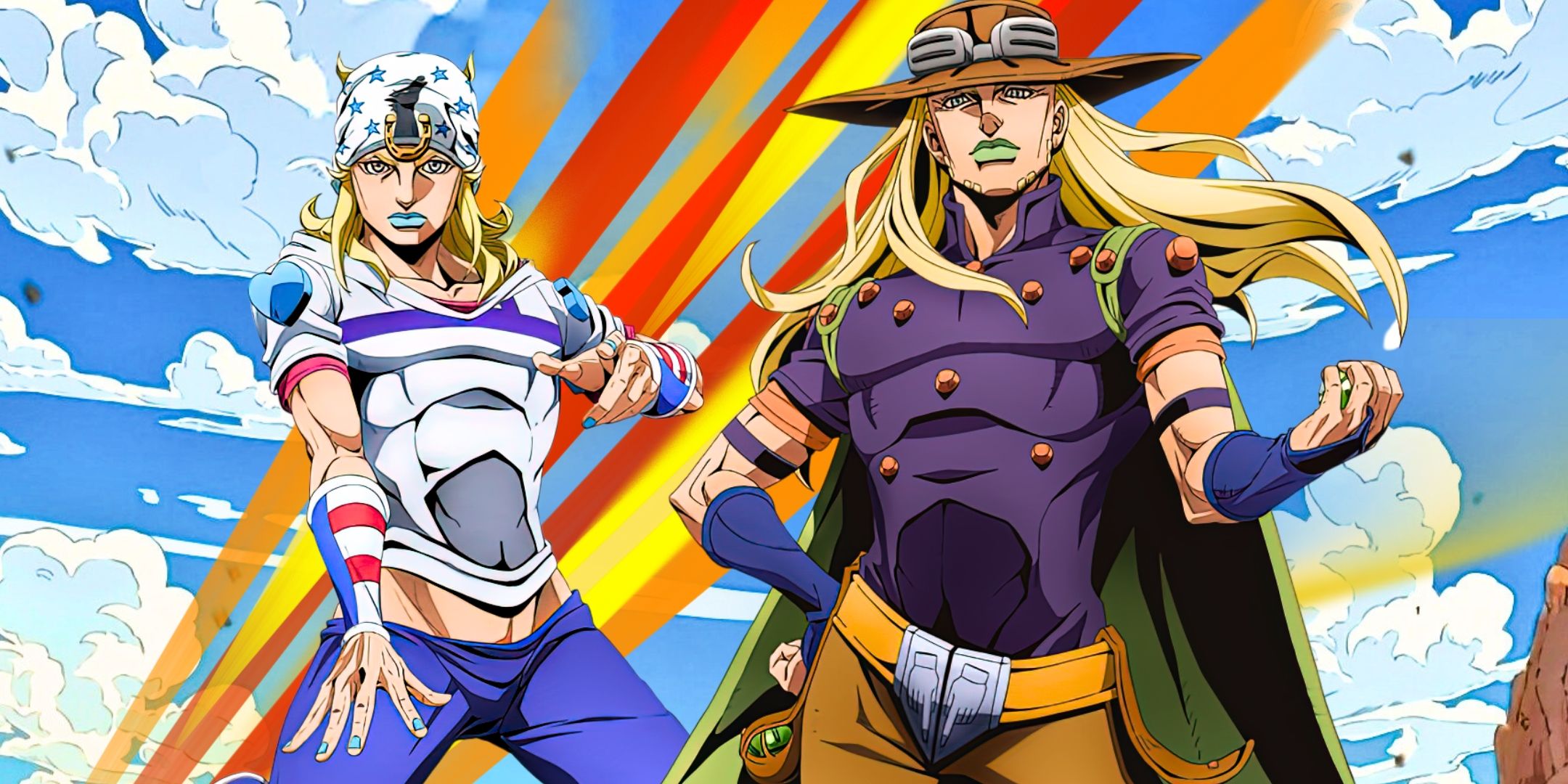
There are anime adaptations, and then there are events. When David Production confirmed that JoJo’s Bizarre Adventure Part 7: Steel Ball Run was moving forward in its production pipeline, the collective roar from the global anime and manga community was seismic — and entirely justified. For over a decade, fans of Hirohiko Araki’s sprawling, genre-defying saga have whispered, theorized, and outright pleaded for the day that Johnny Joestar and Gyro Zeppeli’s transcontinental odyssey would gallop onto screens. Now, as the gears of production turn and the buzz reaches a fever pitch, it’s time to examine exactly why Steel Ball Run isn’t just the next chapter in the JoJo anime franchise — it’s the single most ambitious undertaking David Production has ever faced, and arguably the most consequential anime adaptation of the 2020s.
Araki’s Magnum Opus: Why Steel Ball Run Stands Apart
Let’s establish something upfront: Steel Ball Run is not simply another JoJo part. Originally serialized in Weekly Shōnen Jump before migrating to the monthly Ultra Jump in 2004, Part 7 represents a hard reset of Araki’s universe — a fresh continuity set in 1890 America, untethered from the Joestar bloodline drama of Parts 1 through 6. It’s a Western. It’s a supernatural thriller. It’s a deeply philosophical meditation on fate, willpower, and the meaning of sacrifice. And at its structural core, it’s a grueling, 6,000-kilometer horseback race from San Diego to New York City, with the fate of something far greater than a cash prize hanging in the balance.
Araki himself has spoken about Steel Ball Run as the culmination of everything he learned across decades of manga creation. The storytelling is tighter, the art more refined, and the thematic ambitions soar beyond anything in the prior Joestar saga. Critics and readers consistently rank it among the greatest manga ever written — not just the greatest JoJo — and its reputation has only grown in the years since its conclusion in 2011. The pressure on David Production to honor this legacy is, frankly, immense.
Johnny Joestar and Gyro Zeppeli: A Partnership for the Ages
Johnny: The Anti-Hero Who Crawls Before He Walks
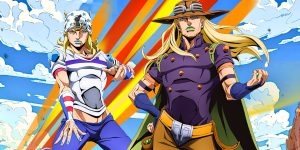
Johnny Joestar is unlike any JoJo protagonist before him. Paraplegic, embittered, and stripped of the aristocratic heroism that defined Jonathan or the streetwise bravado of Jotaro, Johnny begins Steel Ball Run as a broken man — literally unable to stand. His journey isn’t one of inherited destiny; it’s one of desperate, clawing self-reclamation. His Stand, Tusk, evolves across four distinct acts throughout the race, each transformation tied directly to his psychological and spiritual growth. Tusk ACT 4, in particular, represents one of the most conceptually staggering power-ups in all of shōnen manga — an ability that weaponizes the infinite rotation of the Golden Spin to transcend dimensional boundaries. Animating the progression from ACT 1’s modest nail bullets to ACT 4’s reality-warping onslaught will be a storytelling and visual challenge that demands nothing short of brilliance from the adaptation team.
Gyro: The Heart, Soul, and Steel Balls of the Story
If Johnny is the protagonist, Gyro Zeppeli is the soul. A Neapolitan executioner’s son who enters the race to win a pardon for an innocent child condemned to death, Gyro is boisterous, irreverent, and devastatingly competent. His mastery of the Spin — Steel Ball Run’s replacement for the Ripple/Hamon of the original continuity — provides the story’s mechanical and philosophical backbone. The Spin is rooted in the mathematics of the Golden Rectangle, the Fibonacci sequence, and natural rotational energy, giving Araki’s power system a grounding in real-world geometry that feels both cerebral and visceral.
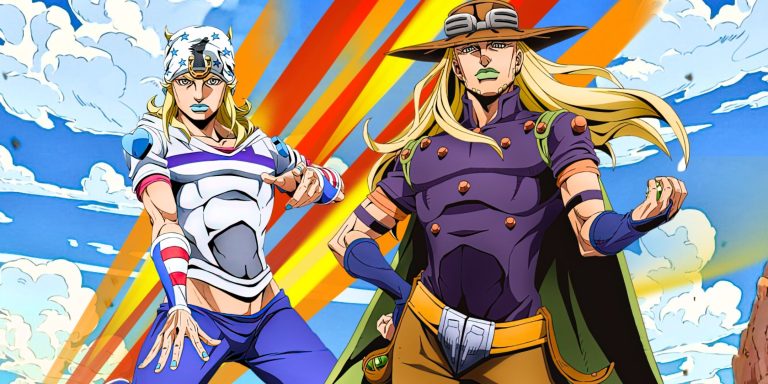
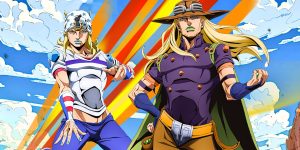
But beyond his combat prowess, Gyro is the emotional anchor. His relationship with Johnny — part mentor, part brother, part reluctant friend — is widely regarded as the finest character dynamic Araki has ever written. Their banter is legendary (the “Pizza Mozzarella” song alone has achieved meme immortality), but beneath the humor lies a bond forged in mutual suffering and shared purpose. How David Production handles the chemistry between these two will likely define the adaptation’s success or failure.
David Production’s Greatest Technical Challenge: Horses, Horizons, and the American Frontier
David Production has proven itself time and again — from the stylish ultraviolence of Stardust Crusaders to the psychedelic Stand battles of Stone Ocean. But Steel Ball Run presents challenges on an entirely different scale. The horses are the elephant in the room — or rather, the stallion. Equestrian animation is notoriously difficult. Fluid, convincing horse movement requires meticulous frame-by-frame attention to gait cycles, weight distribution, and muscular articulation. Now multiply that complexity across dozens of riders in chaotic race sequences, desert storms, mountain passes, and full-speed Stand battles conducted on horseback.
Beyond the equine hurdle, Steel Ball Run demands an unprecedented sense of scale and environment. The race spans the entirety of the American continent — arid deserts, the Rocky Mountains, the Great Plains, dense Eastern forests, and the streets of major cities. Araki’s art in this arc is panoramic and cinematic, drawing heavily from Sergio Leone’s spaghetti Westerns and Cormac McCarthy’s desolate American landscapes. The adaptation will need to capture that sweeping, mythic quality — the loneliness of the frontier, the dust-choked sunsets, the oppressive vastness of a country that feels both beautiful and hostile.
There’s also the question of production format. Many fans and industry observers speculate that Steel Ball Run may break from the traditional seasonal TV anime model entirely, potentially adopting a theatrical film series or a high-budget streaming exclusive format to give the material the visual fidelity it demands. Given the trajectory set by Stone Ocean‘s Netflix partnership, a premium streaming release with extended episode runtimes isn’t just plausible — it may be necessary.
The Villain Question: Funny Valentine and the Weight of Patriotism
No discussion of Steel Ball Run is complete without addressing its antagonist. Funny Valentine, the 23rd President of the United States, is Araki’s most complex and morally provocative villain. Armed with the Stand D4C (Dirty Deeds Done Dirt Cheap) — which allows him to travel between parallel dimensions — Valentine pursues the scattered corpse parts of a holy figure with the genuine, unwavering conviction that he is protecting his nation. He is a patriot in the truest and most terrifying sense: a man willing to sacrifice anyone outside his borders to ensure America’s prosperity.
In an era of heightened geopolitical tension and resurgent nationalism, Valentine’s ideology hits differently than it did during serialization. The anime adaptation will inevitably spark fierce discourse about the line between patriotism and imperialism, self-sacrifice and exploitation. Araki doesn’t offer easy answers — and that moral ambiguity is precisely what elevates Steel Ball Run from exceptional action manga to genuine literature.
Community Reception: A Fandom United in Anticipation
The JoJo community’s anticipation for Steel Ball Run borders on religious fervor. Fan animators have already produced stunning proof-of-concept clips that have racked up millions of views on YouTube and social media, demonstrating both the hunger for this adaptation and the sky-high visual expectations the studio must meet. Manga readers who have waited over a decade to see key moments animated — the napkin speech, the final duel, the true meaning of the Golden Spin — are vocal, passionate, and unforgiving in their standards.
Meanwhile, anime-only viewers who completed Stone Ocean are entering uncharted territory. Steel Ball Run’s fresh continuity makes it an ideal entry point, and the Western setting, the race structure, and the more grounded (yet no less bizarre) tone could attract audiences who previously bounced off JoJo’s more flamboyant earlier parts. The potential for Steel Ball Run to become a crossover cultural phenomenon — bridging the gap between hardcore JoJo devotees and mainstream anime audiences — is enormous.
The Starting Line Awaits
Steel Ball Run is the adaptation that could redefine what we expect from anime. It’s a story about broken people chasing impossible goals across an unforgiving landscape, powered by the mathematics of the universe itself. It’s Hirohiko Araki at his absolute peak, and it demands an adaptation that matches that ambition frame for frame, heartbeat for heartbeat.
David Production has the legacy. They have the love for the source material. Now they need the horses.
Stay locked to Wibux.com for every Steel Ball Run update, trailer breakdown, and deep-dive analysis as this monumental adaptation takes shape. Drop your most anticipated SBR moment in the comments below — and tell us: are you ready for the race of a lifetime?