Ever since the melancholic, bittersweet notes of Duffy’s “Distant Dreamer” brought the curtain down on Stone Ocean, a unified, breathless anticipation has gripped the global anime community. For casual viewers, the ending of the original Joestar lineage signaled a natural pause. But for the initiated, it was merely the prologue to an unspoken eventuality: the inevitable adaptation of Hirohiko Araki’s undisputed magnum opus, Part 7: Steel Ball Run. Sitting comfortably at the razor’s edge of MyAnimeList’s top-rated manga of all time—often swapping ranks only with Kentaro Miura’s Berserk—this trans-continental horse race isn’t just another chapter in the franchise; it is a monumental shift in artistic ambition, narrative maturity, and philosophical scope.
Yet, bringing Steel Ball Run to the small screen is an undertaking that looms like a mirage over David Production. It is a work celebrated for its cinematic sprawl and hyper-detailed draftsmanship, but notorious for posing what might be the single most terrifying logistical challenge in modern television anime: the sustained animation of galloping horses. As industry whispers swell and speculative leaks circulate across social feeds, the question is no longer whether Steel Ball Run deserves an adaptation, but how David Production plans to conquer anime’s final wild frontier.
The Trans-American Odyssey: Araki’s Leap into Seinen Perfection
To understand the sheer magnitude of the Steel Ball Run buzz, one must appreciate the monumental shift it represents within Hirohiko Araki’s creative timeline. Serialized beginning in 2004, the series originally carried no overt “JoJo” branding on its covers, operating as an enigmatic period piece set against the backdrop of late 19th-century America. When the series migrated from the adolescent restrictions of Weekly Shonen Jump to the monthly pages of Ultra Jump in 2005, Araki unlocked a creative freedom that altered the trajectory of the series forever.
Gone were the rigid moral binaries of youthful heroes fighting cackling vampires. In their place stood a grueling, 6,000-kilometer cross-country trek from San Diego to New York City, bankrolled by enigmatic tycoon Stephen Steel. The race is brutal, opportunistic, and politically corrupt. Araki used this rebooted continuity—entirely detached from the Phantom Blood–through–Stone Ocean continuity—to experiment with dust-caked Western aesthetics, body horror, historical revisionism, and deeply flawed human beings clawing through mud, snow, and blood for a prize that quickly transcends a 50-million-dollar purse.
Johnny, Gyro, and the Geometry of Fate
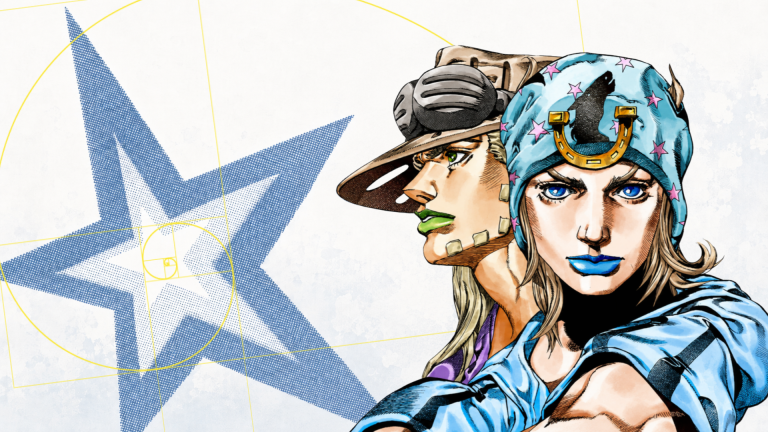
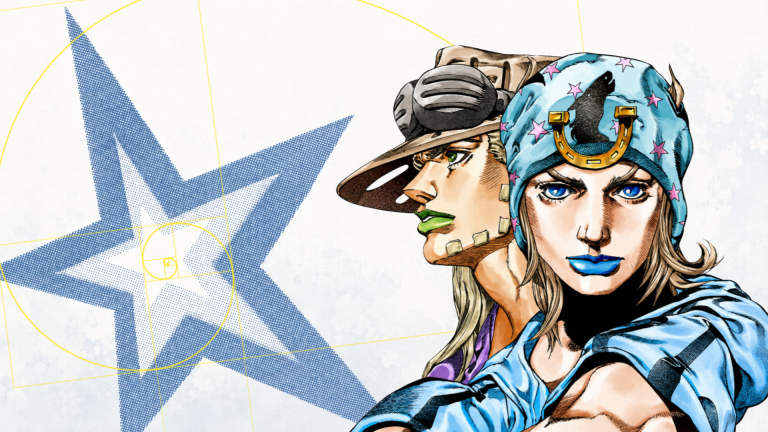
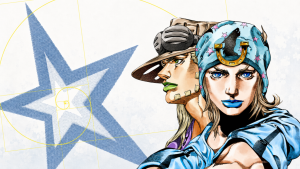
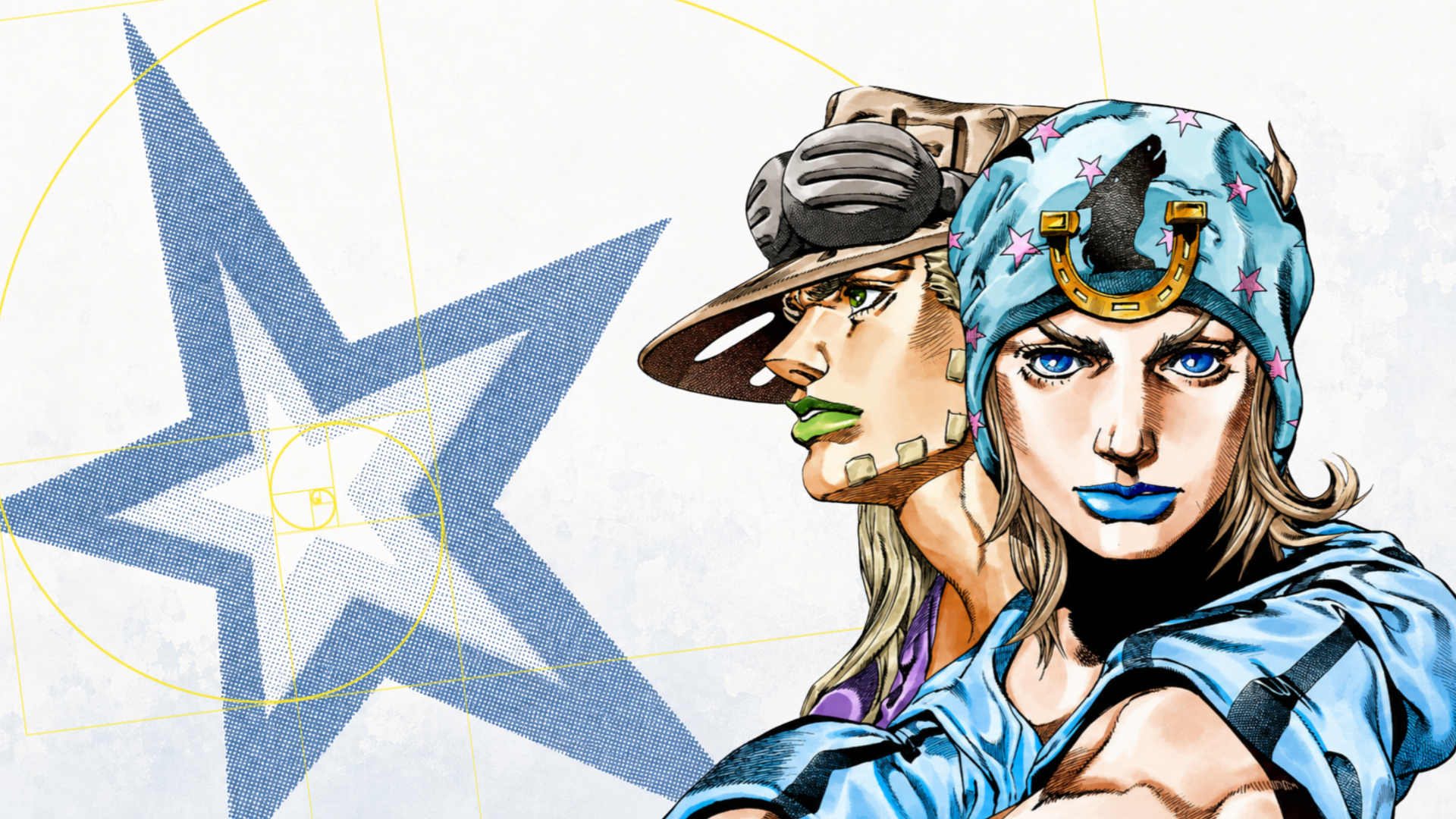
At the beating heart of this high-octane race is the peerless dynamic between Johnny Joestar and Gyro Zeppeli. In an anime landscape saturated with instantly loyal power-of-friendship duos, their bond begins as an alliance of sheer pragmatism before blossoming into one of the most poignant brotherhoods ever penned.
Johnny Joestar is unlike any Shonen protagonist before him. A former prodigy jockey whose hubris cost him the use of his legs, Johnny starts his journey bitter, cynical, and spiritually hollow. He is driven not by righteous altruism, but by an obsessive, burning need to crawl back from “negative” to “zero.” Araki famously characterizes Johnny by the chilling, unblinking fire in his eyes—a manifestation of his “dark determination,” a willingness to kill without hesitation if it means reclaiming his dignity.
Contrasting Johnny’s brooding intensity is Gyro Zeppeli: gold-toothed, idiosyncratic, deeply superstitious, and effortlessly charismatic. Yet beneath Gyro’s penchant for composing terrible jokes about mozzarella cheese lies a somber ethical burden. An exiled executioner from the Kingdom of Naples, Gyro rides not for personal glory, but to win amnesty for an innocent child condemned to death. Their journey is one of mutual redemption, elevated by philosophical banter and high-stakes survival.
The Golden Spin vs. The Stand Metagame
Narratively, Steel Ball Run redefines the mechanics of combat. While Stands remain the operational superpower, Araki introduced The Spin—a mystical martial art rooted in the mathematics of the Fibonacci sequence and the Golden Ratio. By harnessing natural rotational energy through steel spheres, Gyro’s ancestral technique acts as a bridge between the anatomical mysticism of Part 1’s Hamon and the conceptual Stand battles of later eras. Johnny’s slow mastery of this kinetic phenomenon—manifesting through his evolving Stand, Tusk—turns his personal physical recovery into a visual, terrifying escalation of multiversal physics.
The Equestrian Crucible: Animating David Production’s White Whale
If the narrative of Steel Ball Run is pure gold, its production realities are pure iron. Animators across the industry know an unspoken truth: drawing horses is agonizingly difficult. Sustaining realistic four-legged quadruped gait cycles, anatomical muscle shifts, dynamic perspective changes, and equestrian gear in traditional hand-drawn 2D frame-by-frame animation is a resource black hole.
In recent years, productions like Attack on Titan and Vinland Saga circumvented this challenge by leveraging 3D CGI models for cavalry sequences, with varying degrees of aesthetic success. For David Production—a studio whose brand identity thrives on stylized anatomical linework, eccentric posture, and kinetic close-ups—cutting corners on the horses is simply not an option. A CGI shortcut that looks sterile or stiff could irrevocably shatter the gritty immersion of Araki’s frontier.
Insiders suspect that the deliberate silence surrounding Part 7 is the direct result of David Production constructing a dedicated, highly experimental production pipeline. The studio demonstrated extraordinary ambition with the psychedelic environments of Stone Ocean and the hyper-kinetic fire effects of Fire Force. Conquering Steel Ball Run likely requires a sophisticated hybrid workflow: bespoke 3D rigs mapped with cell-shaded toon shaders, meticulously finished and shaded by veteran 2D key animators to maintain Araki’s hatch-heavy signature aesthetic. Anything less would fail to honor the manga’s visceral grandeur.
The High Stakes of the Corpse: Funny Valentine’s Dangerous Ideology
Beyond the logistical mountains David Production must climb, the narrative stakes of Steel Ball Run are anchored by what many critics consider Araki’s greatest antagonist: President Funny Valentine. Driven by a radical, uncompromising patriotism, Valentine seeks to secure the mummified pieces of an ancient holy relic scattered across the American frontier—a holy figure implied to be none other than Jesus Christ.
Valentine’s multidimensional Stand, Dirty Deeds Done Dirt Cheap (D4C), introduces paradigm-shifting physics that turn the final third of the story into an exhilarating, mind-bending thriller. What elevates Valentine above previous villains like DIO or Diavolo is his twisted sense of nobility; his desire to establish American supremacy makes him a chilling ideological foil to Johnny’s self-serving hunger. Adapting this ideological war demands a director who understands theatrical pacing, sound design, and the slow-burn horror of Araki’s best writing.
The Horizon Awaits: When Will the Starting Gun Fire?
As David Production juggles other prestigious endeavors, the gravitational pull of Steel Ball Run only grows stronger. The fandom’s unyielding enthusiasm isn’t mere nostalgia; it is a recognition that Part 7 represents a rare zenith where artistic evolution, narrative depth, and thematic maturity perfectly converged.
When that official teaser finally drops—whether it begins with the deafening roar of a starting pistol on a sandy beach or the spinning of a steel sphere through the desert air—it will mark the beginning of one of the most critical eras in modern anime history. For now, fans must keep their eyes fixed firmly on the horizon. The race across America is coming, and it promises to reshape everything we thought we knew about Araki’s bizarre universe.
Which scene from Steel Ball Run are you most desperate to see animated—Gyro’s bizarre musical compositions, or the mind-bending reveal of D4C? Sound off in the comments below, and stay tuned to Wibux.com for all your breaking JoJo updates!