

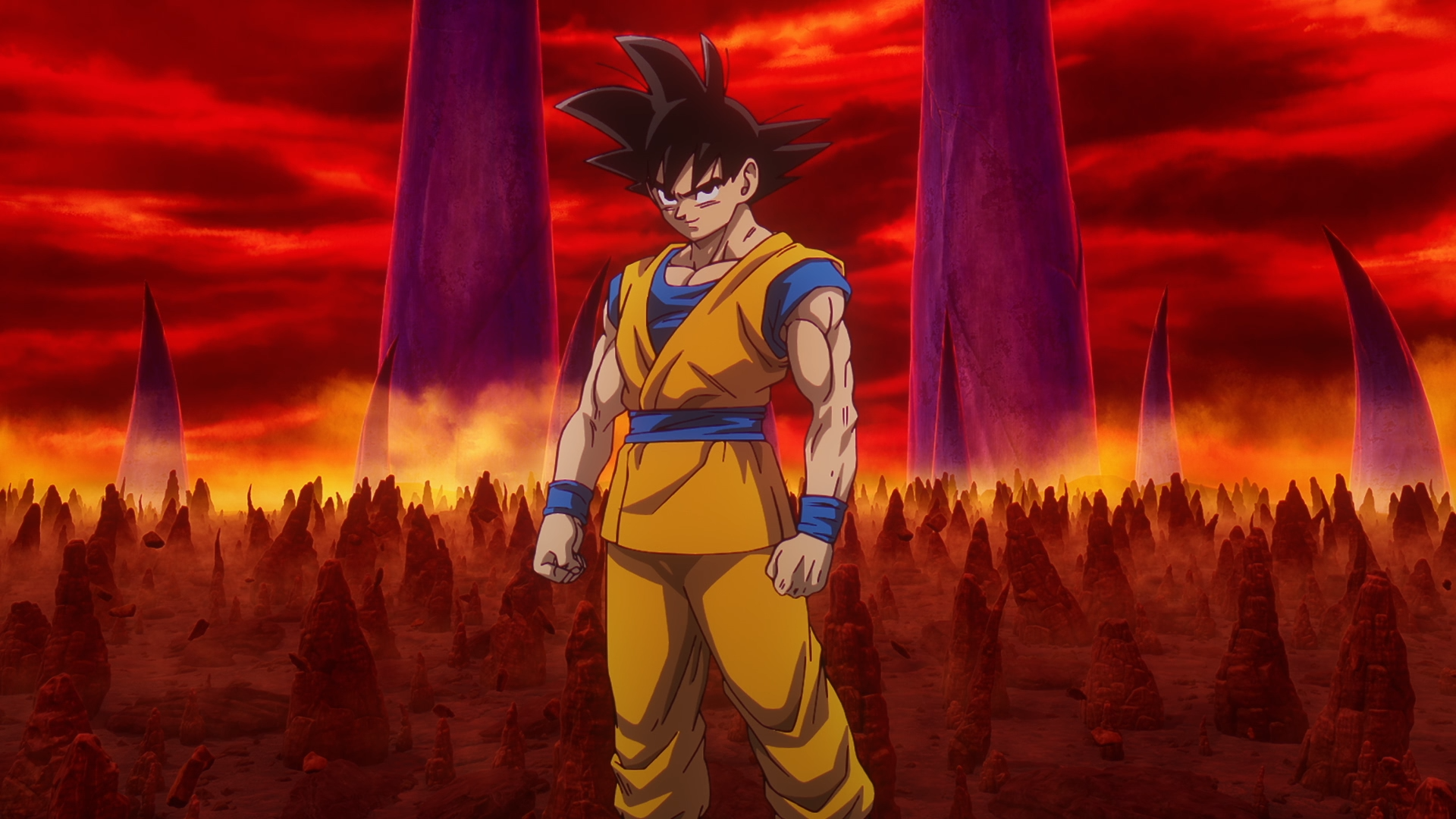
When the history of modern pop culture is cataloged, October 2024 will stand as a monumental, bittersweet milestone. Forty years after an unassuming boy with a monkey tail burst out of Mount Paozu, the premiere of Dragon Ball Daima arrived not merely as an anniversary celebration, but as the final creative bequest of Akira Toriyama. Following the visionary creator’s shocking passing in March 2024, the anticipation surrounding Daima transitioned from typical franchise hype into a reverent cultural vigil. Fans braced themselves, wondering whether this new chapter would feel like a hollow corporate continuation or a genuine piece of Toriyama’s soul. Fortunately, the extended premiere delivers an emphatic answer: Dragon Ball Daima is an exuberant, mechanically inventive, and visually transcendent tour de force that redirects the franchise away from hyper-inflated cosmic power scales and plunges headfirst into the long-shrouded secrets of the Demon Realm.
A Bittersweet Renaissance: Toriyama’s Hands-On Swan Song
Unlike recent cinematic projects or the sprawling monthly serializations of Dragon Ball Super—where Toriyama often provided high-level plot outlines and basic character drafts while entrusting execution to others—Dragon Ball Daima bears his intimate fingerprints on virtually every frame. Toriyama conceived the overarching narrative, established the intricate mechanics of the new worlds, drew numerous bespoke vehicles, and personally designed both the primary antagonists and the miniaturized cast.
The premiere breathes with an unmistakable Toriyama cadence: a delicate equilibrium between apocalyptic stakes and delightfully absurd domesticity. While the narrative could have rested on its laurels by introducing yet another universe-ending multiverse god, Daima purposefully pulls the lens backward. It honors the 40th anniversary of the franchise by anchoring its narrative foundation in the immediate aftermath of the Majin Buu Saga, contextualizing its timeline and honoring the weight of that climatic victory before steering its characters into entirely uncharted territory.
Unveiling the Demon Realm: Deepening Forty Years of Cosmology
For decades, the Demon Realm (or Makai) existed as one of the most tantalizing footnotes in Dragon Ball lore. Dabura’s tenure during the Buu saga provided a glimpse of its existence, and spin-offs like Super Dragon Ball Heroes and Dragon Ball Xenoverse built non-canonical playgrounds out of its conceptual framework. In Daima, Toriyama formally canonizes, systemizes, and breathes terrifying life into this subterranean dimension.
Kings, Conspiracies, and the Shadow of Babidi
The premiere’s opening sequence treats viewers to an exquisite retrospective of the Buu Saga viewed through an unprecedented lens: the surveillance monitors of King Gomah, the newly minted sovereign of the Demon Realm. Alongside Gomah, we are introduced to Degesu—the younger, ambitious brother of Universe 7’s own Supreme Kai (Shin)—and the enigmatic scientist Dr. Arinsu. Their frantic analysis of Goku and the Z-Fighters executing Babidi and obliterating Majin Buu establishes a brilliant dramatic premise. To the Demon Realm, Babidi was not merely a rogue warlock; his demise shattered the political power structure of their universe.
Gomah’s immediate terror that the Earthlings might conquer the Demon Realm next drives the plot forward with airtight internal logic. Rather than summoning brute force to crush Goku, Gomah exploits ancient mysticism. His solution is as petty as it is tactically devious: travel to Earth, gather the native Dragon Balls, and reduce Earth’s defenders to harmless children.
Namekian Biology and the Tamagami
Toriyama’s most revolutionary lore drop in the premiere rewrites our fundamental understanding of Namekian origins. Through the wizened Demon Realm Namekian known as Neva, Daima reveals that the Namekians are not native to Planet Namek at all; they are biological emigrants from the Demon Realm itself. Neva’s effortless reunification of Earth’s inert Dragon Balls recontextualizes the race’s inherent mystical authority.
Furthermore, Gomah’s quest uncovers the existence of the Demon Realm’s own native set of Dragon Balls, fiercely guarded by colossal bio-constructs called the Tamagami. By shifting the pursuit of the Dragon Balls away from casual planetary searches and transforming it into an obstacle course against ancient mythological sentinels, Daima revitalizes the original sense of mystical adventure that propelled the franchise in 1984.
Fluidity over Flash: Toei’s Masterclass in Hand-to-Hand Kineticism
Visually, Dragon Ball Daima represents a peak production pipeline for Toei Animation. Helmed by series directors Yoshitaka Yashima (veteran animator of Dragon Ball Z) and Aya Komaki (renowned for her stunning, emotionally resonant storyboarding on One Piece’s Wano Arc), the premiere rejects the oversaturated, neon-drenched digital composites that occasionally bogged down Dragon Ball Super. Instead, the aesthetic pays visual homage to the legendary Katsuyoshi Nakatsuru’s character designs, boasting clean line work, earthy palettes, and extraordinarily fluid cel-style textures.
The action choreography represents a vital philosophical shift. In the era of Super Saiyan Blue and Ultra Instinct, combat had largely evolved into a sensory barrage of blinding energy beams, planet-cracking shockwaves, and instant teleportation. Daima boldly dials the clock back to the visceral physics of grounded martial arts. Goku’s rediscovery of the Power Pole (Nyoibo) is far more than an affectionate nostalgia trip; it completely recalculates the spatial dynamics of combat. Watching a pint-sized Goku calculate momentum, leverage, and center of gravity against physical opponents brings an electrifying level of tangible craftsmanship back to the franchise’s fight scenes.
Subverting the Ghost of GT: The Psychology of the “Mini” Z-Fighters
When the concept of Daima was first announced, fandom cynics immediately drew comparisons to 1996’s polarizing Dragon Ball GT, which also miniaturized Son Goku via an ill-conceived wish. However, the execution in Daima couldn’t be more distinct. Where GT alienated audiences by isolating Goku from the broader cast and sidelining fan-favorite heroes, Daima turns its miniaturization into a communal, personality-driven comedic crisis.
Watching the Z-Fighters process their transformation provides a masterclass in character psychology:
- Goku views his shrunken stature not as an existential curse, but as an intriguing physical puzzle, joyously adjusting his martial arts forms to compensate for his truncated limbs.
- Vegeta responds with incandescent, wounded royal pride, furious that his battle-hardened physique has been reduced to infant proportions while still stubbornly trying to maintain his brooding posture.
- Piccolo and Shin immediately adopt tactical mindsets, assessing the logistics of traveling to the Demon Realm to confront Gomah directly.
By transforming the entire ensemble rather than isolating a lone protagonist, Toriyama constructs a dynamic team-road-trip atmosphere. The tone channels the uninhibited spirit of Toriyama’s comedic roots (echoing Dr. Slump and early Dragon Ball) while preserving the hard-won emotional maturity the characters attained throughout the Buu arc.
The Eternal Shenron’s Parting Gift: A Master’s Legacy Cemented
It is impossible to watch Dragon Ball Daima without feeling an acute sense of historical gravity. This is not an assembly-line product conceived in a corporate board room to move merchandise; it is the final playground constructed by the most influential manga creator of the twentieth century. In sending Goku back to his roots—armed with an extendable red staff, propelled by unquenchable curiosity, and stepping into the uncharted mist of a bizarre new universe—Toriyama reminded the world why we fell in love with his universe in the first place.
Dragon Ball Daima does not merely honor forty years of monumental shonen heritage; it honors the gentle, playful, and endlessly inventive soul of the man who created it. The adventure has begun anew, the Demon Realm awaits, and somewhere beyond the stars, Akira Toriyama is surely smiling at the mischief he left behind.
What did you think of the Dragon Ball Daima premiere? Did the revelations about the Demon Realm and Namekians blow your mind, or are you just hyped to see Goku swinging the Power Pole again? Sound off in the comments below, and stay tuned to Wibux.com for our weekly episodic breakdowns!