

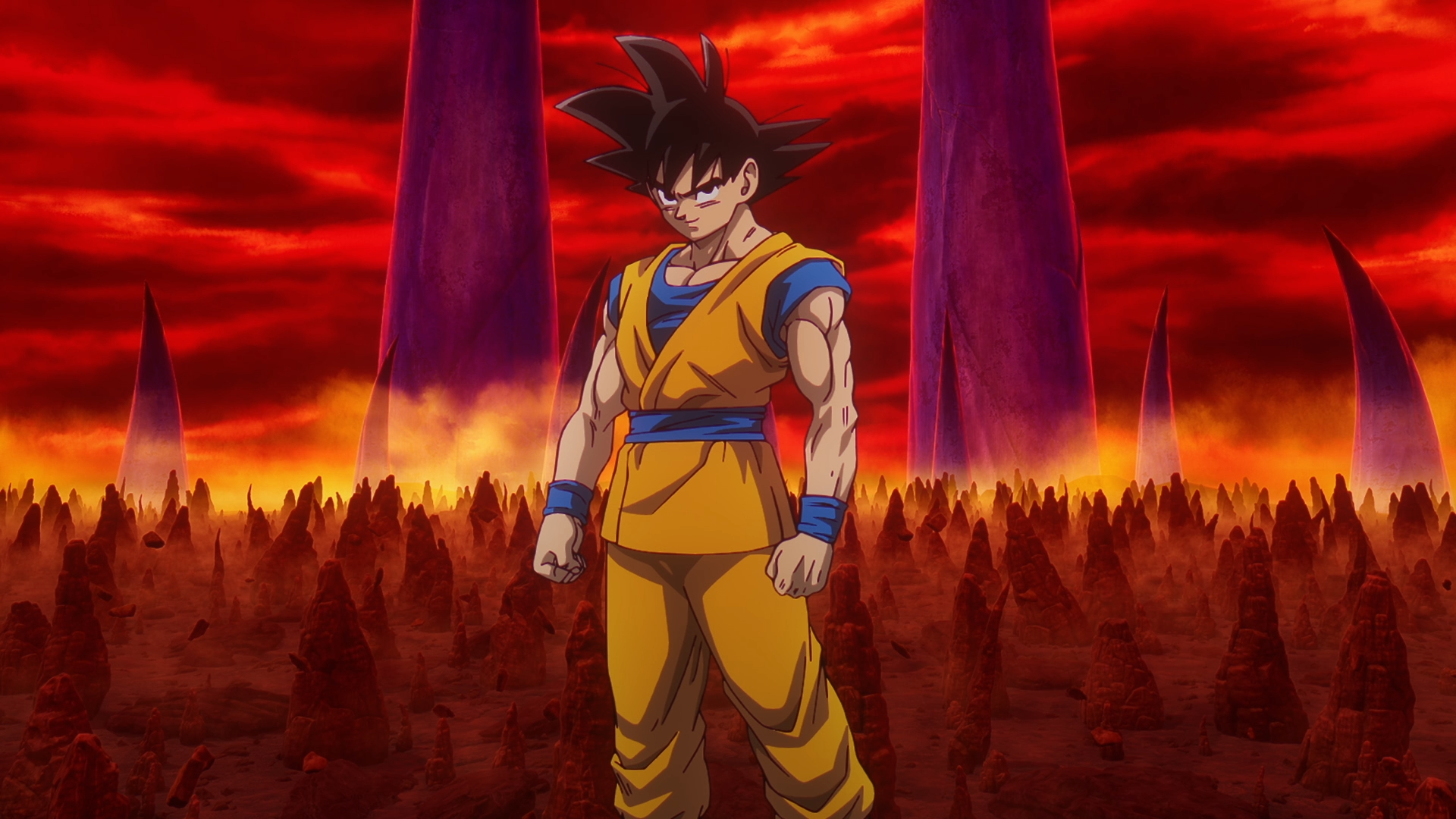
Dragon Ball Daima Premiere Breakdown: Akira Toriyama’s Final Masterpiece Takes Goku to the Mysterious Demon Realm
There’s a particular kind of gravity that settles over a franchise when its creator delivers one last story. When Akira Toriyama passed away in March 2024 at the age of 68, the anime world didn’t just lose a mangaka — it lost the architect of an entire cultural mythology. Dragon Ball isn’t merely a series; it’s a generational language, a shared reference point for hundreds of millions of fans across four decades. So when Dragon Ball Daima premiered in October 2024, it carried the weight of something far more profound than a new anime season. It arrived as a farewell letter, a final creative vision from the man who gave us Goku, penned with the unmistakable playfulness and sincerity that defined Toriyama’s entire career. And against all expectations, it doesn’t just honor his legacy — it actively expands it in ways that feel both nostalgic and genuinely surprising.
A 40th Anniversary Gift That Became a Swan Song
Dragon Ball Daima was originally conceived as a celebration of the franchise’s 40th anniversary, with Toriyama himself deeply involved in the project’s story, character designs, and world-building. Unlike Dragon Ball Super, where Toriyama provided outlines that were then fleshed out by other writers, Daima bears the fingerprints of its creator in nearly every frame. Toriyama personally designed over 50 new characters for the series and crafted the central narrative conceit: a mysterious conspiracy within the Demon Realm that results in Goku and the Z-Fighters being transformed into miniaturized versions of themselves.
What could have been a gimmick — “tiny Goku, how cute” — instead becomes the vehicle for something the franchise hasn’t attempted in years: genuine exploration. The shrinking isn’t just physical; it’s a narrative reset that strips away the power-scaling arms race that has defined Dragon Ball’s modern era. Mini Goku can’t simply obliterate his problems with Ultra Instinct. He has to be resourceful, curious, and adventurous in ways that recall the original Dragon Ball series from 1986, when a young Goku wandered an unpredictable world with nothing but a Power Pole and an insatiable appetite for discovery.
Toriyama himself stated before his passing that he wanted Daima to recapture the “sense of adventure” that first defined the series. Mission accomplished — and then some.
The Demon Realm (Makai): Dragon Ball’s Most Ambitious World-Building in Decades
For forty years, the Demon Realm has existed at the periphery of Dragon Ball lore — referenced, hinted at, but never truly explored. We knew Dabura was its king. We knew Demon King Piccolo had tenuous connections to its mythology. But the Makai itself remained a narrative black box. Daima rips that box wide open.
The Demon Realm as presented in Daima is a layered, stratified world with its own political hierarchies, ecosystems, and cultural logic. It’s divided into three distinct layers, each with escalating danger and visual identity. The first layer feels almost whimsical — alien flora, strange creatures, a sense of Toriyama’s signature humor baked into the environmental design. But as Goku and his companions descend deeper, the tone shifts. The second and third layers introduce darker aesthetics, more complex power structures, and antagonists whose motivations extend beyond simple conquest.
Glorio, Panzy, and the New Cast
Among the new characters, Glorio stands out as a particularly compelling addition — a Demon Realm warrior whose allegiances remain deliberately ambiguous through the early episodes. He’s charming, capable, and clearly hiding something, embodying the kind of morally gray characterization that Toriyama excelled at but rarely indulged in within Dragon Ball’s typically black-and-white moral framework. Then there’s Panzy, a young Demon Realm denizen who serves as both guide and emotional anchor, her wide-eyed determination recalling early Bulma without feeling derivative.
The villainous conspiracy — orchestrated by figures within the Demon Realm who have their own designs on the Dragon Balls — adds a layer of political intrigue that feels refreshingly mature for the franchise. This isn’t Frieza blowing up planets. This is scheming, manipulation, and the kind of slow-burn antagonism that rewards patient viewers.
Toei Animation’s Visual Renaissance: Martial Arts Choreography That Demands Respect
Let’s address the elephant in the room: Dragon Ball Super‘s early episodes were, to put it diplomatically, a visual catastrophe. The infamous Episode 5 Beerus fight became a meme for all the wrong reasons. Toei clearly learned from that debacle, because Daima is arguably the most visually polished Dragon Ball project ever produced for television.
The series employs a visual style that bridges Toriyama’s classic character design sensibilities with modern animation techniques. Character proportions are rounder, softer, and more expressive — a deliberate callback to the aesthetic of early Dragon Ball and Dr. Slump. But the action sequences? They’re anything but soft. The martial arts choreography in Daima’s early episodes is exceptional, emphasizing weight, momentum, and spatial awareness in ways that recall the best moments of the original Dragon Ball Z.
The Tatsuya Nagamine Factor
Director Yoshitaka Yashima and his team at Toei have assembled a murderer’s row of key animators, and it shows. Fight sequences prioritize readability and impact over the kind of beam-spam spectacle that has dominated the franchise’s recent output. When mini Goku throws a punch, you feel it — the anticipation in the wind-up, the snap of contact, the environmental reaction. There’s a groundedness to the combat that makes every exchange feel consequential, even when the characters are pint-sized. The background art deserves special mention as well; the Demon Realm’s environments are painted with a lushness and imagination that evoke Studio Ghibli’s fantastical landscapes, lending the series a visual identity that’s entirely its own within the Dragon Ball canon.
Character Psychology: Goku Rediscovered
Perhaps Daima’s most quietly radical achievement is its treatment of Son Goku himself. Over the course of Dragon Ball Super, Goku’s characterization became a point of genuine contention among fans. Was he a lovable simpleton or an irresponsibly negligent father-figure whose naivety endangered entire universes? Daima threads this needle with remarkable elegance by placing Goku in a context where his childlike qualities become assets rather than liabilities.
Mini Goku is curious, earnest, and delighted by the unknown — and in the Demon Realm, surrounded by genuine mystery, these traits read as heroic rather than foolish. There’s a scene in the early episodes where Goku encounters a creature he’s never seen before, and his reaction — pure, unfiltered wonder — is so authentically Toriyama that it’s almost painful knowing this is the last time the creator will guide this character’s emotional register. Vegeta’s bruised pride at being miniaturized provides excellent comedic counterpoint, while Supreme Kai’s guilt over the conspiracy’s origins adds genuine emotional stakes.
The supporting cast isn’t forgotten either. Piccolo’s protective instincts, Bulma’s scientific pragmatism, and the broader Z-Fighter ensemble all get moments that feel earned rather than obligatory — a testament to Toriyama’s understanding that Dragon Ball was never just about Goku.
Community Reception and the Legacy Question
The fan response to Daima has been overwhelmingly positive, though not without nuance. Long-time fans have embraced the return to adventure-driven storytelling, with social media flooded with comparisons to the original Dragon Ball’s Muscle Tower and Red Ribbon Army arcs. Power-scaling enthusiasts — a vocal subset of the fandom — have expressed some frustration at the de-emphasis on transformation hierarchies, but even many within that community have acknowledged that Daima’s approach feels like a necessary creative palate cleanser.
Critically, Daima has been praised for something increasingly rare in long-running franchise anime: it feels like it has something to say. It’s not content to simply deliver fan service and escalating power levels. It wants to remind audiences why they fell in love with this world in the first place — the humor, the heart, the sense that anything could be waiting over the next hill.
Final Thoughts: A Farewell Worth Celebrating
Dragon Ball Daima is not just a good Dragon Ball series. It’s a profound one — a work that understands its own legacy well enough to look backward and forward simultaneously. Akira Toriyama didn’t use his final project to deliver the biggest fights or the most dramatic transformations. He used it to take Goku on one last adventure, to build one more impossible world, and to remind us that the heart of Dragon Ball was never about who could punch the hardest. It was about a kid with a tail who looked at the horizon and ran toward it, grinning.
If you’ve lapsed from the franchise, Daima is your invitation back. If you’ve never left, it’s the validation you’ve been waiting for. And if you’re new to Dragon Ball entirely? There might not be a better entry point than this — a series made by a creator who knew exactly what made his world magical, delivering that magic one final, beautiful time.
Dragon Ball Daima is currently streaming on Crunchyroll. Stay tuned to Wibux.com for weekly episode breakdowns, lore deep-dives, and all the latest coverage of Toriyama’s final masterpiece.