

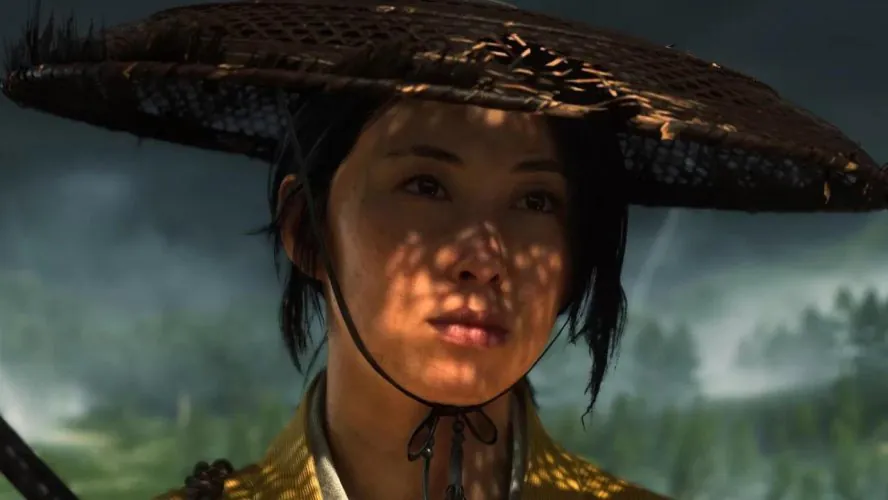
When Sucker Punch Productions took the stage to pull back the curtain on Ghost of Yōtei, the entire gaming community felt an electric jolt of surprise. Anticipation had long circulated around an immediate continuation of Jin Sakai’s tragic duel across Tsushima Island, but directors Nate Fox and Jason Connell boldly chose an entirely different destiny. Transporting players more than three hundred years forward to the untamed wilderness surrounding Mount Yōtei in 1603, this ambitious standalone journey introduces Atsu, a mysterious wanderer voiced and performed by Erika Ishii. Why did PlayStation and Sucker Punch decide to reinvent their crowning open-world franchise rather than simply retreading familiar ground, and what makes this cinematic adventure one of the most anticipated titles in modern gaming?
Stepping Beyond Jin Sakai: The Untamed Frontier of Ezo in 1603
To truly understand the creative leap represented by Ghost of Yōtei, one must examine the dramatic shift in historical context. While Ghost of Tsushima depicted the organized, desperate struggle against the 1274 Mongol invasions under the strict confines of traditional samurai clans, 1603 Japan represents a completely different world. Mount Yōtei looms tall over the northern wilderness of Ezo—known today as Hokkaido—a vast frontier that existed far outside the centralized rule of the newly established Tokugawa shogunate.
This wild territory was not dominated by rigid military hierarchies or gilded samurai castles. Instead, Ezo was an open, untamed expanse populated by indigenous Ainu communities, rugged outcasts, roving mercenaries, and daring outlaws. Director Nate Fox emphasized that this untamed landscape allows the studio to explore unprecedented freedom in environmental storytelling, contrasting sprawling snow-dusted tundra, dense cedar forests, and geothermal springs with the raw hostility of an unforgiving wilderness. Gamers who enjoyed the rich environmental design of open-world epics like Borderlands 4 or competitive combat arenas such as Dragon Ball: Sparking! ZERO will find Sucker Punch’s meticulous attention to atmospheric atmosphere deeply captivating.
Who Is Atsu? Erika Ishii and the Birth of a New Legend
At the beating heart of this revelation stands Atsu, a wandering warrior whose journey is driven by personal vengeance, survival, and a desperate pursuit of justice in a lawless frontier. Portrayed with magnetic intensity by versatile actor Erika Ishii, Atsu embodies an entirely distinct archetype compared to the stoic nobleman Jin Sakai. She is not bound by ancestral samurai codes, nor does she carry the aristocratic burdens of Clan Sakai; instead, she moves through the world as an underdog forced to forge her own rules.
Early cinematic teasers reveal Atsu brandishing a diverse arsenal that radically expands traditional swordplay. Beyond the razor-sharp single katana, players witness her wielding dual katanas, long-range kusarigama chains, and even early matchlock firearms that entered Japan during the Sengoku period. This evolution reflects the shifting reality of 17th-century warfare, providing fluid combat transitions between lightning-fast parries, sweeping area attacks, and tactical ranged takedowns that reward ingenuity and split-second reflexes.
Sucker Punch’s Vision: Evolution Rather Than Repetition
Creative directors Jason Connell and Nate Fox have made it clear that creating a true successor to an acclaimed masterpiece requires boldness. Sucker Punch wanted to preserve the core pillars that made the original experience iconic—the cinematic wind navigation system, breathtaking minimalist user interface, and profound reverence for classic samurai cinema popularized by legendary filmmaker Akira Kurosawa—while eliminating repetitive open-world checklist design.
In Ghost of Yōtei, the open world is engineered to feel reactive and organically alive. Rather than tracking mechanical map markers, players will rely on wildlife, shifting weather patterns, rising smoke from distant camps, and acoustic cues to discover hidden shrines, ronin duels, and forgotten lore. The development team at Sucker Punch has harnessed the full hardware capabilities of PlayStation 5, introducing massive sightlines, dynamic wind simulation across expansive grassland plains, and real-time aurora borealis illuminating the northern night sky.
Why Ghost of Yōtei Is Setting a New Benchmark for Samurai Games
The cultural resonance of the Ghost franchise has always extended far beyond mere gameplay mechanics. It represents a celebration of Japanese folklore, historical transition, and philosophical inquiry into what it means to protect the vulnerable when society’s institutions fail. By centering the narrative on an outcast woman navigating a lethal frontier during the dawn of the Edo era, Sucker Punch is broadening the scope of what samurai storytelling can achieve in interactive entertainment.
Moreover, the title marks a major milestone in PlayStation Studios’ lineup, demonstrating a commitment to creating brand-new narrative sagas instead of indefinitely milking identical character arcs. Atsu’s mask, scarred blade, and resolute gaze signal that the mantle of the “Ghost” is not an individual person—it is a timeless symbol of resistance against tyranny and ruthless oppression.
What Do You Think?
Are you excited to step into the boots of Atsu and conquer the snowy wilds of Mount Yōtei in 1603, or were you secretly hoping to see Jin Sakai’s journey continue to the mainland? How do you feel about the addition of dual-wielding katanas and historic firearms to the signature combat formula? Drop your thoughts, theories, and gameplay expectations in the comments below!